Travel & Planning for New Destination Released. Free Shipping to Most Countries Around the World.
Free Shipping to Most Countries Around the World.
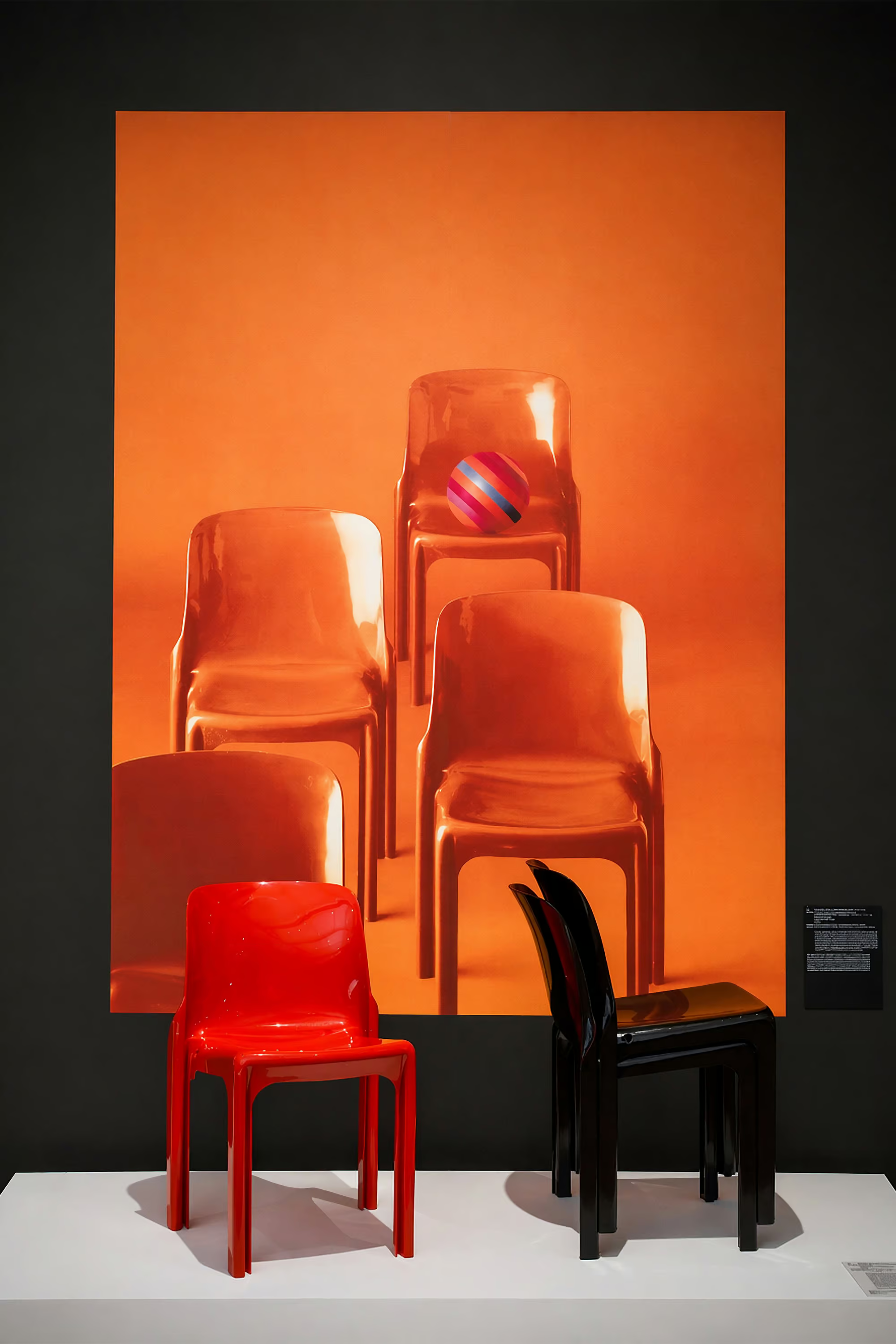
The exhibition where I photographed the chairs is titled “Hello Image: The Staging of Things.” It aims to show the public the full story behind style‑defining objects, tracing what happens from design and set building through to graphic design and photography. The show reveals how powerful images and brand identities are created and how they go on to influence us. Whether you are looking at works by Marianne Brandt or iconic pieces by Martin Margiela and Issey Miyake, you can see how designers, photographers, graphic artists and companies work together and how their roles are divided. From industrial era typewriters, telephones, televisions and cabinets to porcelain, sofas, video works and everyday kitchenware, it brings together exactly the kind of objects you would expect to encounter in a contemporary German museum of art and design.
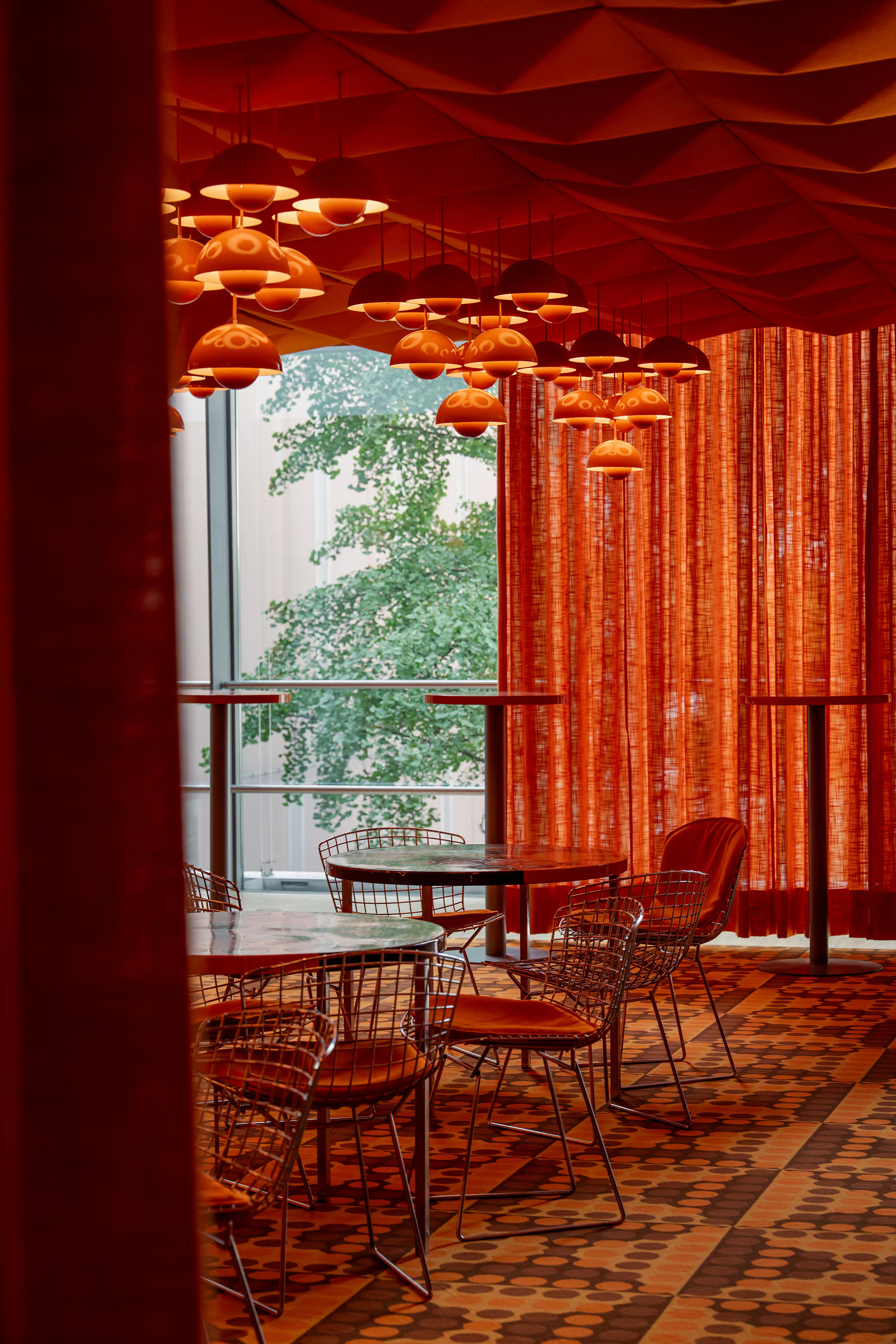
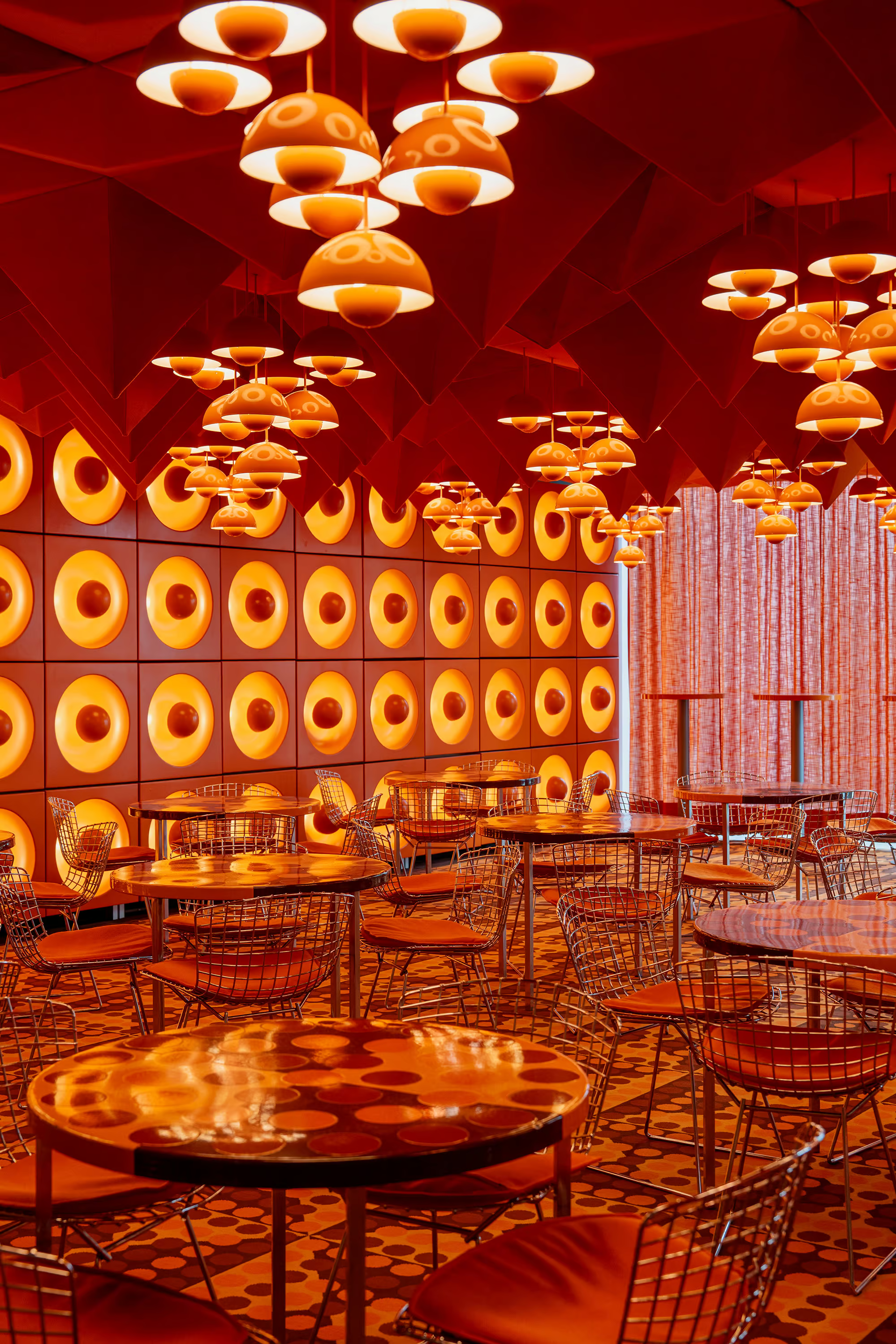
The space flooded in orange in the photos is an interior designed by the Danish designer Verner Panton for the new headquarters of the Spiegel publishing house in Hamburg in the late 1960s. His commission covered the courtyard, entrance hall, main lobby, canteen with bar, a basement swimming pool for staff, an editorial conference room with a reception‑like waiting area and the corridors on the upper floors used by management and editors. Here colour once again becomes the key design element. It plays a crucial role in visually fusing and softening the scale of the rooms in classic Panton style. Beyond the furniture displays, the contract required Panton to use products from Knoll, and he also developed the Spiegel lamp especially for this project, installing it on walls and ceilings as a kind of luminous cladding. Not long after the building was completed, the swimming pool was destroyed in a fire, while the canteen largely survived in its original form. Today it is regarded as a rare and unique example of design in use. It was donated to the City of Hamburg and is now on view at the Museum für Kunst und Gewerbe Hamburg, the Museum of Art and Industry Hamburg.
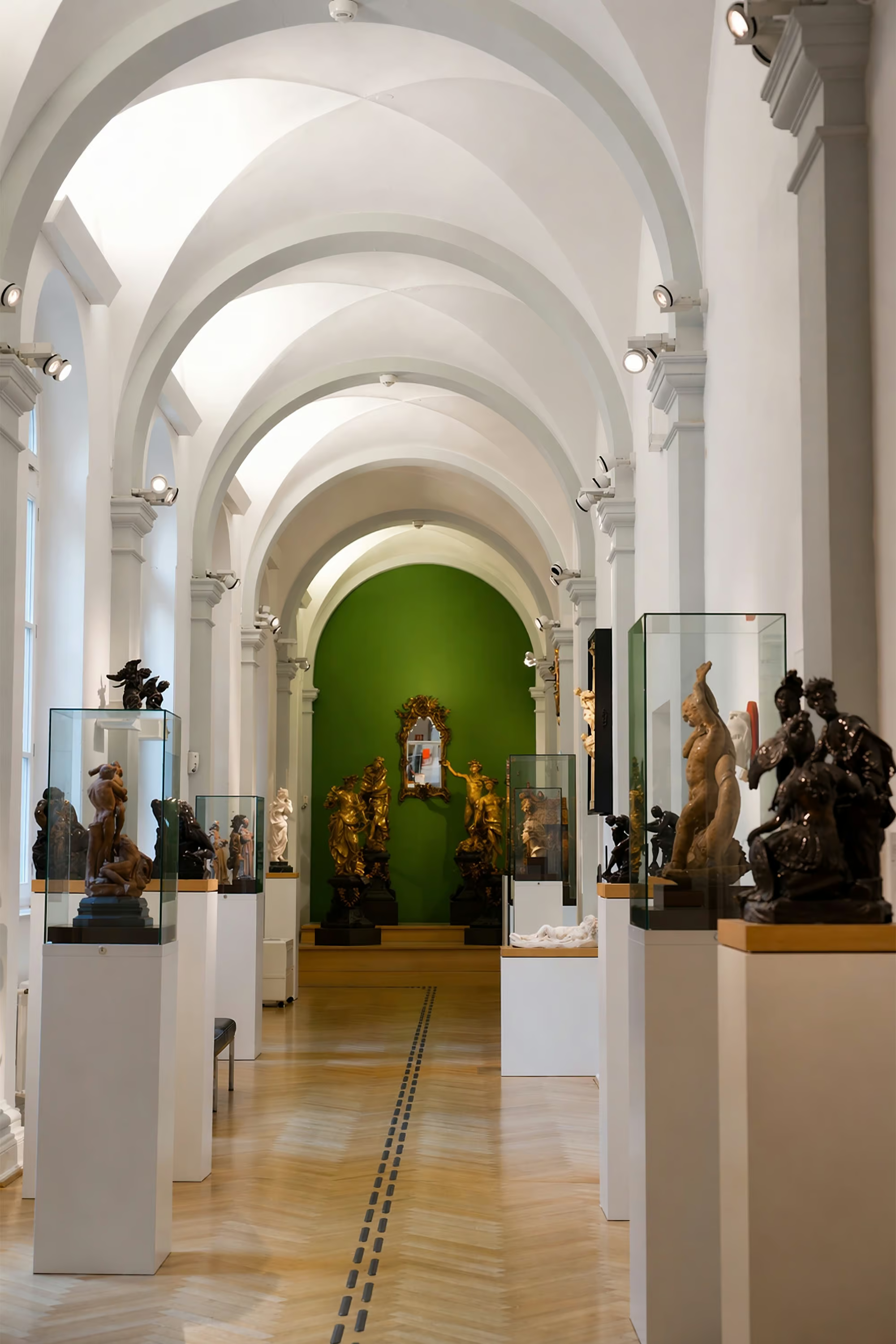
Whether it is medieval sculpture and woodcarving, church treasures and liturgical objects for the altar, pieces from Renaissance cabinets of curiosities, Baroque sculpture, small bronzes and ivory works, or scientific instruments, metal and silverware, historic table services, folk art from northern Germany, European faience and porcelain, glass objects, or the many kinds of furniture that range from medieval chests to multifunctional pieces from the Neoclassical period, the Museum für Kunst und Gewerbe Hamburg really brings everything together. Around nine hundred objects are on permanent display each year. What you see under the arched European style colonnades and in the two symmetrical gallery wings is only the tip of the iceberg of its collections.
We use cookies to optimize your experience, analyze usage, and personalize content. Your continued browsing indicates consent to our cookie usage and the sharing of site interaction data with our marketing and analytics partners.