Travel & Planning for New Destination Released. Free Shipping to Most Countries Around the World.
Free Shipping to Most Countries Around the World.
This year’s Xiangshan Campus of China Academy of Art is quite easy to navigate, with shows concentrated near the South Gate and North Gate. The North Gate area includes Building 8 (the gymnasium), the School of Sculpture & Public Art, the School of Animation & Game, and the School of Film. In my opinion, the two schools in the middle, Animation & Game and Film, are the most visually rewarding and the most accessible to general visitors. The South Gate zone covers the EDNA Joint Institute, the School of Craft Arts, and the China Museum Of Design. The first two venues focus mainly on spatial design, environmental design, and interaction design, while the China Museum Of Design houses works in film, sculpture, ceramics, and a small selection of architecture.
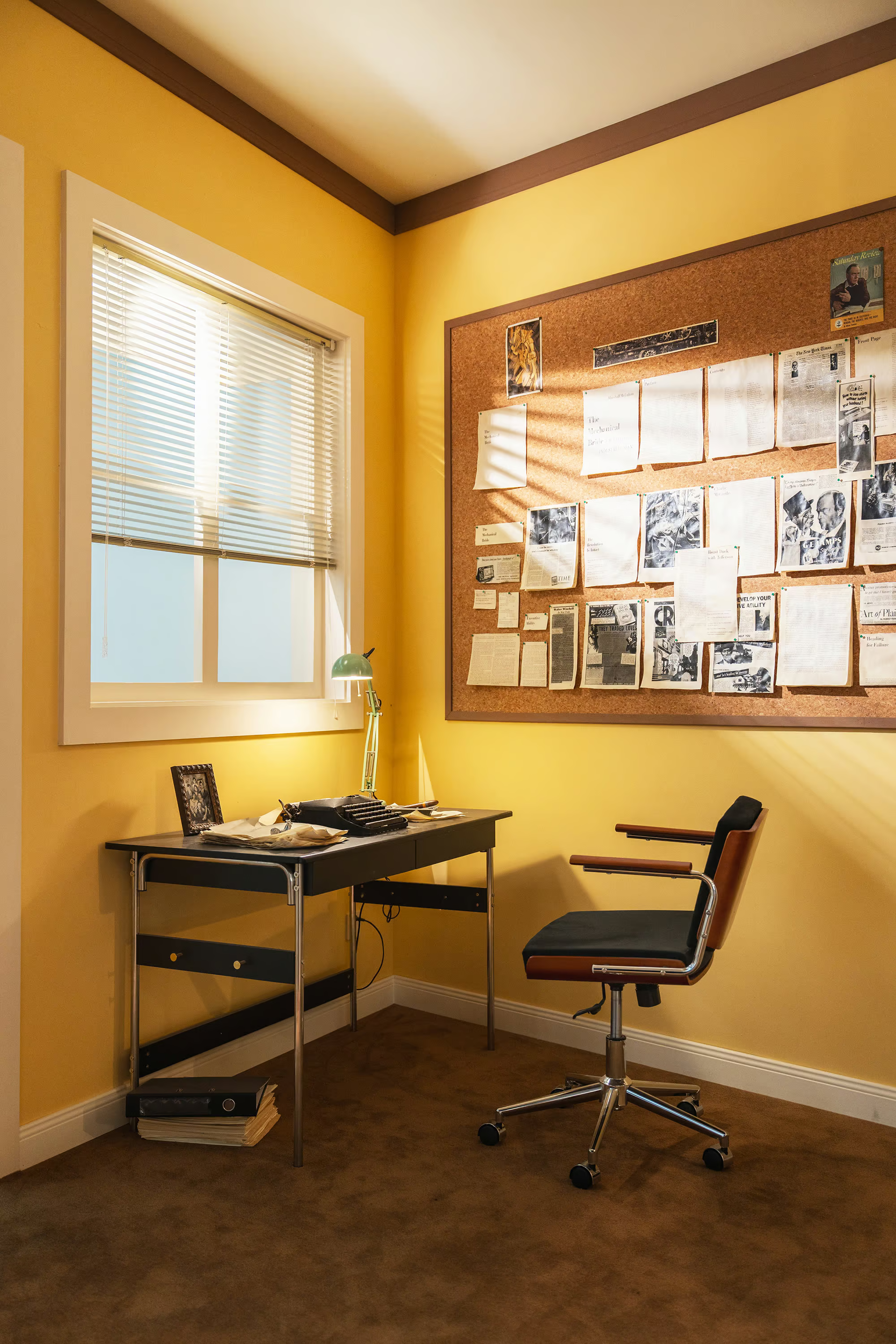
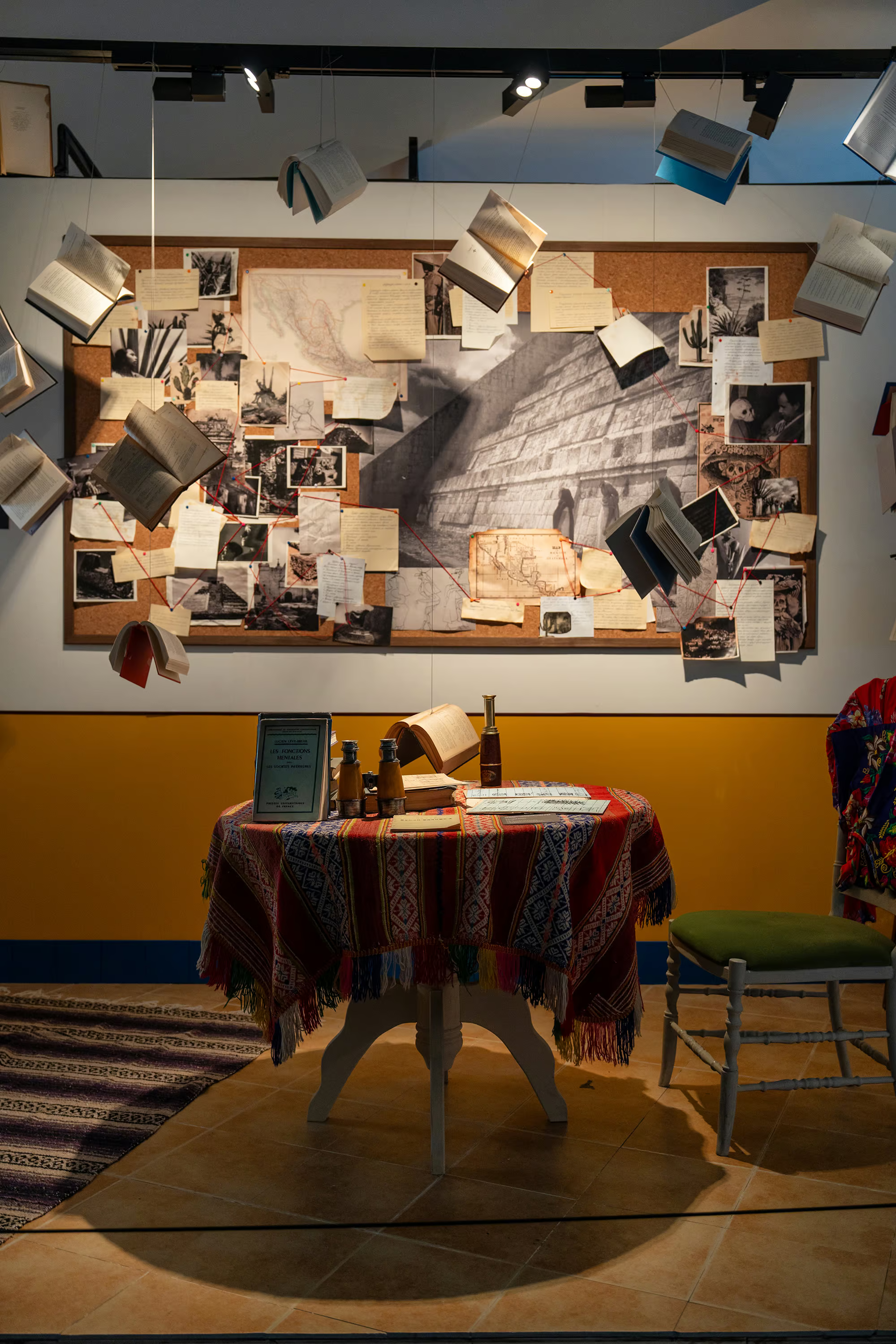
Everything in this post was shot inside the China Academy of Art Museum. Not far from the first-floor entrance, you’ll come across the installation shown in Photo 3. The dim, oppressive lighting creates a fully immersive viewing experience. The piece recreates a study frozen in a bygone era: walls dense with old photographs and manuscript collages, each fragment evoking a different moment in time; the central round table overtaken by documents and materials, as though unfinished work were still quietly underway. Books suspended mid-air, their pages caught in the act of turning, stand in place of any human hand, holding time in suspension and drawing visitors into what feels like an awakened fragment of history and private memory. Nearby hang Swiss reprint posters of two 1940s films: Time in the Sun and ¡Que viva México!
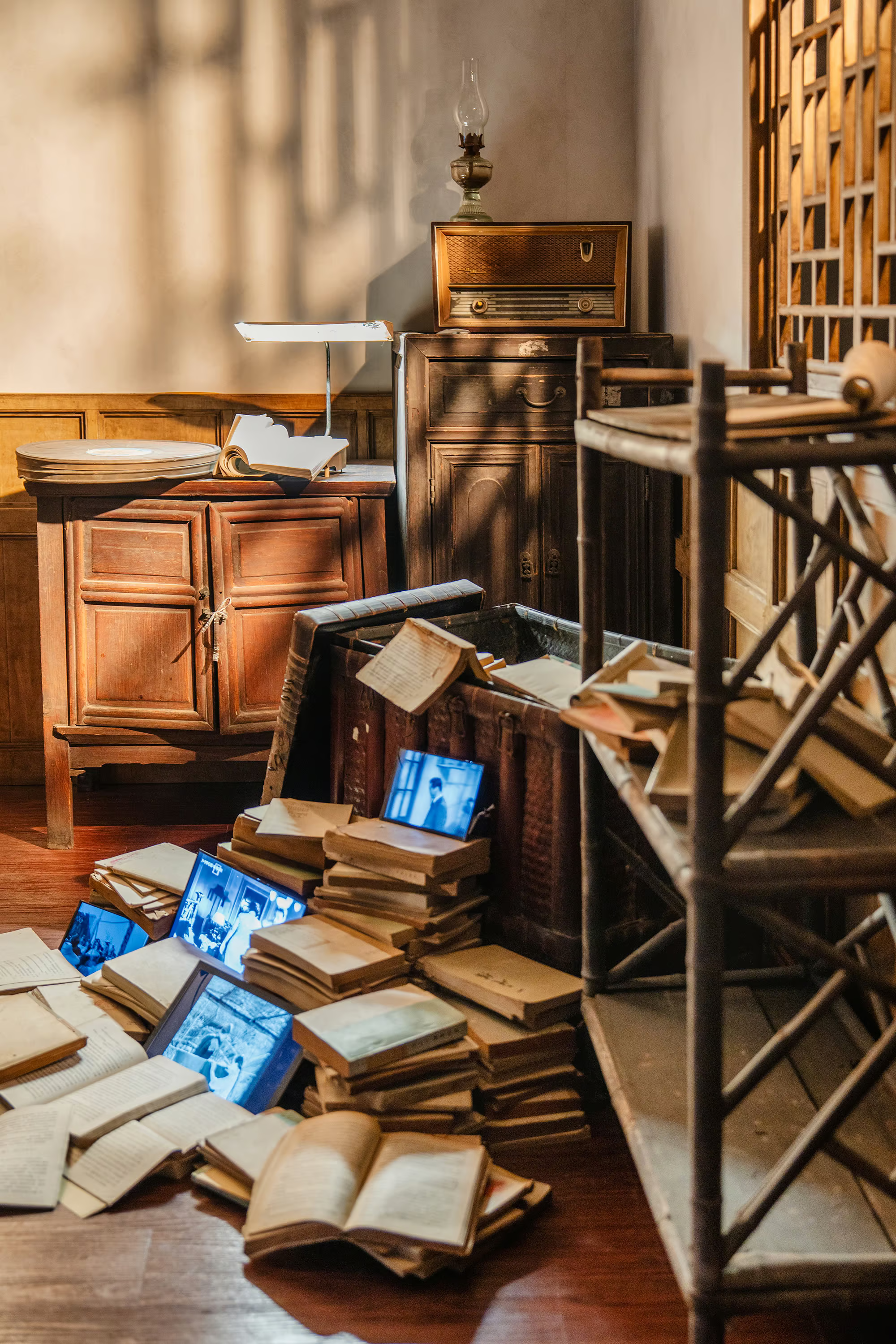
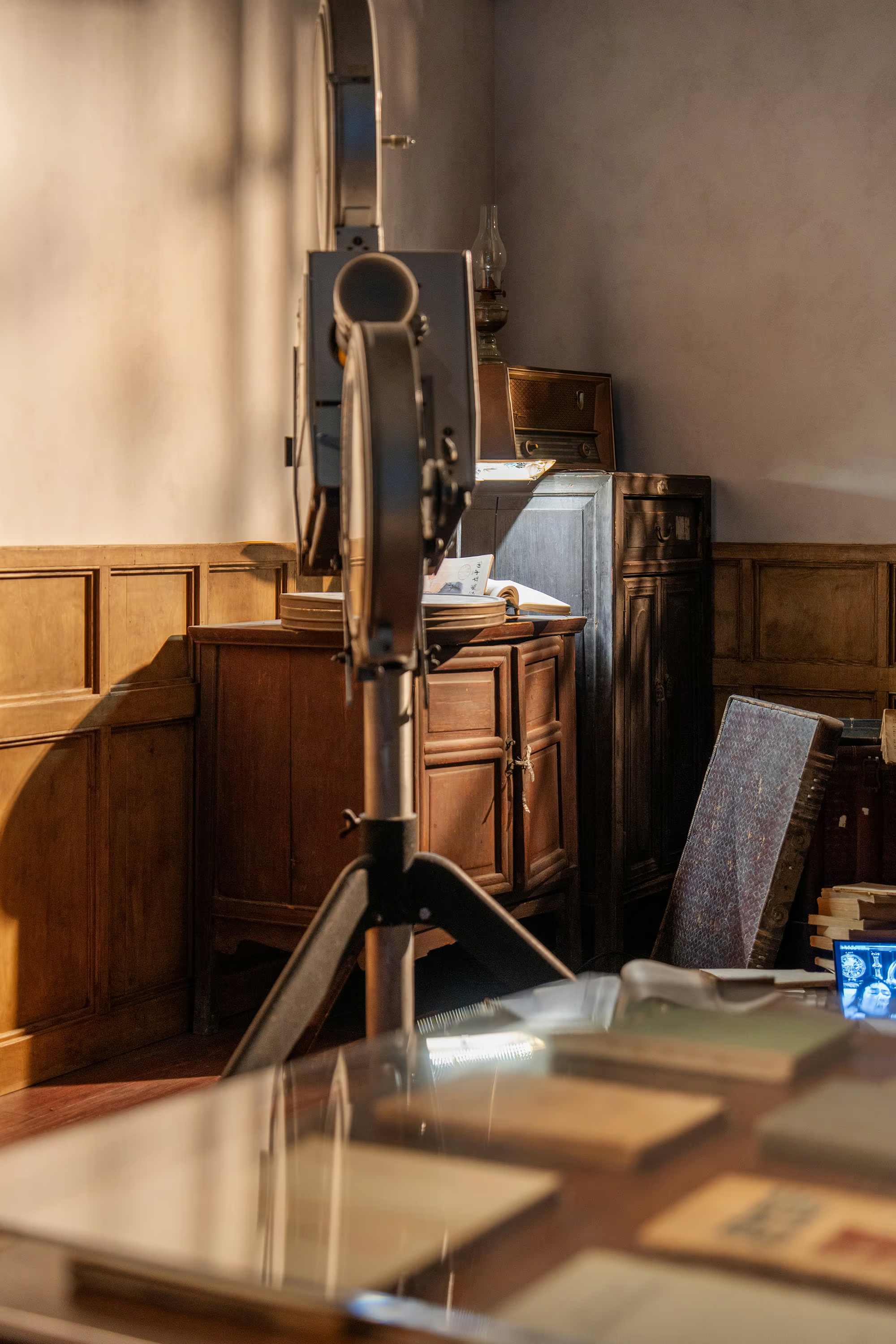
The first two photos are a curated assortment of collectibles on display at this year’s CAA exhibition, including a film projector and a scatter of surrounding ephemera featuring titles such as the four-act play Fangcao Tianya, Gorky’s Selected Works: Mother, Essays on Film, Under the Eaves of Shanghai, Annals of Theatre, The Contract Workers, and the journal Art Monthly. The exhibition across the entire first floor centers broadly on the historical development of montage as a cinematic grammar and on a rethinking of established ideas in film history, approaching an understanding of the origins of human intelligence and nature through the study of sensory stimulation in works of art.
We use cookies to optimize your experience, analyze usage, and personalize content. Your continued browsing indicates consent to our cookie usage and the sharing of site interaction data with our marketing and analytics partners.