Travel & Planning for New Destination Released. Free Shipping to Most Countries Around the World.
Free Shipping to Most Countries Around the World.
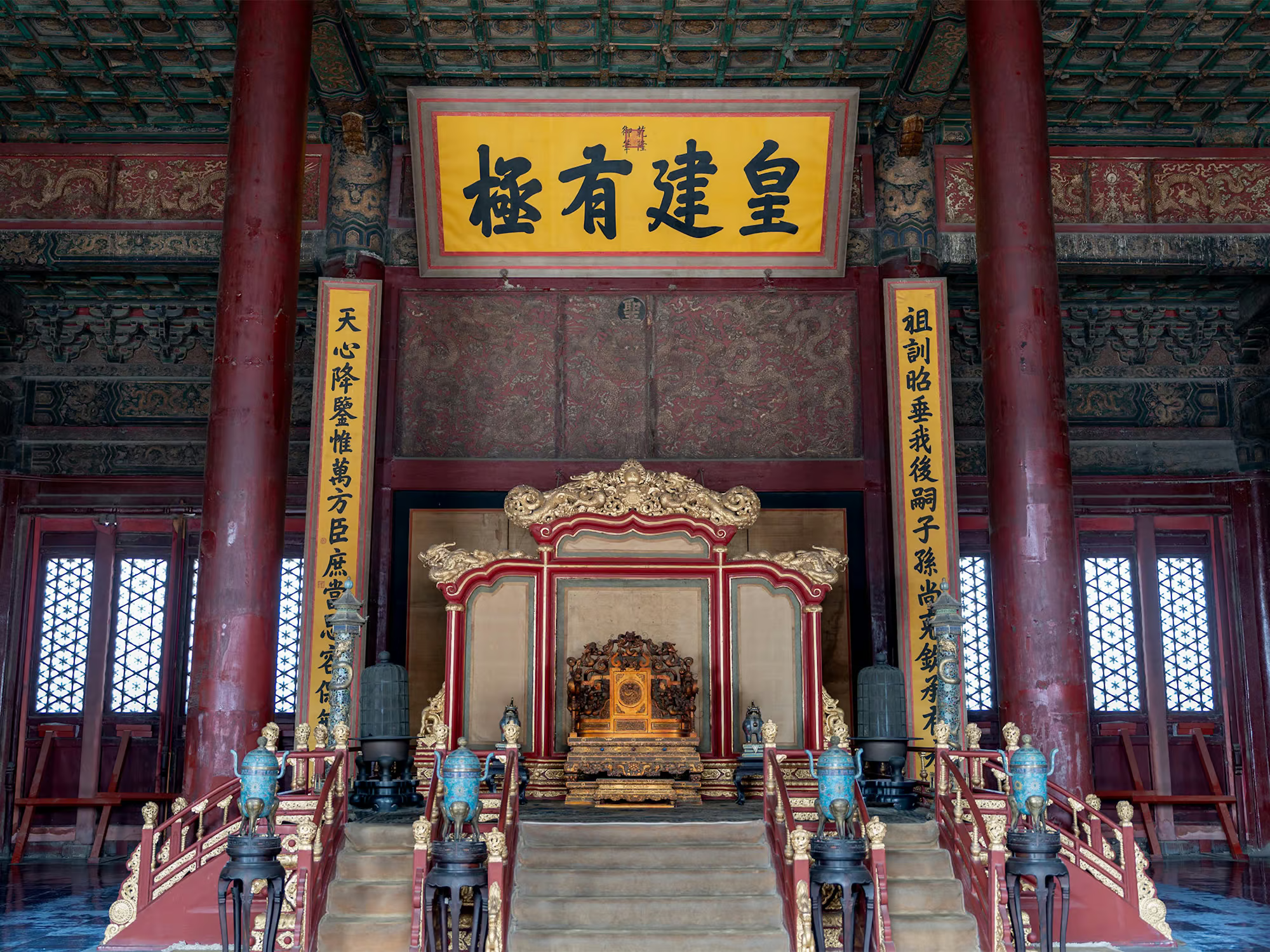
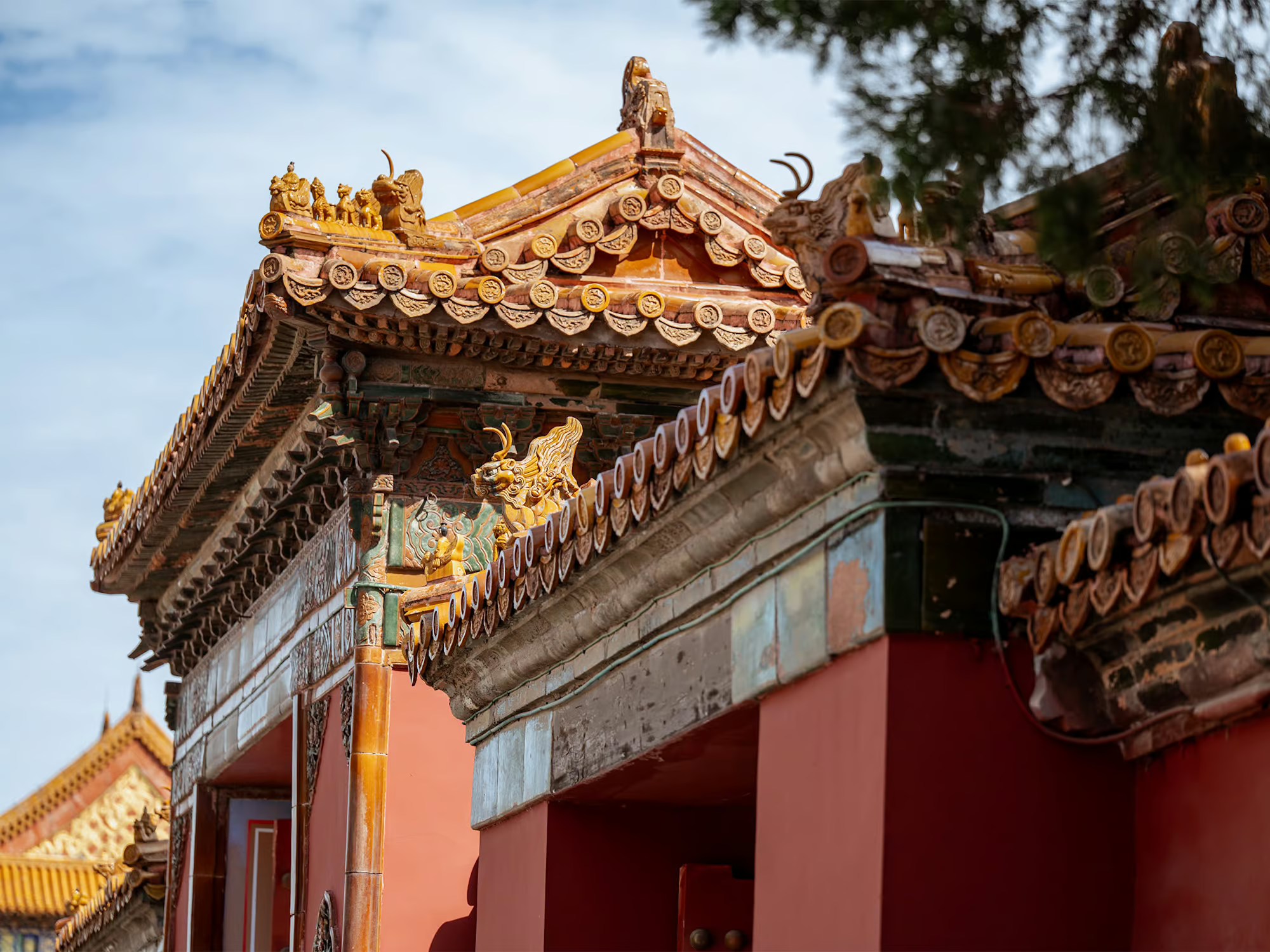
The second photo shows the plaque hanging above the Hall of Preserving Harmony. The four characters, meaning roughly “the sovereign’s rule must stand at the center,” were written by the Qianlong Emperor himself. It’s supposed to express that a ruler must govern along the middle path, impartial and incorruptible. Not sure what everyone thinks of the “Old Man of Perfect Ten” and his calligraphy skills. The role of the Hall of Preserving Harmony shifted over the years. The Shunzhi Emperor once lived here and even held his wedding in this hall. Kangxi lived here too, which is why it was once also called the Palace of Pure Tranquility. By 1789, it had become the venue for the palace examination, the final round of the imperial exam presided over by the emperor himself. Well, the whole empire belonged to him anyway, and there’s only so much of him to go around, so he could live wherever he pleased within his own palace. Even a building of this rank as the Hall of Preserving Harmony was only allowed nine roof ridge beasts, a number chosen to symbolize supreme imperial authority.
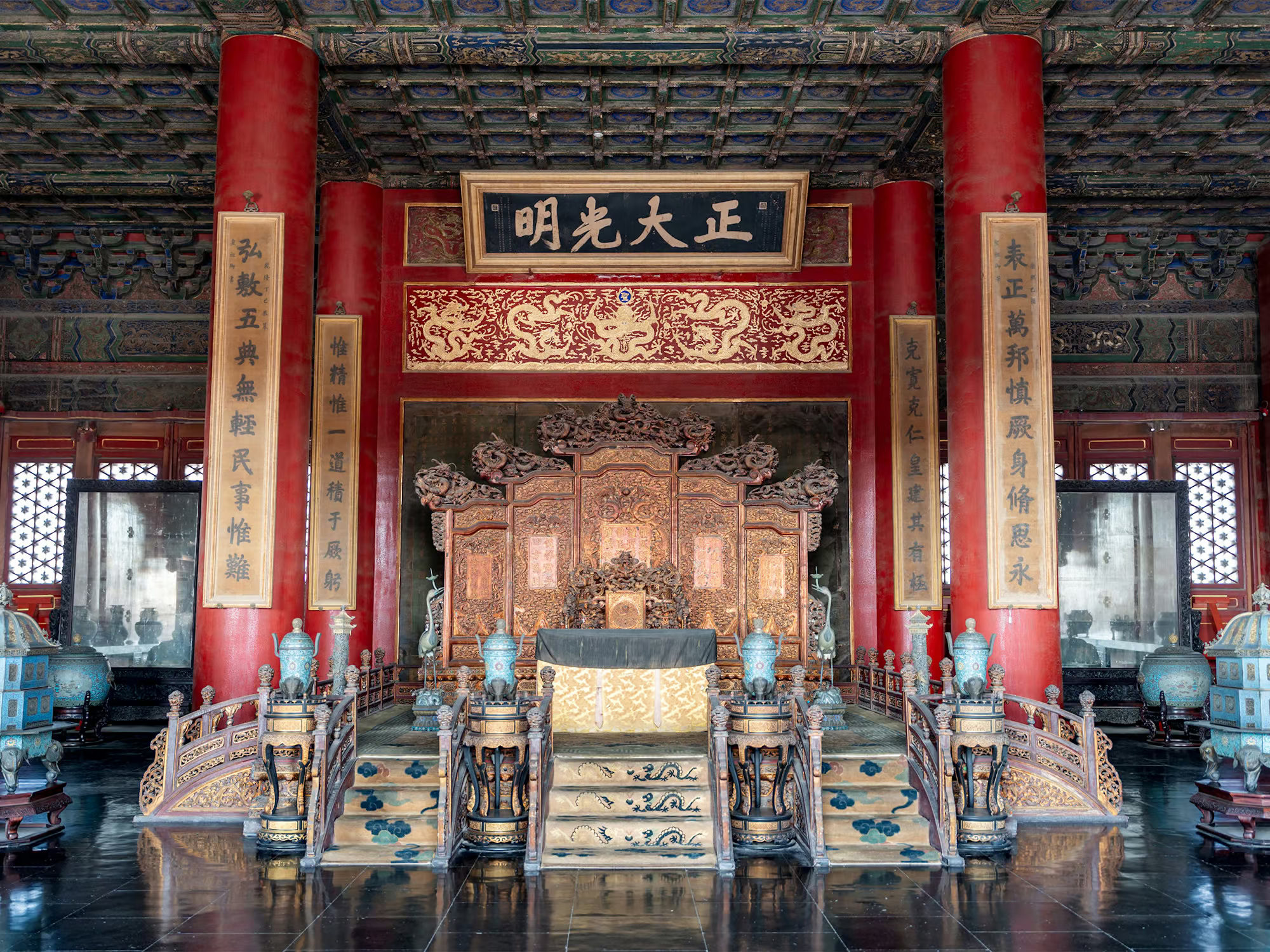
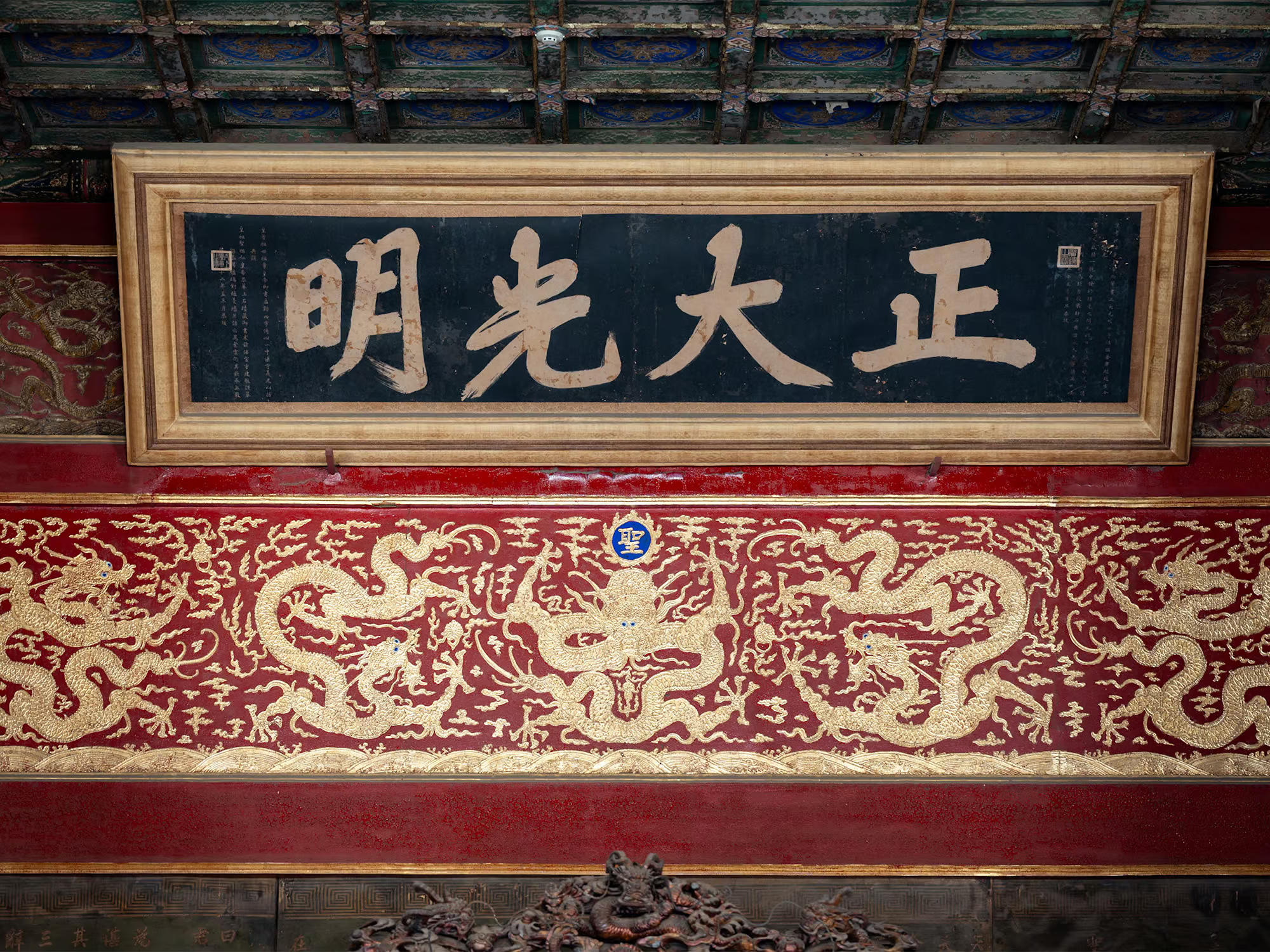
The “Upright and Bright” plaque (zhèng dà guāng míng) hangs in the Palace of Heavenly Purity, written by the Shunzhi Emperor. Curious what people make of his handwriting compared to the emperors who came after him. The function of this plaque has probably been explained to death by period dramas by now: starting with the Yongzheng Emperor, the throne was no longer publicly designated to an heir apparent. Instead, the emperor would write the name of his chosen successor on two identical edicts, one kept by the emperor himself and the other hidden behind this very plaque. Only when both copies matched would the named heir be confirmed as the legitimate successor. The system was originally meant to stop rival candidates from scheming against each other. The irony is that as the Qing Dynasty declined in its later years, even the number of sons an emperor fathered kept shrinking. This was the emperor’s official sleeping quarters, but it was never just a bedroom. It also functioned as an extension of the court itself, where the emperor regularly received close ministers, and many major decisions were made right here. It occasionally hosted grand ceremonies and served as a venue for imperial family banquets. When an emperor passed away, his body would also be temporarily placed here before burial rites. At the entrance to the Palace of Heavenly Purity stand a bronze crane, a bronze tortoise, and a sundial.
Then there’s the actual residence of the Qing emperors from the mid to late dynasty onward: the Hall of Mental Cultivation. It served multiple functions at once, including daily living, handling state affairs, hosting banquets, receiving guests, and being attended to by consorts. Its location was also ideal, sitting diagonally across from the Palace of Heavenly Purity, with the Imperial Kitchen and the Duty office of the Grand Council both close by. Everything you’d need, right within reach.
We use cookies to optimize your experience, analyze usage, and personalize content. Your continued browsing indicates consent to our cookie usage and the sharing of site interaction data with our marketing and analytics partners.