Travel & Planning for New Destination Released. Free Shipping to Most Countries Around the World.
Free Shipping to Most Countries Around the World.
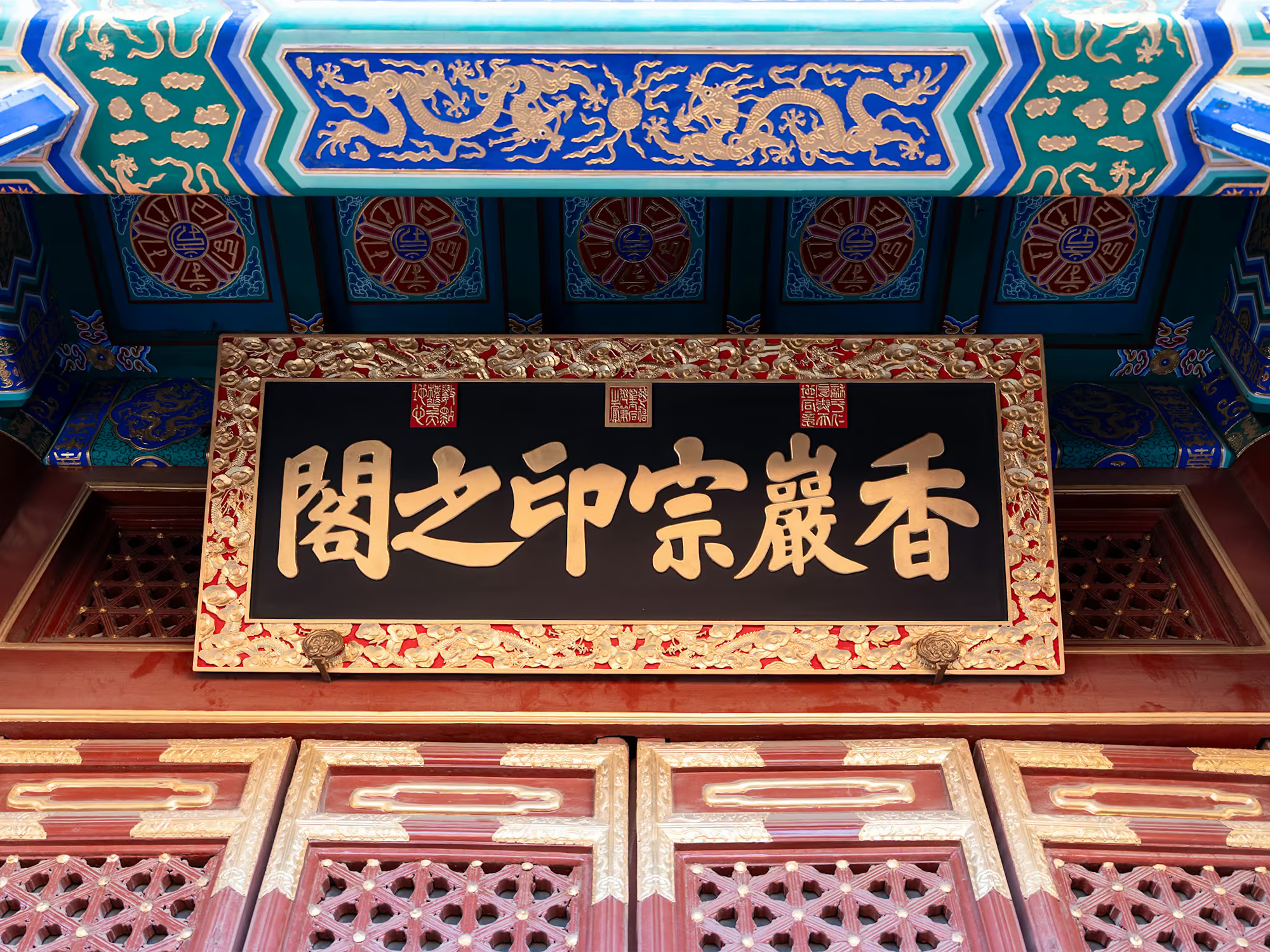
Tower of Buddhist Incense (Foxiang Ge)
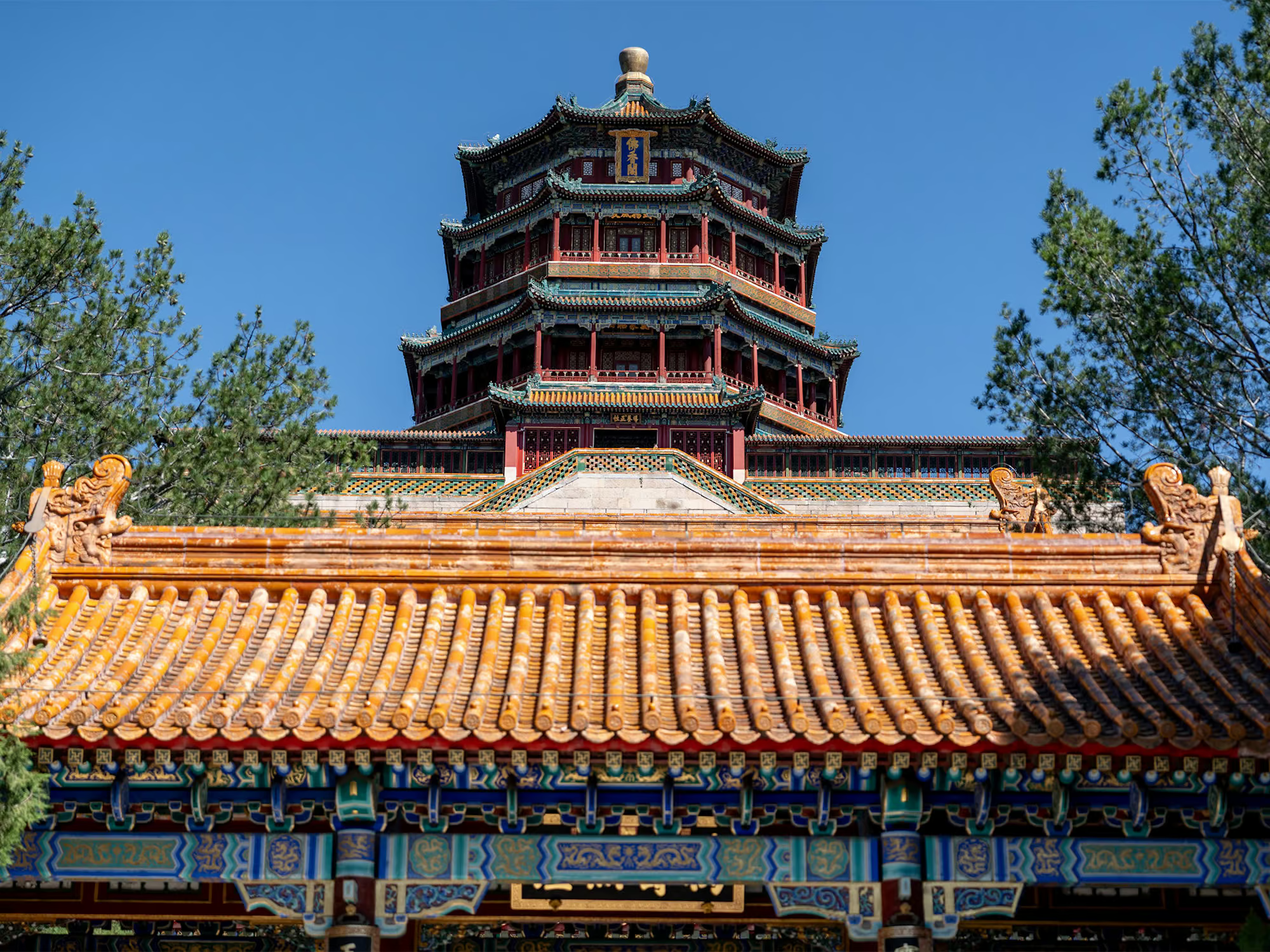
Before the Tower of Buddhist Incense stood here, Emperor Qianlong planned a nine-story Longevity Pagoda for his mother, modeled on the Six Harmonies Pagoda in Hangzhou. Halfway through construction it came down. Some say lightning struck it; others blame weak foundations. Either way, the pagoda became a pavilion and nine stories became three, giving us the octagonal, three-story structure with four tiers of eaves you see today.
Inside, eight enormous ironwood pillars run straight up to the roof. They frame a gilded bronze Thousand-Armed Guanyin. Qianlong’s original was a colossal statue of the Bodhisattva of Great Compassion, burned by Anglo-French troops in 1860. Emperor Guangxu replaced it with a standing clay figure, which was destroyed during the Cultural Revolution. The statue there now is a Ming dynasty bronze cast in the Wanli era, brought over from Ya’er Hutong Primary School in Beijing. Few statues have had such a rough ride.
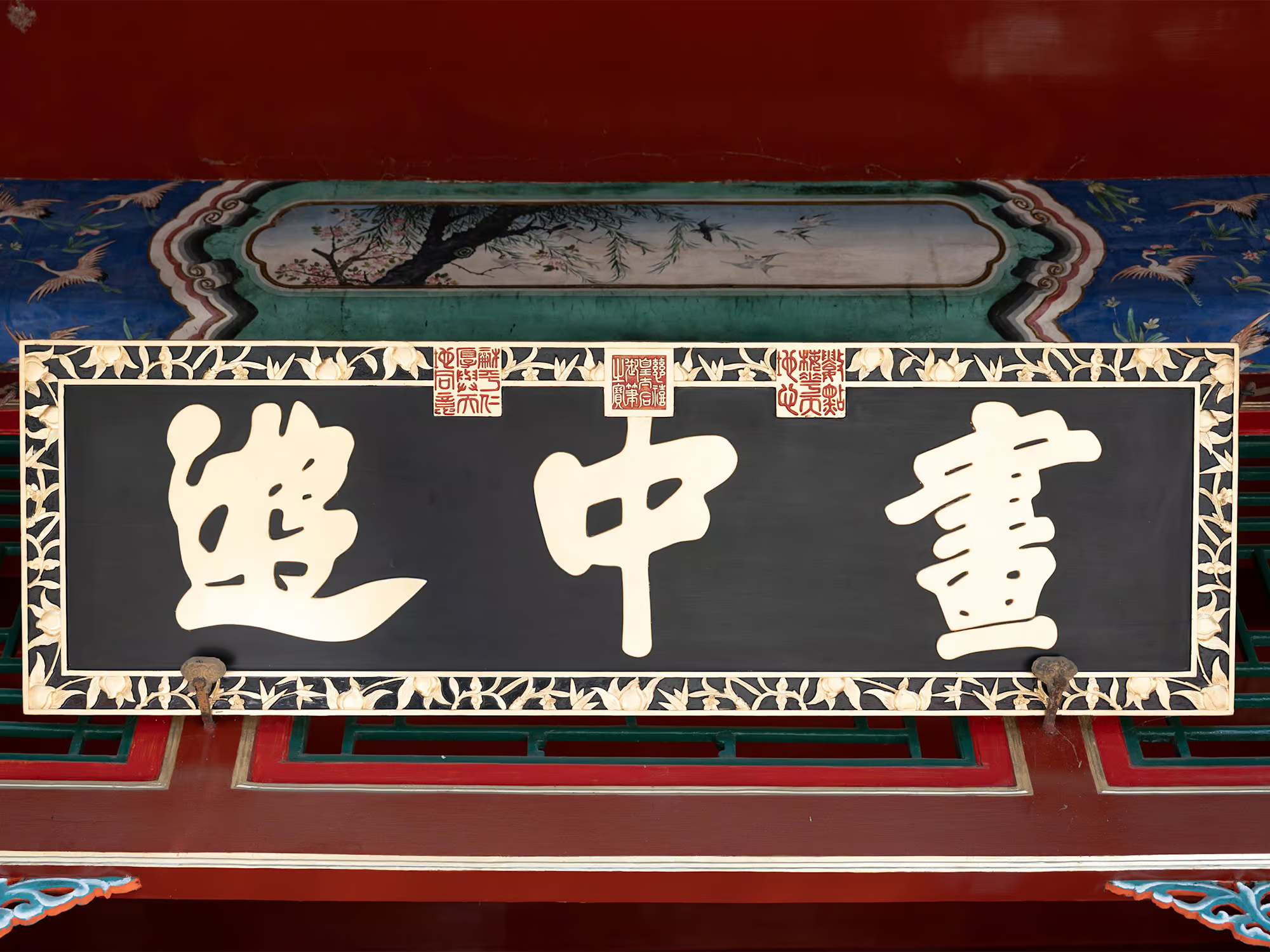
Painting Pavilion (Huazhongyou)
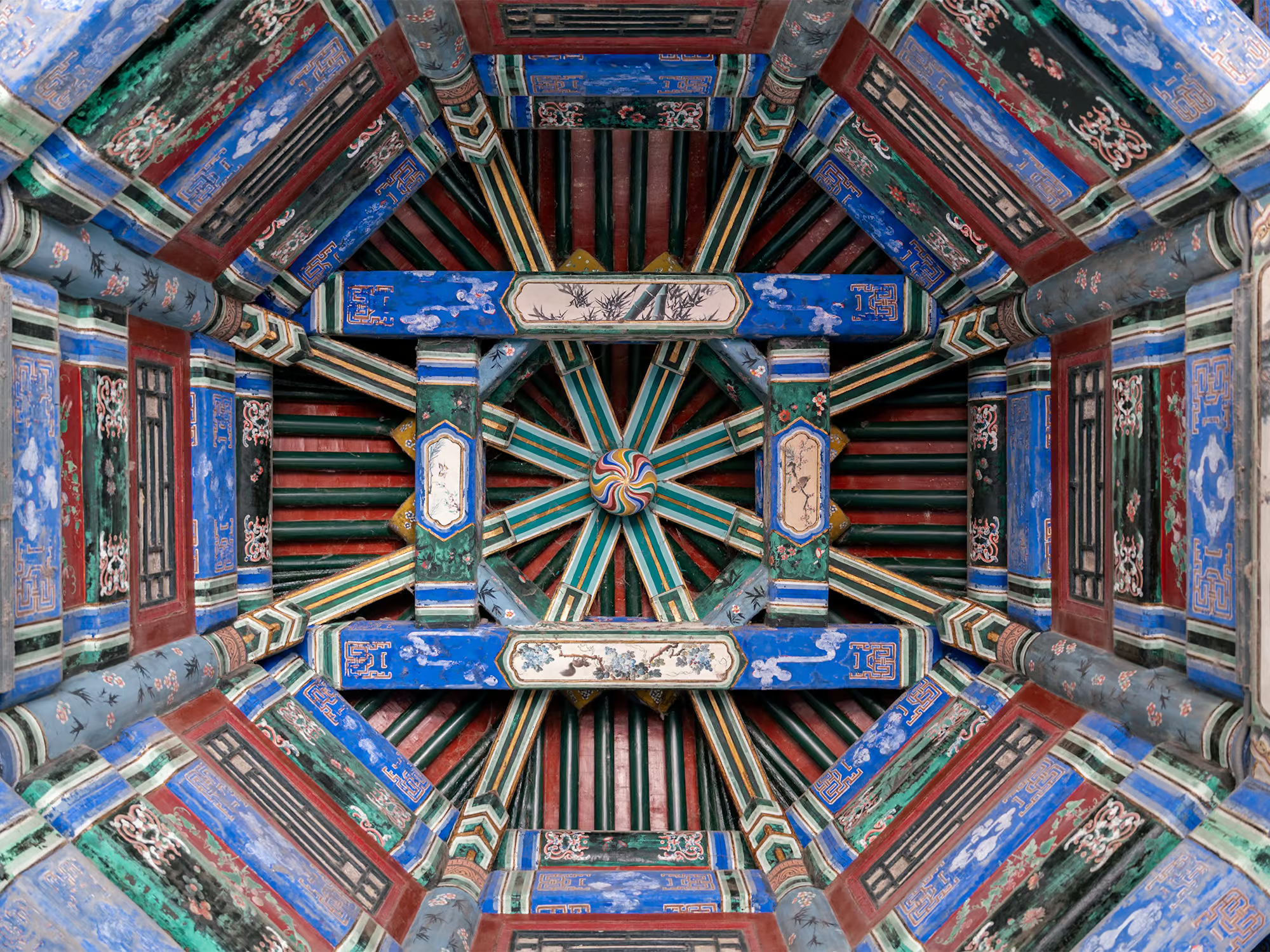
Set high on the hillside, Huazhongyou has some of the best views in the Summer Palace. From the octagonal Chenghui Pavilion you can look out across the wide, misty waters of Kunming Lake. The complex follows the slope of the hill, its buildings linked by winding covered walkways. Red corridors, upturned eaves and glossy dark tiles play off rugged rocks and deep green pines and cypresses. As you walk through, the scenery shifts with every step, like strolling through a landscape scroll, which is exactly how the place earned its name: “Walking in a Painting.”
Built under Qianlong, it is a masterclass in the Chinese garden art of borrowing scenery to create a world. Like the Four Great Continents temple complex, it was burned by Anglo-French forces. What stands today was rebuilt on the original site in the Guangxu era to satisfy Empress Dowager Cixi, reportedly with money diverted from the Beiyang Fleet. That diversion is often blamed for China’s crushing defeat in the First Sino-Japanese War and the humiliating Treaty of Shimonoseki, which ceded Taiwan, the Penghu Islands and the Liaodong Peninsula to Japan.
Hall of Jade Ripples (Yulan Tang)
At Yulan Tang you’ll find a plaque marking it as a site of the 1898 coup. The Hundred Days’ Reform initially had support from the court’s top ranks, Cixi included, but it lasted only about 90 days. Once the reforms threatened the interests of the conservative faction led by Cixi, the movement collapsed, and six reformers were executed that same year at Caishikou in Beijing.
Emperor Guangxu was then confined to Yulan Tang under heavy guard. The puppet emperor died shortly before Cixi herself. Poisoning was long suspected, and forensic tests on his hair later found arsenic far above a lethal dose, confirming he died of arsenic poisoning.
Suggested Walking Route
North Palace Gate → Suzhou Street → Four Great Continents → Huazhongyou → Long Corridor → Tower of Buddhist Incense → Hall of Dispelling Clouds → Spring Heralding Pavilion (Zhichun Ting) → Seventeen-Arch Bridge → New Palace Gate
We use cookies to optimize your experience, analyze usage, and personalize content. Your continued browsing indicates consent to our cookie usage and the sharing of site interaction data with our marketing and analytics partners.