Travel & Planning for New Destination Released. Free Shipping to Most Countries Around the World.
Free Shipping to Most Countries Around the World.
I visited last year, but this time—it was even better! Those who know, know. The exhibition next door at the NRW‑Forum Düsseldorf was a real eye‑opener: fascinating, slightly blush‑inducing, but no heart palpitations, thankfully. The overall show was much larger than the one I saw before – completely re‑curated with new pieces and now extending across both the east and west wings of the building, even spilling over to the far side of the first‑floor restaurant. There was also a market in the basement level, and the museum’s own gift shop has seriously leveled up: the designs are far more refined than last year’s merchandise. Intricate pop‑up cards, delicate ornaments, fans, and other objects carry an unmistakable resonance with East‑Asian aesthetics.
Here are a few of the works that caught my eye:
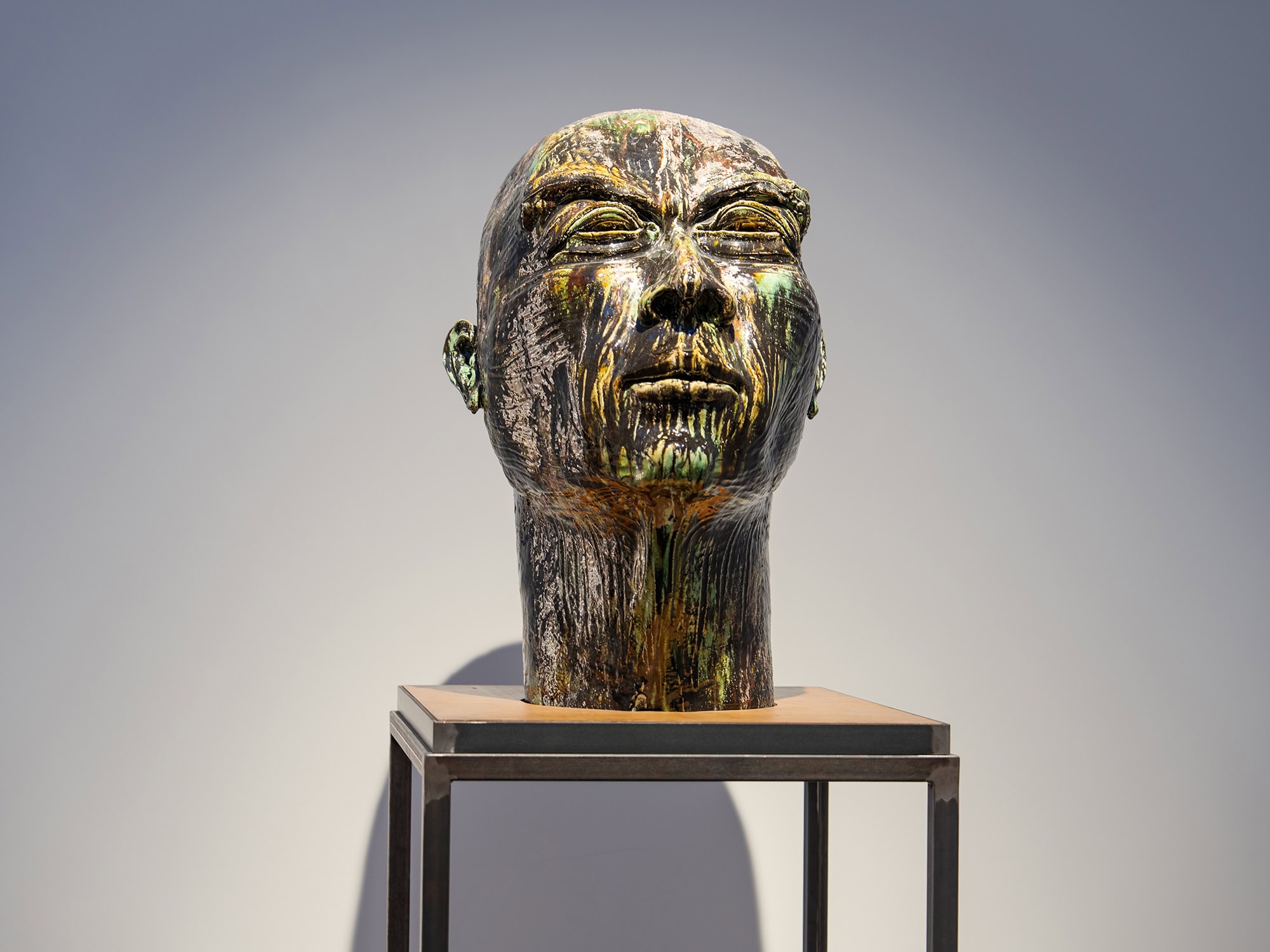
Thomas Schütte – Sculptures
Schütte is a powerhouse of German contemporary art, known for his sculptures, installations, and architectural models; he’s even exhibited at major biennales. Often working in ceramics to resist the polished slickness of industrial production, he studied at the Kunstakademie Düsseldorf and skillfully reinterprets the classical bust—anchoring his figures in physical space without losing their sense of presence or truth.
Jivya Soma Mashe – Untitled
Born into the Warli tribe of India, Mashe grew up within a spiritual tradition that sees humans and nature as intimately, mysteriously connected. The tribe’s stories—of deities, spirits, animals, and people—have long been passed down orally. During festivals, women would paint them onto the clay‑and‑cow‑dung walls of their homes. Mashe was the first artist to bring these Warli visual narratives into the realm of contemporary art and public exhibition, turning ancestral storytelling into a universal language of form and rhythm.
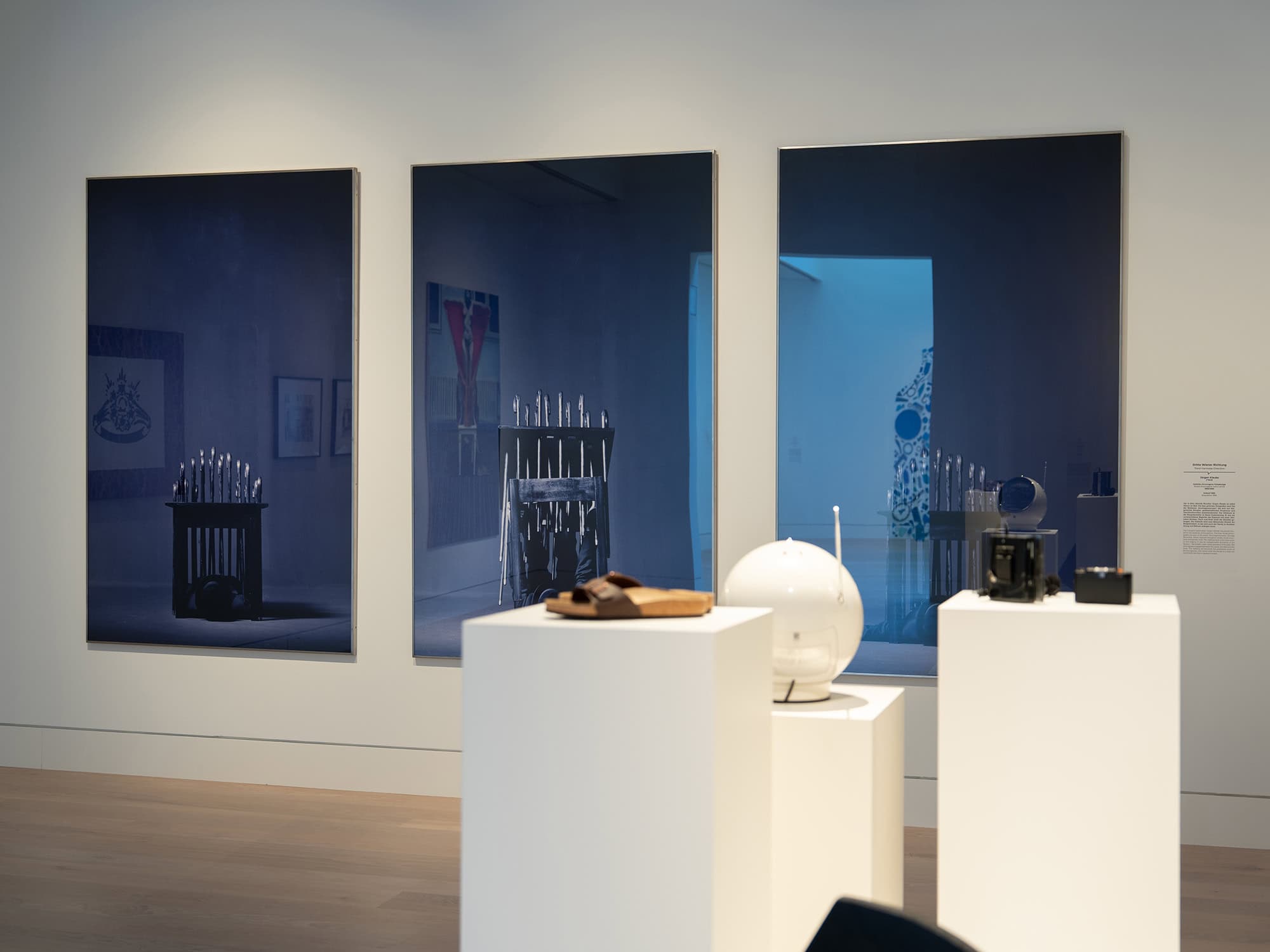
Jürgen Klauke – Third Viennese Direction
The Cologne‑based artist Jürgen Klauke makes himself the protagonist of his own work. These blue‑toned photographs belong to his Sunday Neuroses series, which probes bourgeois rituals, social conventions, and gender identity. At the center stands the walking cane—an indispensable accessory of the once‑respectable middle class. It becomes a symbol of restraint and conformity, the stiff corset of propriety that even the most dapper gentleman, tucked into his tailored suit, cannot quite escape.
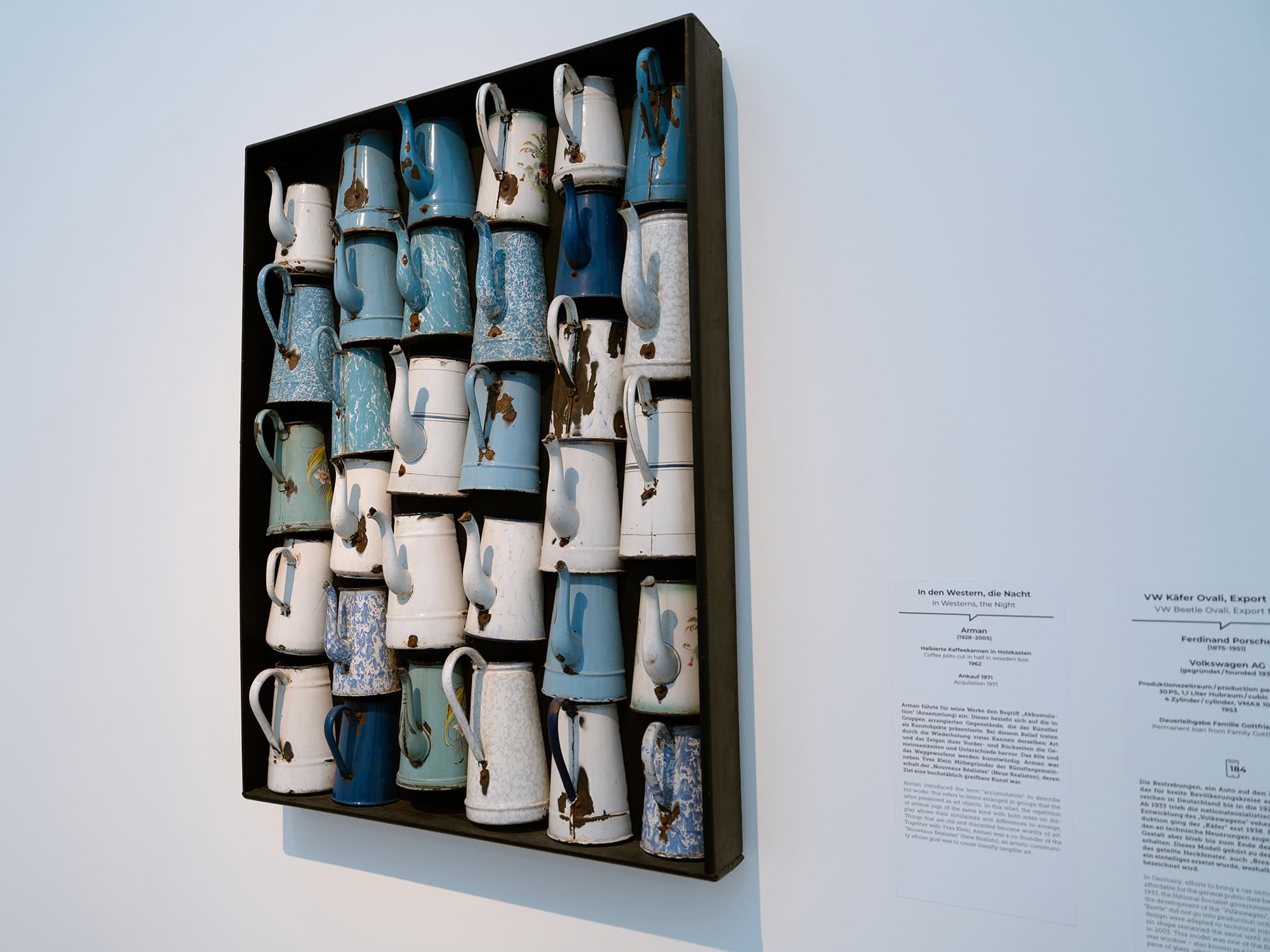
Arman – Coffee Pots Cut in Half in Wooden Box
In this relief, the French‑born artist Arman employs his signature concept of accumulation—assembling multiples of everyday objects into a unified artwork. Here, rows of coffee pots, halved and mirrored front to back, reveal both likeness and difference between the identical forms. What was once old or discarded gains new life as art: a meditation on repetition, consumption, and the quiet poetry of things we overlook.

We use cookies to optimize your experience, analyze usage, and personalize content. Your continued browsing indicates consent to our cookie usage and the sharing of site interaction data with our marketing and analytics partners.