Travel & Planning for New Destination Released. Free Shipping to Most Countries Around the World.
Free Shipping to Most Countries Around the World.
Beihai Park has a remarkably long history and is a classic Chinese imperial garden. Its story goes back to the Liao dynasty. The Jin dynasty carried out the first expansion, and in the Yuan dynasty Kublai Khan enlarged it further, developing it into an imperial palace and royal garden. The Ming kept expanding and restoring it, and the Qing were just as busy, which makes it an imperial “backyard” spanning five dynasties.
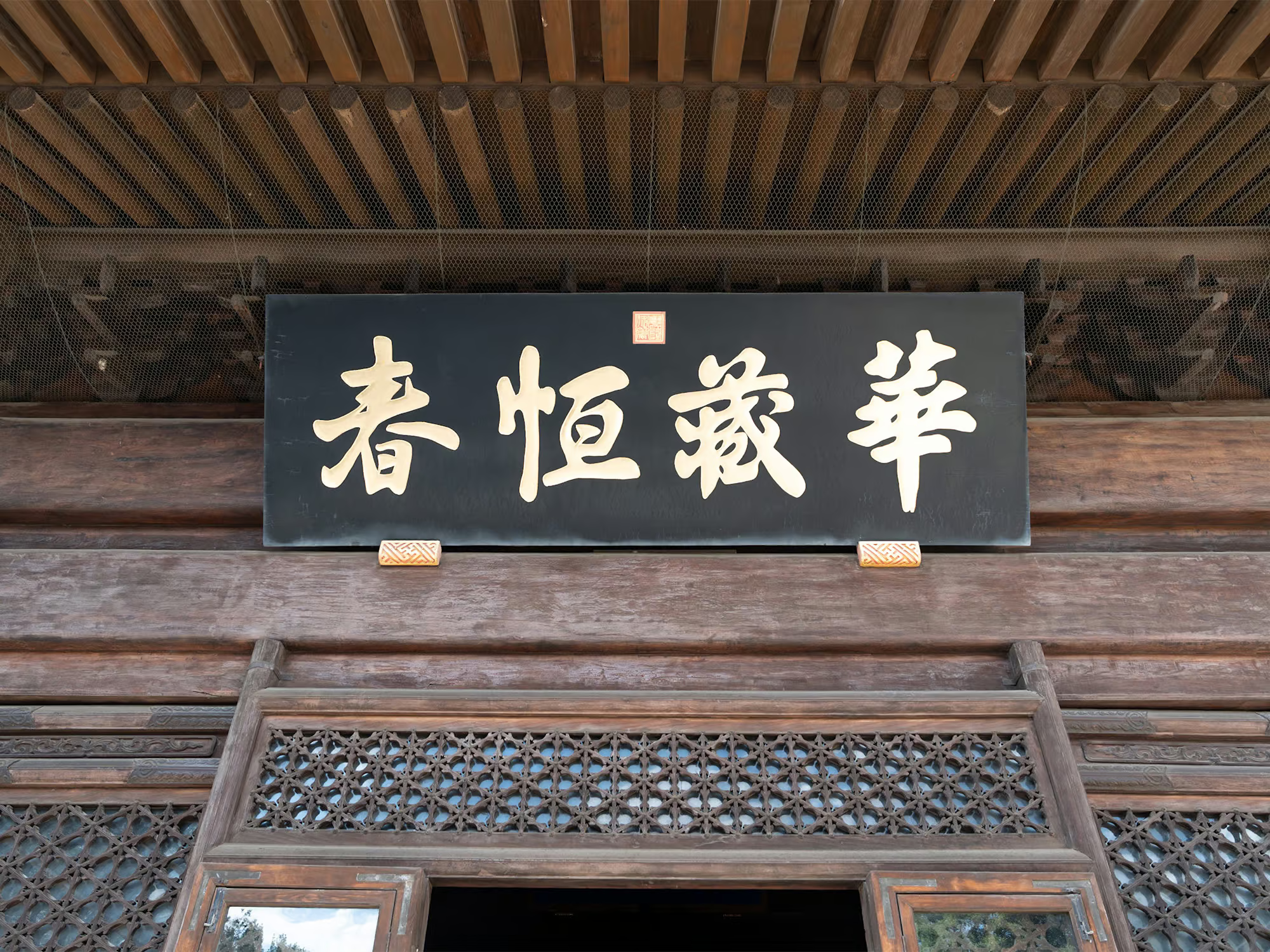
Let’s start with the sights on the north side. Xitian Fanjing, also called Daxitian (the Great Western Heaven), was where Emperor Qianlong prayed and worshipped Buddha. In the Ming dynasty it was a workshop for printing Tibetan Buddhist scriptures, and what you see today dates from Qianlong’s expansion in 1759. The main buildings are roofed with black glazed tiles: in the Five Elements, black stands for water, so the wish to keep fire away is easy to read. The huge pillars all around are made of golden nanmu wood left over from the Ming dynasty. The plaque reading Huazang Hengchun in my photo is said to be in Qianlong’s own calligraphy, wishing the Buddhist Pure Land eternal peace, dignity and beauty.
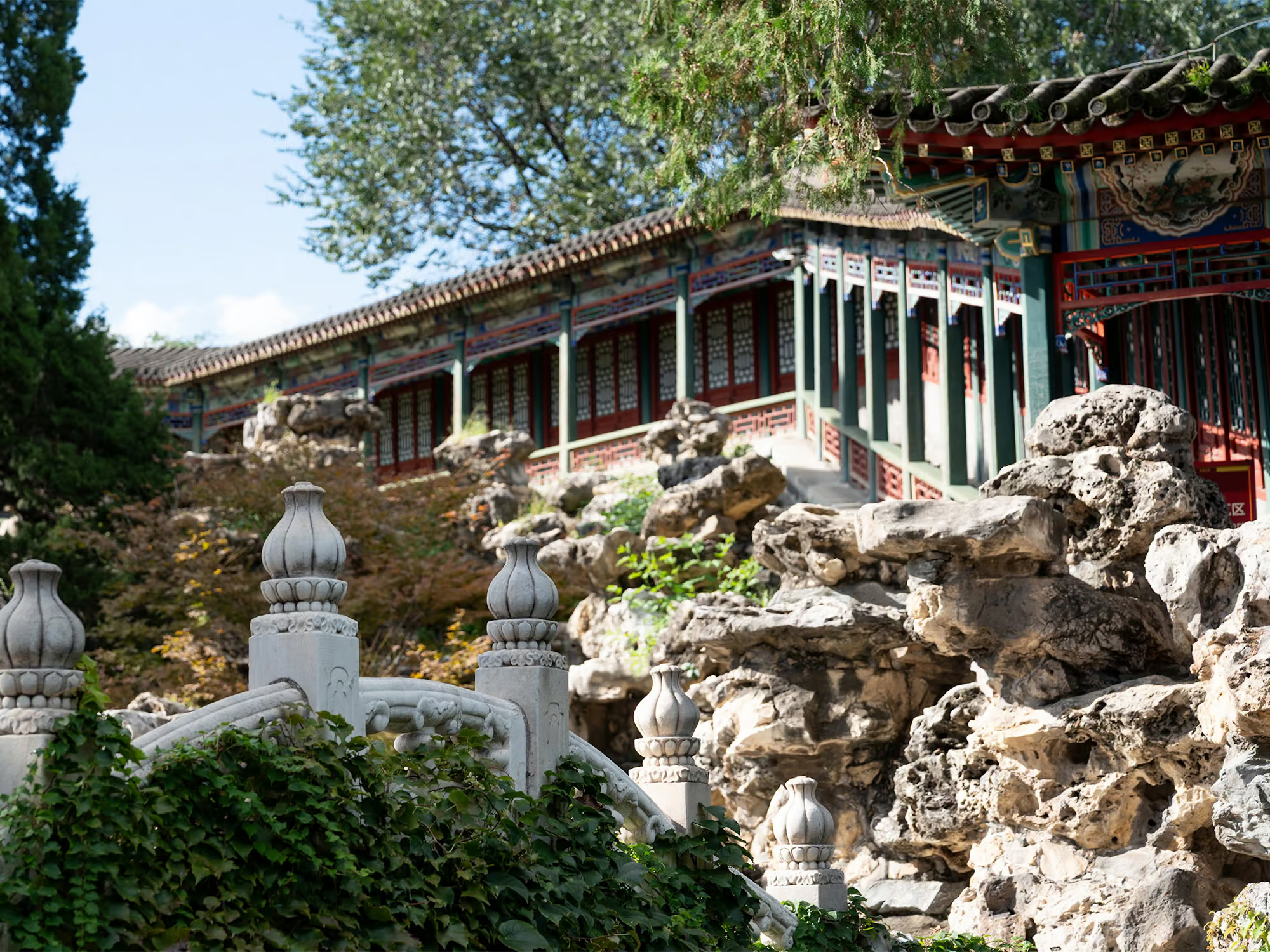
Right next door is the Studio of the Tranquil Heart (Jingxin Zhai), the lovely courtyard in my photos with Taihu rocks and covered walkways, designed after the gardens of southern China. It has had a turbulent past. It began as a study for the crown prince. Later, Empress Dowager Cixi diverted naval funds to build a small train station here so she could come to escape the summer heat. It was damaged by the Eight Nation Alliance, then occupied by the invading Japanese army as a headquarters, and after restoration it served as a banquet venue for the Ministry of Foreign Affairs. It only returned to Beihai Park’s management in 1980.
Keep walking west along the lake and you’ll reach the Nine Dragon Wall, the only double sided one in China and a must see in Beijing. In my opinion it’s even more worth your time than the Nine Dragon Wall at the Forbidden City’s Treasure Gallery, because this one has dragons on both sides.
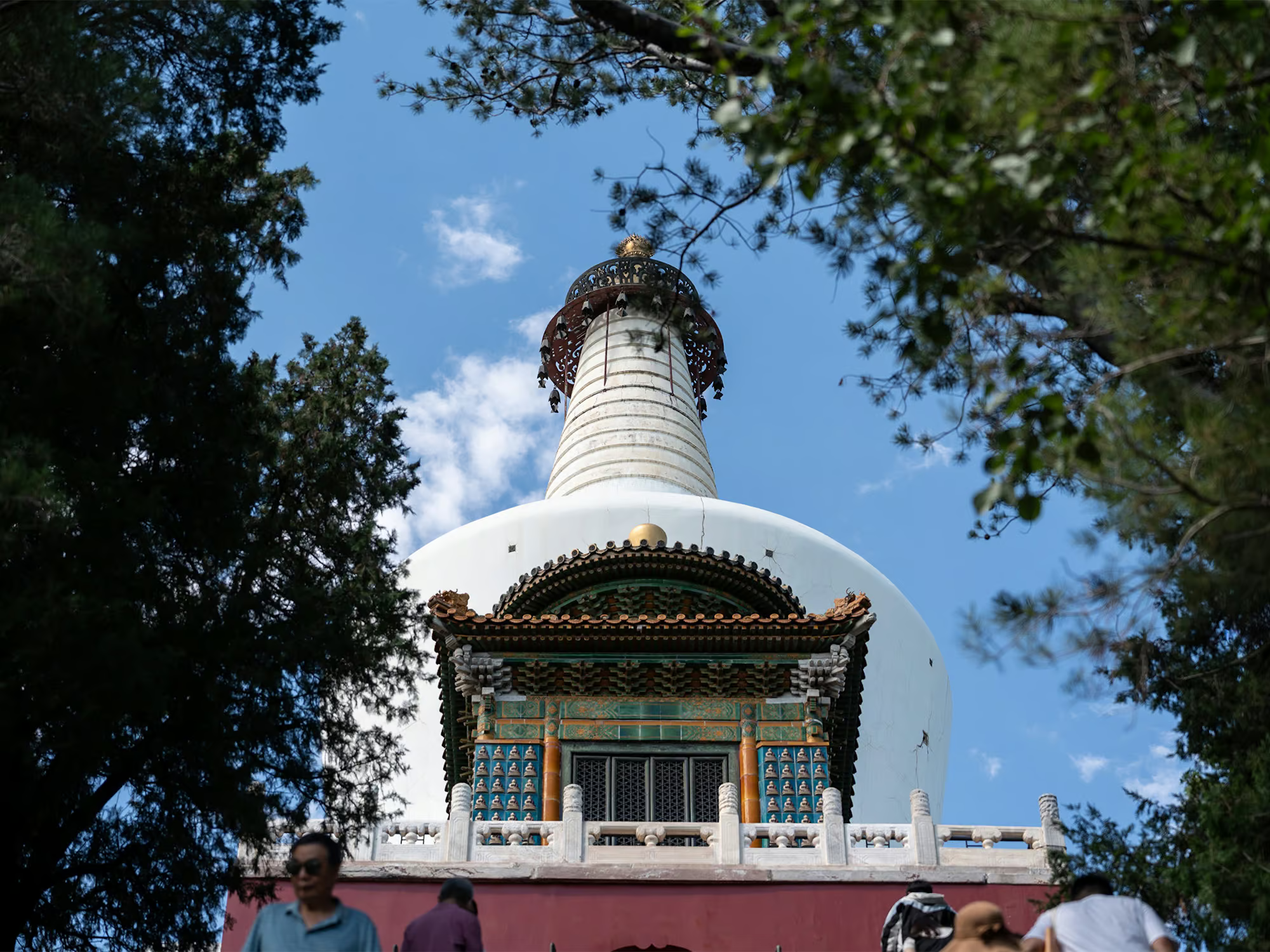
The other highlight of Beihai Park is the iconic White Dagoba on Jade Flower Island (Qionghua Island). You can take a boat over from near the Five Dragon Pavilions or walk there. To get right up to the base of the dagoba, you’ll need a ticket for Yong’an Temple. The White Dagoba is built in a Tibetan style, and the name Qionghua means elegant splendor, as if such a pagoda could only exist in a fairyland. For anyone putting together a list of things to do in Beijing, this lakeside view belongs near the top.
During my visit there happened to be a Guizhou themed market, with Miao silver jewelry, Shui script, beef rice noodles, grilled pork intestines and intangible heritage tie dye. It felt like being teleported to Guizhou in an instant. It ran until September 8 near the Beihai Royal Post Station, so keep an eye out for similar pop up markets when you go.
We use cookies to optimize your experience, analyze usage, and personalize content. Your continued browsing indicates consent to our cookie usage and the sharing of site interaction data with our marketing and analytics partners.