Travel & Planning for New Destination Released. Free Shipping to Most Countries Around the World.
Free Shipping to Most Countries Around the World.
If you know a bit about Buddhism, you’ve probably heard of the four continents of Buddhist cosmology: Purvavideha in the east, Aparagodaniya in the west, Jambudvipa in the south, and Uttarakuru in the north. In Journey to the West, Sun Wukong hails from Purvavideha, while Puti Zushi’s Lingtai Fangcun Mountain retreat sits in Aparagodaniya, and Jambudvipa is where humankind lives. Behind Longevity Hill at the Summer Palace, the Four Great Continents complex brings this Buddhist worldview to life through a striking blend of Han and Tibetan architecture. Tibetan Buddhism was always held in high regard by the Qing rulers, something you can also see reflected in temples like Yonghegong.
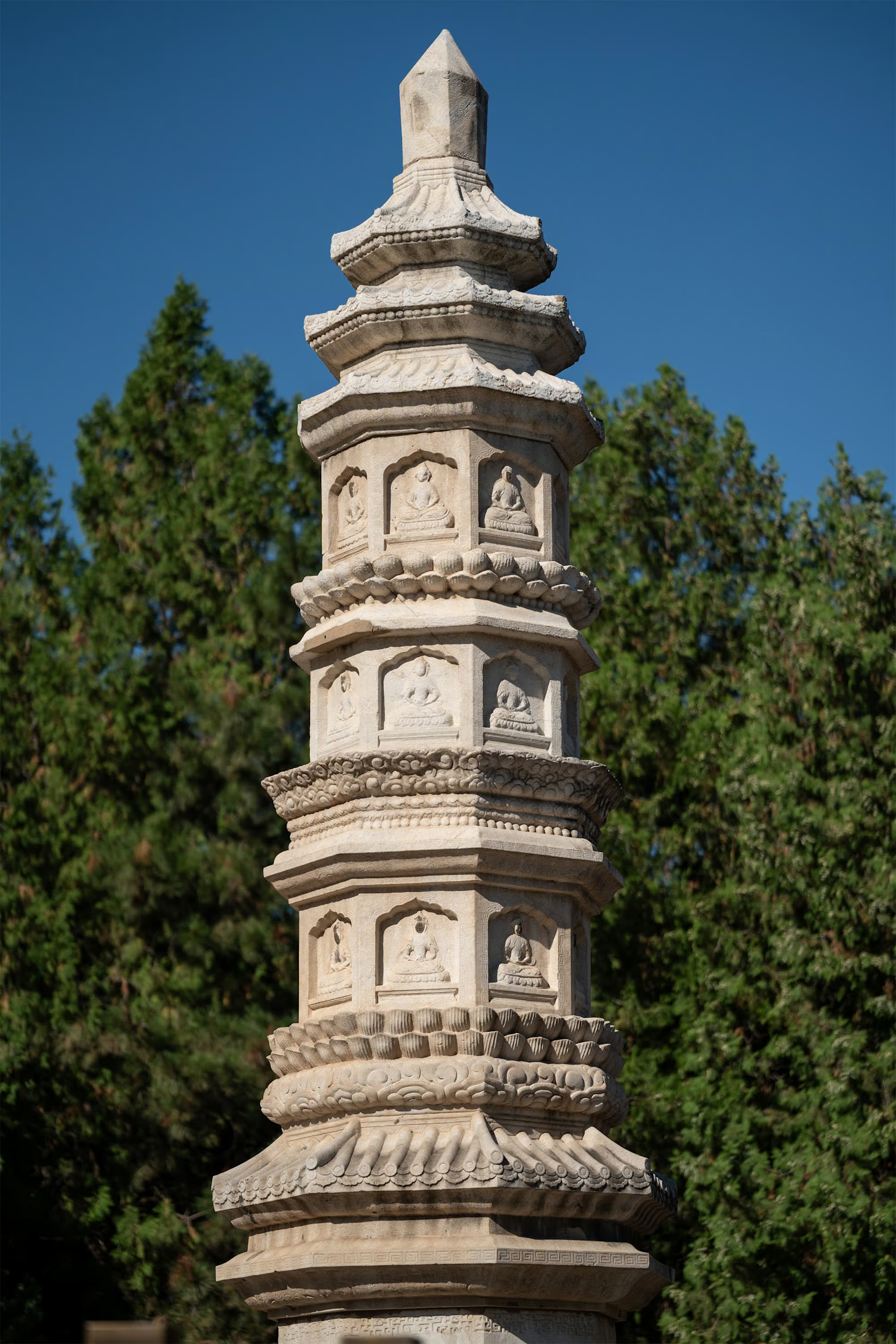
The complex is split into an upper and lower half. The upper section is unmistakably Tibetan in style just from the exterior, while the lower half follows Han Chinese temple conventions. At the very center of the upper section sits the Xiangyan Zongyin Pavilion, standing in for Mount Sumeru, the mythical center of the universe. The sloped-roof buildings surrounding it on all four sides represent the four continents. The current central hall was rebuilt by the Guangxu Emperor on the original site after the Anglo-French forces burned it down. The version built earlier under the Qianlong Emperor was actually taller and grander, since the whole complex was modeled almost exactly on Tibet’s Samye Monastery. We know it was scaled down afterward because Chengde’s Puning Temple, built during the same period as a copy of the same Samye Monastery, still has its central hall, the Mahayana Pavilion, at the original height and scale.
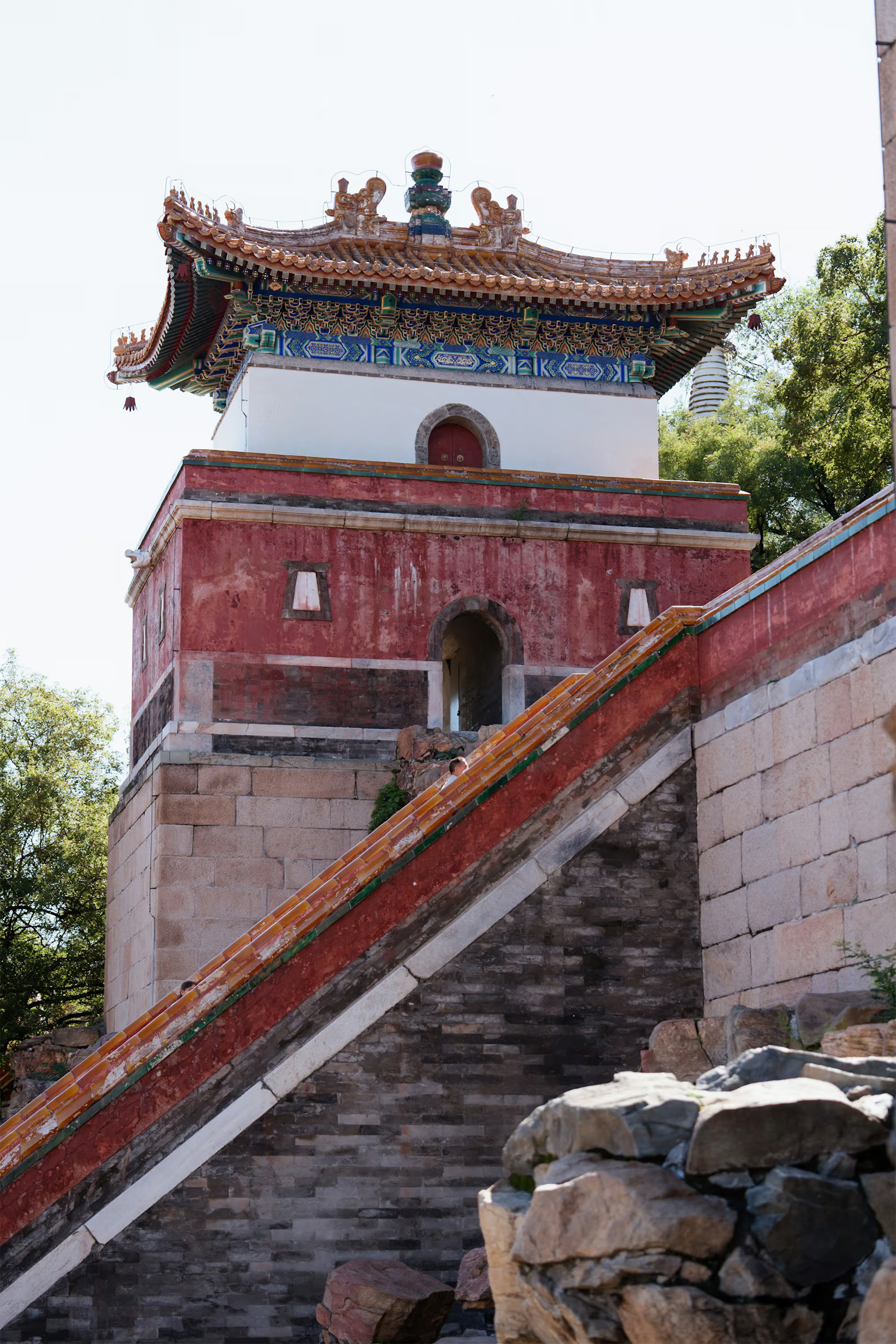
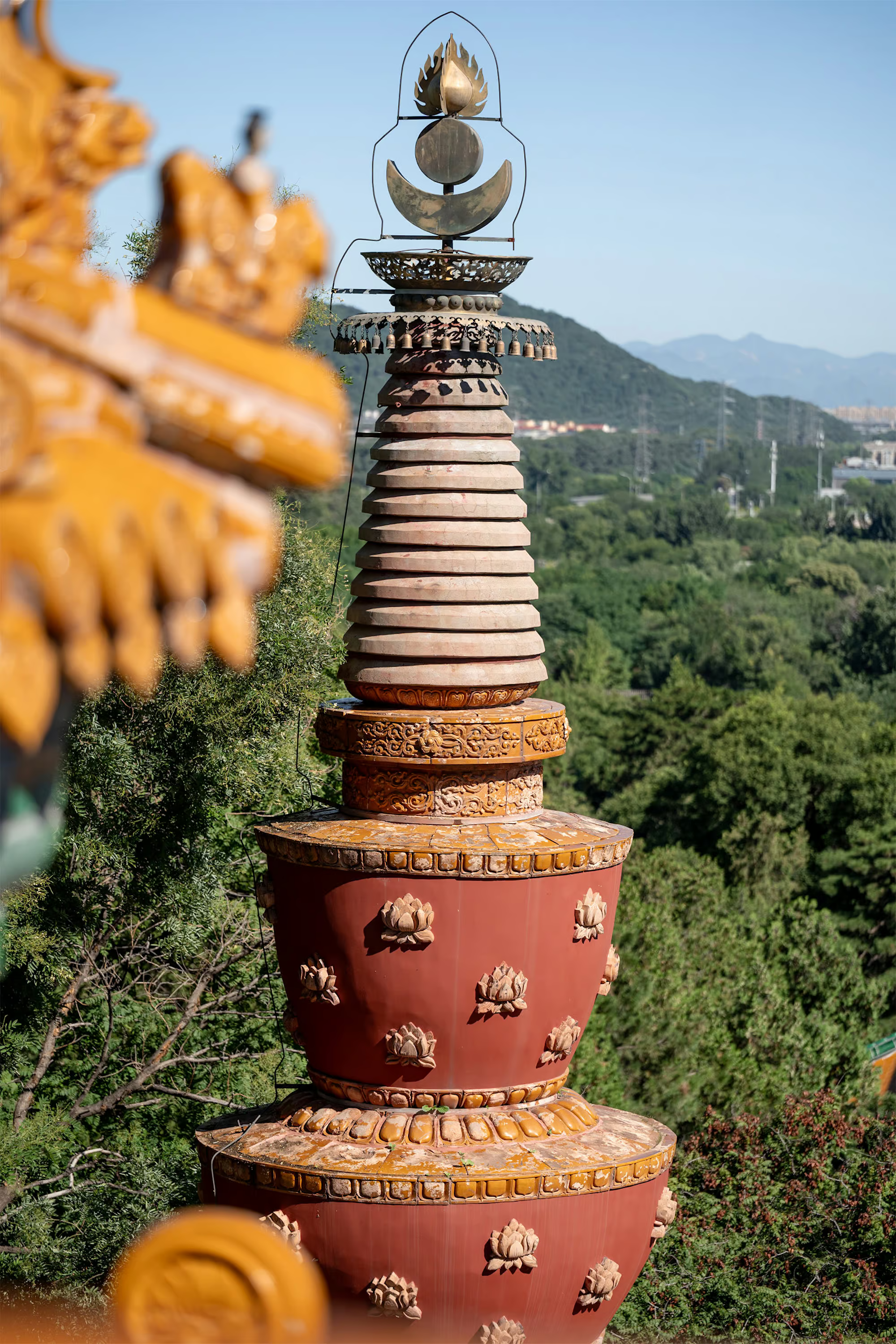
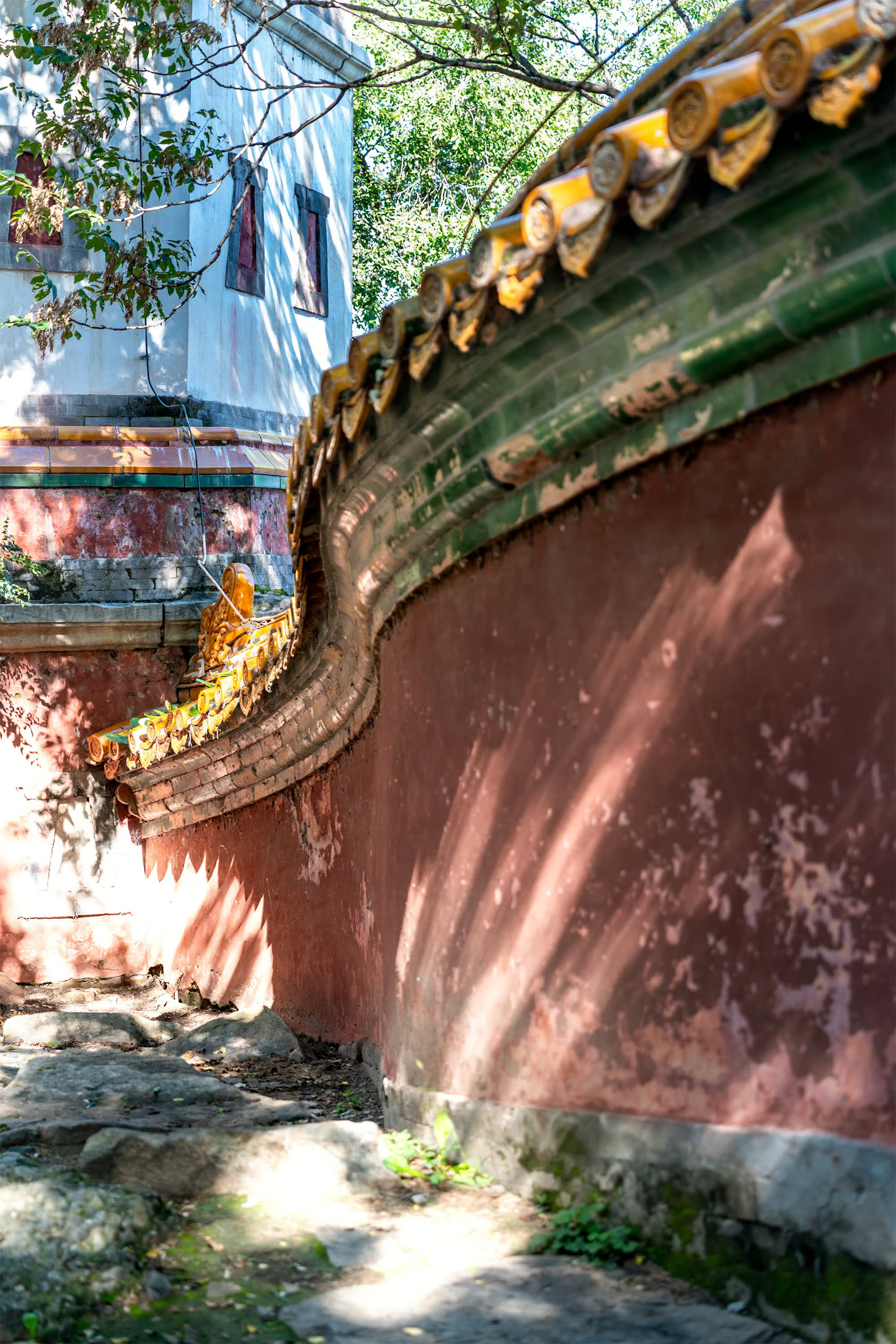
Four lama pagodas, in red, white, black, and green, stand at the four corners of the Tibetan-style section, representing fire, wind, earth, and water. The first photo actually shows two buildings, mirrored left and right: the Sun Hall and the Moon Hall, symbolizing the sun and moon above Mount Sumeru. The wall in the last photo represents the mythical Iron Wall Mountain that marks the edge of the world. The stories behind Tibetan Buddhism are genuinely fascinating. Learning even a little goes a long way.
Due to limited space, the Han-style section skips the traditional temple elements like the mountain gate, the Hall of Heavenly Kings, and the bell and drum towers, keeping only the main hall and two side halls. The “Cifu” archway on the north side serves as the entrance.
We use cookies to optimize your experience, analyze usage, and personalize content. Your continued browsing indicates consent to our cookie usage and the sharing of site interaction data with our marketing and analytics partners.