Travel & Planning for New Destination Released. Free Shipping to Most Countries Around the World.
Free Shipping to Most Countries Around the World.
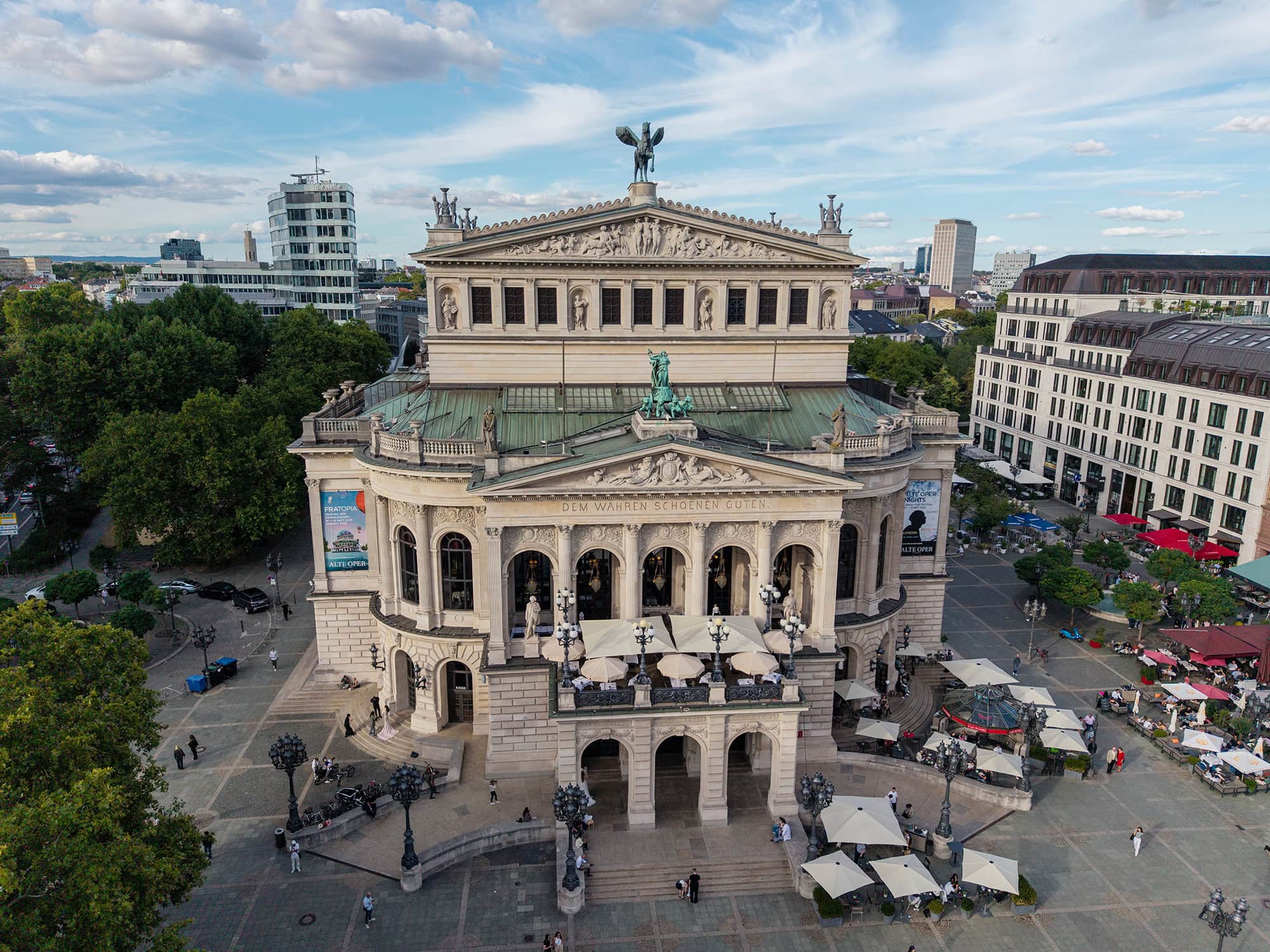
Drawn first by its beauty, devoted then to its history — this magnificent edifice has long been the apple of my eye in Frankfurt. Its façade is sculptural in precision, where classical columns stand in elegant harmony with ornate, richly worked decoration. Yet the Alte Oper is far more than a concert hall; it is a living space for encounters and exchange — a place that encourages experimentation and the breaking of convention. It is a space for listening, but also for participating, engaging, and fully immersing oneself. It belongs as much to reason as it does to emotion.
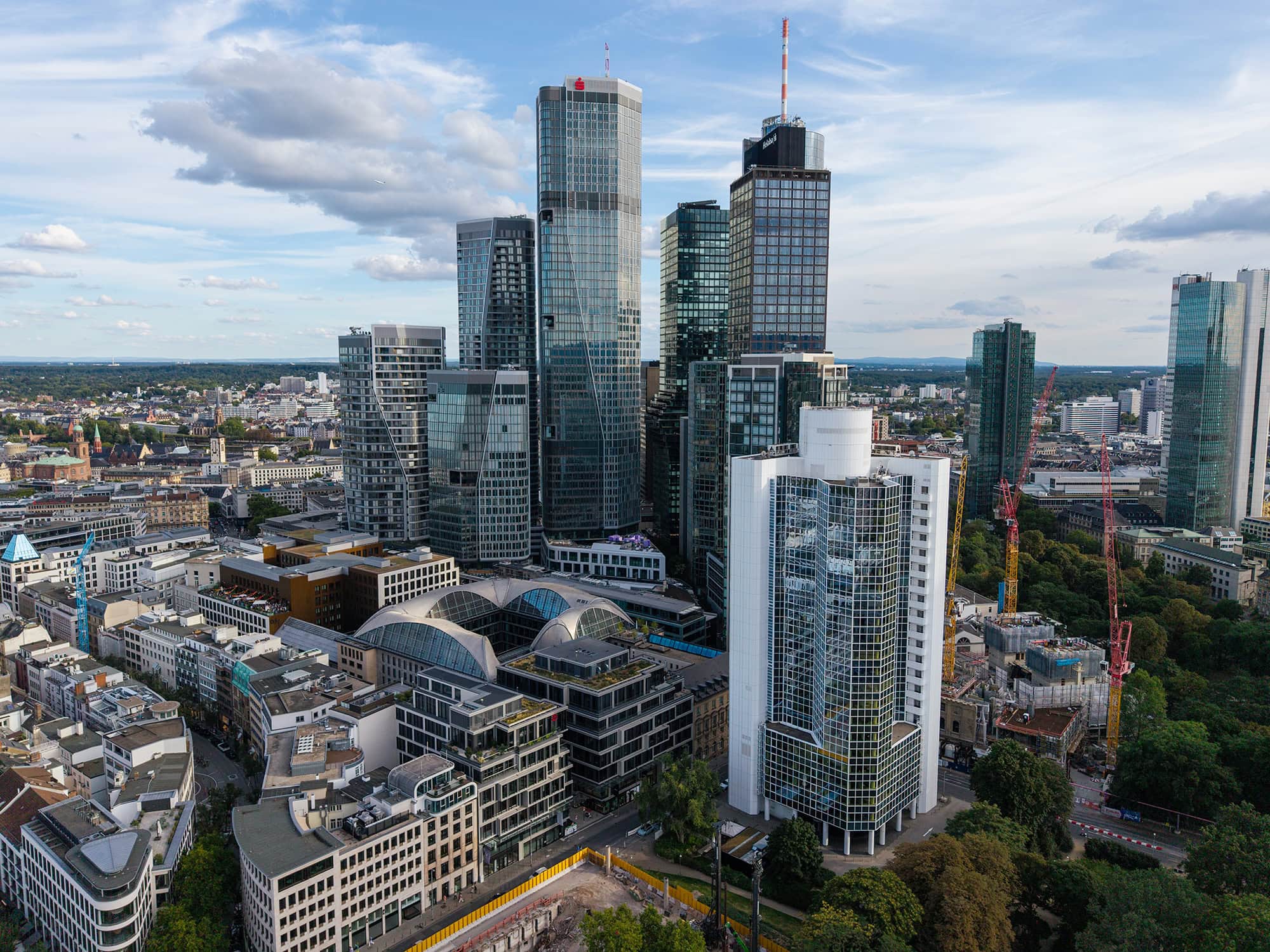
Despite its historic dignity, the Old Opera House rises today amid the modern skyline, a bridge between eras. Behind its classical frontage lies a vibrant, multifaceted complex: at its heart the Großer Saal — the Grand Hall — which seats nearly 2,500, alongside the smaller Mozart Saal, the sleek, contemporary Clara Schumann Foyer, as well as stately salons and additional venues. The Alte Oper is not merely a building; it is a theatre of memory.
Its story begins at the end of the nineteenth century, when Frankfurt, at long last, gained an opera house of its own. The design came from Berlin architect Richard Lucae. On 20 October 1880, the city celebrated its grand opening; about two thousand guests attended, among them Emperor Wilhelm I. With its noble façade, opulent interiors, and stage technology that was groundbreaking for its time, the opera house soon became a benchmark for theatres across Germany — until March 1944, when it was destroyed in an air raid.
At the very beginning, the project owed its existence to civic generosity: sixty‑seven Frankfurt merchants contributed 480,000 florins (roughly 370,000 euros today) to make the dream a reality. Then, in 1964, a citizens’ initiative sparked the effort to rebuild, raising 15 million Deutschmarks in donations.
When I visited this time, the square outside was filled with newlyweds posing for wedding photos — the same sight you see everywhere in the world. Ordinary couples who can’t travel abroad simply come to the most beautiful places in their own cities to capture their moment — the Alte Oper being one such dreamlike backdrop.
And speaking of open squares, Frankfurt’s drone‑flying regulations can be oddly amusing. I once read about a traveller who flew his tiny drone in Hamburg, knowing little about how strict Frankfurt could be. His plane had barely touched down when he was surrounded by four or five police officers. He was flying one of the small Mini‑series drones; one officer told him flatly, “You can’t fly that here,” while flipping urgently through the handbook for a regulation. Then a woman beside him murmured, “Sir, it seems his drone is a micro‑model—no license required.” That was when I realised that even the enforcers sometimes don’t fully know the rules themselves.
With experience, I’ve learned how to navigate it sensibly. Having flown here last year, this time I chose a quiet street opposite a café in the busy city centre, ordered a Little Lemon, and chatted amicably with the barista as I flew. As long as you operate carefully, avoid drawing attention during take‑off or flight, and stay within the local regulations, no one minds. Few people here actually fly drones, and since I hold an A1/A3 certificate and proper insurance, I simply made sure to follow the rules responsibly.
We use cookies to optimize your experience, analyze usage, and personalize content. Your continued browsing indicates consent to our cookie usage and the sharing of site interaction data with our marketing and analytics partners.