Travel & Planning for New Destination Released. Free Shipping to Most Countries Around the World.
Free Shipping to Most Countries Around the World.
As I mentioned in an earlier post, the Axi are one of the Yi people’s key branches. With a population of a little over 100,000, they are widely distributed across Mi’le, Kunming, Shilin, Yanshan, Qiubei, Luxi, and other parts of Yunnan. But the village I visited on this trip is something else: Axi people make up nearly 99.99% of the residents. It’s such a concentrated presence that it feels like you’re not just entering a village – you’re stepping into a community’s shared memory.
The village’s earliest form can be traced back to the early Qing dynasty, and it has preserved a complete traditional layout to this day. Forest coverage here exceeds 80%, and the landscape is typical of the karst terrain of southeastern Yunnan, with mountains encircling the village. The land unfurls in a lotus-like shape: from afar it resembles a natural screen; up close, you can hear the wind. Village and landscape seem to lift each other up.
The scenic area includes several natural zones – such as “Mizhi Fairyland” and “Tiger Roars in the Forest” – as well as a cluster of traditional Yi villages with a history of 360 years. In “Tiger Roars in the Forest,” the most striking landmark is a massive gray-white stone tiger statue. It stands at the edge of the woods like a guardian, carrying a solemn, almost ritual sense of presence.
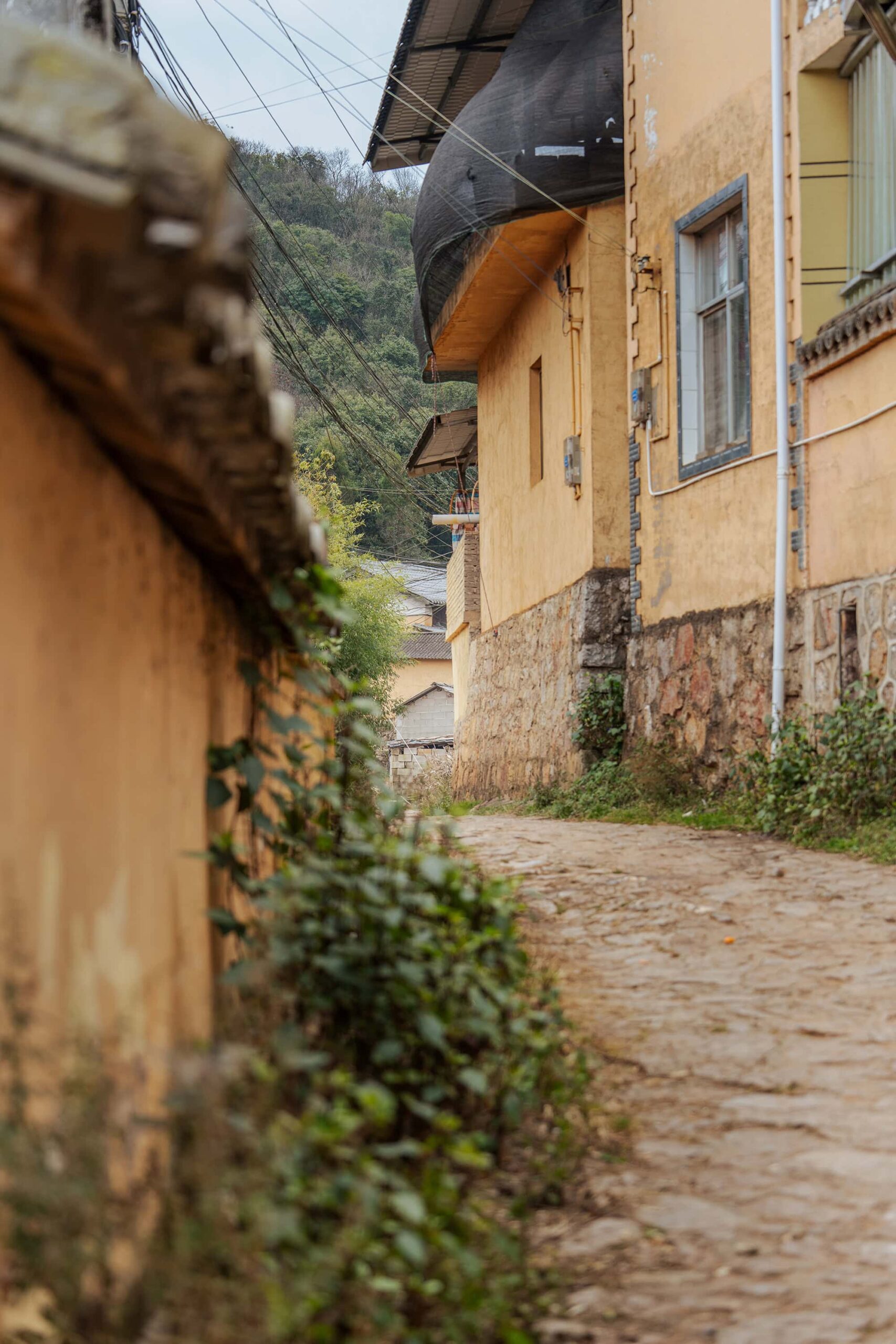
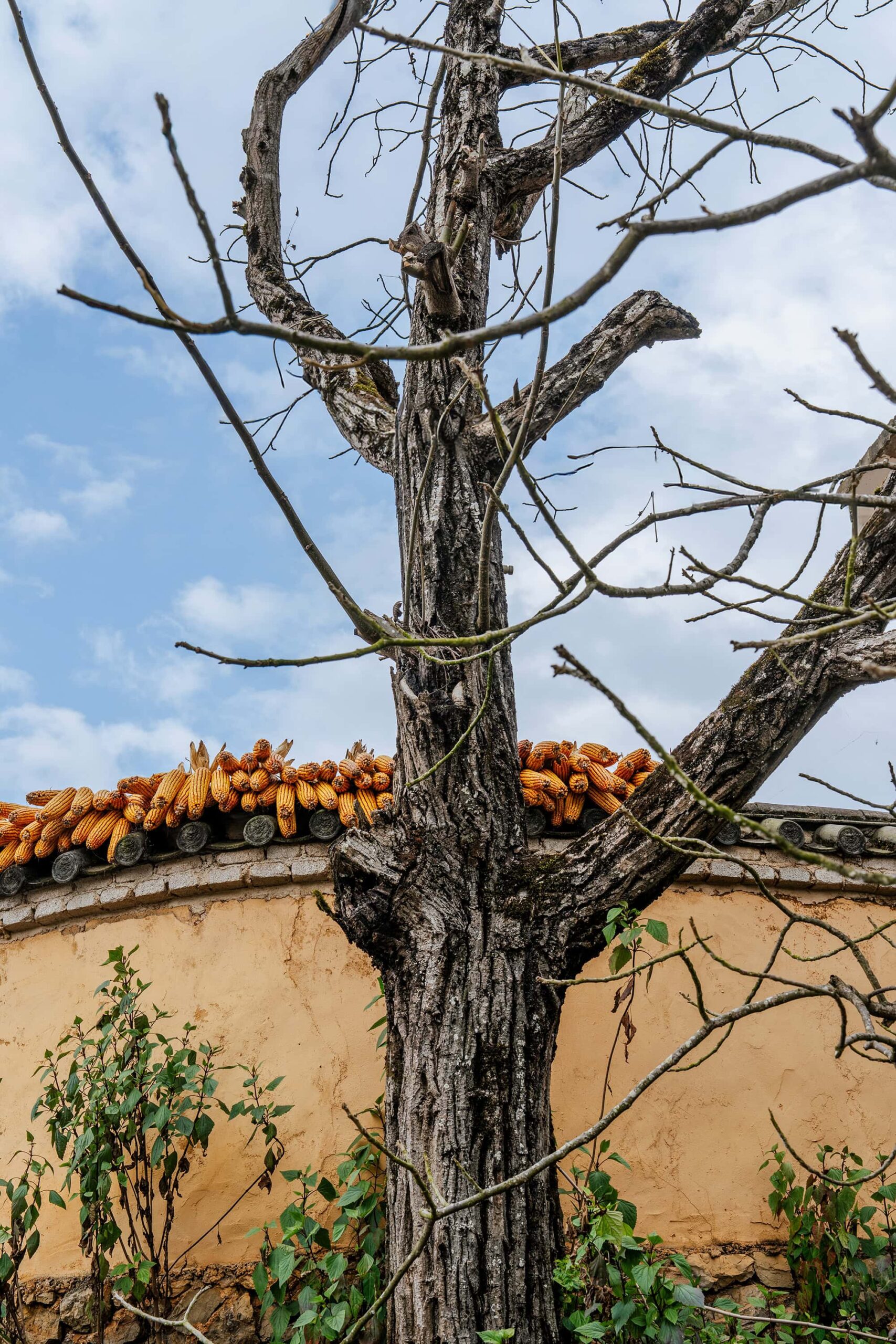
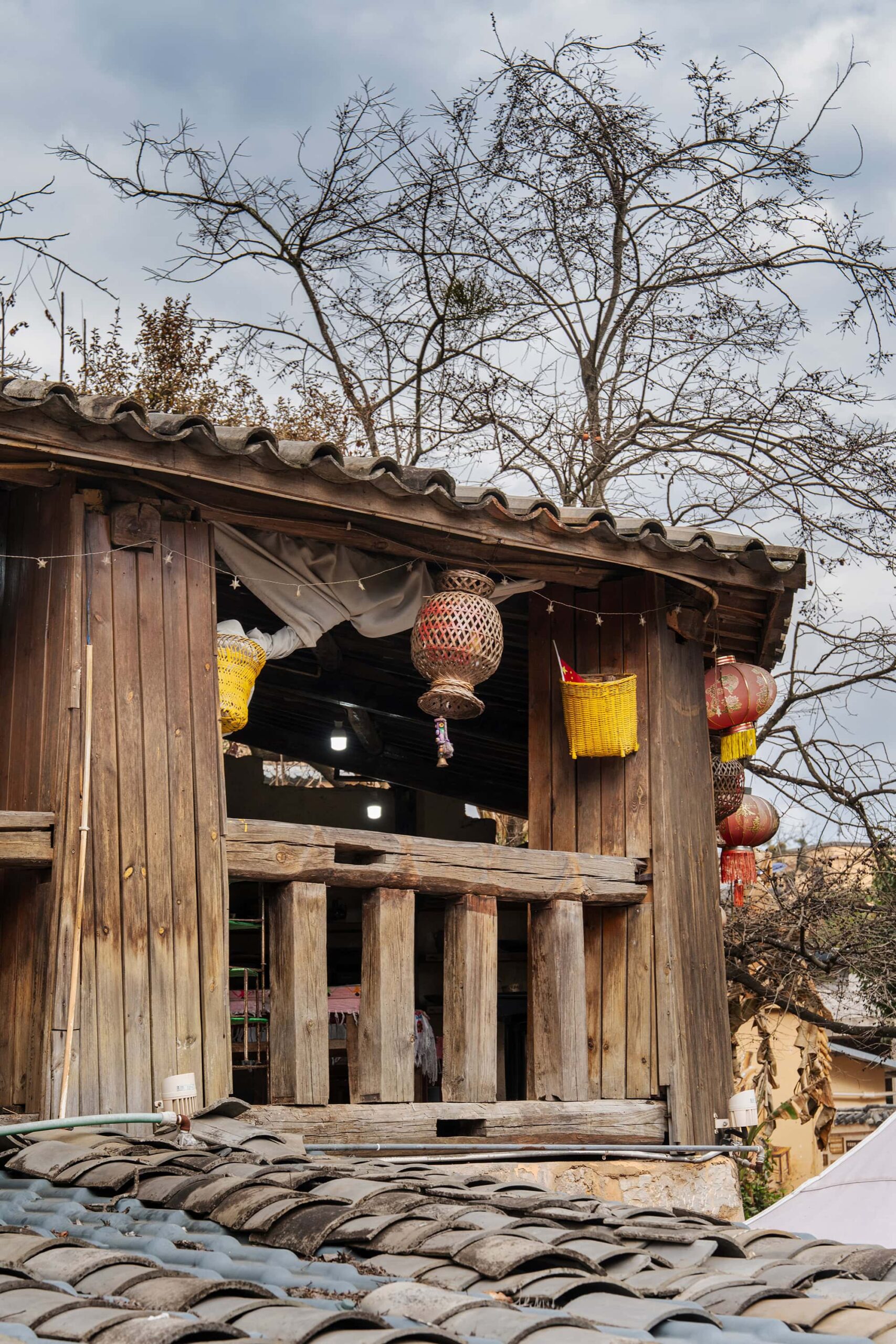
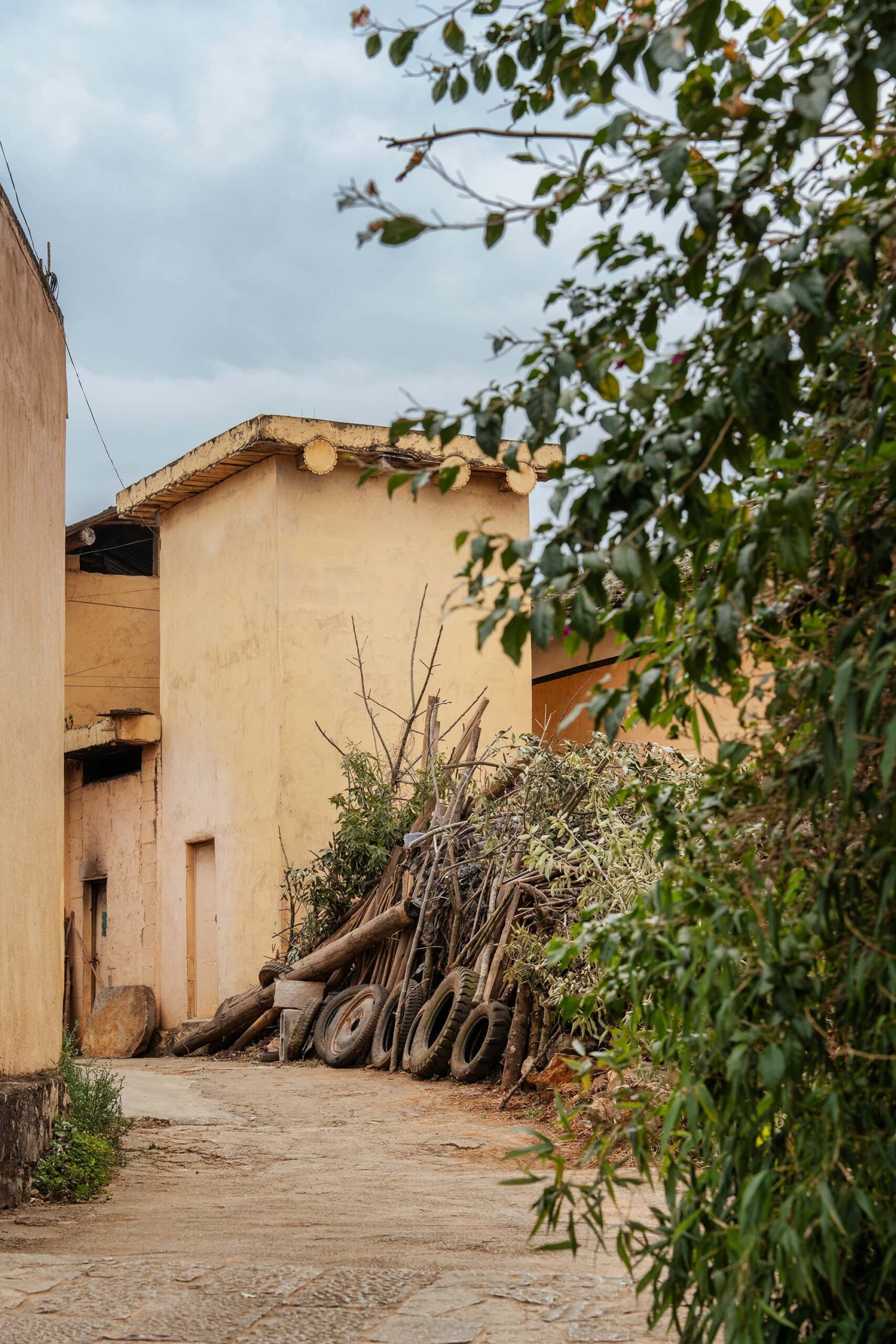
In the village itself, 204 traditional earthen-and-timber homes remain. With black-tiled roofs and yellow walls, they follow the slope of the mountain, rising layer upon layer. The village’s Yi museum lays out the cultural story in a structured way – traditional dress, instruments, festivals, rites and customs. And at fixed times every day, there are folk showcases: a suona welcome, Axi Jumping the Moon (traditional dance performance), and rituals like stepping over a fire basin with toasts. None of it feels like a “specimen” locked behind glass – it’s life, still breathing.
After you arrive at the visitor center and buy a ticket, you take a shuttle bus in. At the first stop you’ll see the boardwalk and the stone tiger. Don’t lose your ticket: it can also be used as a voucher at the entrance to redeem a wine made from roses. The second stop (and the final one) is when you really step deep into the village. Rammed-earth houses climb the hillside, and wall paintings depict weaving, farming, and everyday labor, like time itself has been carefully brushed onto the walls. At the Craft Heritage Memorial Hall, the lingering echoes of leaf-playing tunes, the ringing strings of the large sanxian, and Axi embroidery – bright in color, dense in stitching – together weave this village into a “living museum,” quietly telling stories of customs and aesthetics passed down for a hundred years.
In the Axi language, Jumping Moon is called “Gasi Bi,” meaning “joyful jumping.” It’s the Axi people’s most representative folk dance and is also recognized as a national-level intangible cultural heritage. Sometimes it involves a dozen people; other times, thousands. It often forms spontaneously during rituals, festivals, and major celebrations – both communal and joyfully self-driven. It blends singing, dancing, and music, with steps and routines that are relatively standardized, and it can be divided into an elders’ style and a youth style. Movements include stamping kicks, crane-step one-legged hops, bouncing steps, running jumps, turning jumps, and clapping jumps. The accompaniment is usually led by the large sanxian and bamboo flute, then joined by smaller sanxian, sanhu, yueqin, suona, whistles, and other homemade folk instruments. The rhythm is hot and bright, the movements bold and unrestrained yet still agile – and once the beat builds, it’s easy to get pulled into the excitement.
I was lucky enough to watch a performance on site this time, and the girls’ headpieces and embroidery really were stunning. Silver and red accents shone brightly, and the red soles of their shoes flashed as their steps rose and fell, matching the open, exuberant dance. After the show there was an interactive segment: visitors could take photos with the performers, or step onto the floor and try a few moves. And when the drumbeats and laughter spill together, you understand what “intangible heritage” means here. It isn’t a past that’s been put away for safekeeping – it’s the present, still unfolding.
We use cookies to optimize your experience, analyze usage, and personalize content. Your continued browsing indicates consent to our cookie usage and the sharing of site interaction data with our marketing and analytics partners.