Travel & Planning for New Destination Released. Free Shipping to Most Countries Around the World.
Free Shipping to Most Countries Around the World.
In Danish, “Ny” means “new,” while “Glyptotek” comes from the Greek glyphein (to carve) and theke (a repository). Even from its name, one can sense that the Ny Carlsberg Glyptotek is a museum devoted primarily to sculpture. Its core collection centres on the ancient civilizations of the Mediterranean – Egypt, Greece, and Rome – displayed alongside modern masterpieces such as those by Auguste Rodin.
The museum’s origins trace back to the private art collection of Carl Jacobsen, the son of the founder of Carlsberg Brewery. Over time, it grew into one of Denmark’s most prestigious art institutions. In addition to its celebrated sculptures, the museum boasts a distinguished collection of paintings – from the French Impressionists and Post‑Impressionists to the golden age of Danish painting.
Now, let me take you through some of the sculptures I saw during my visit.
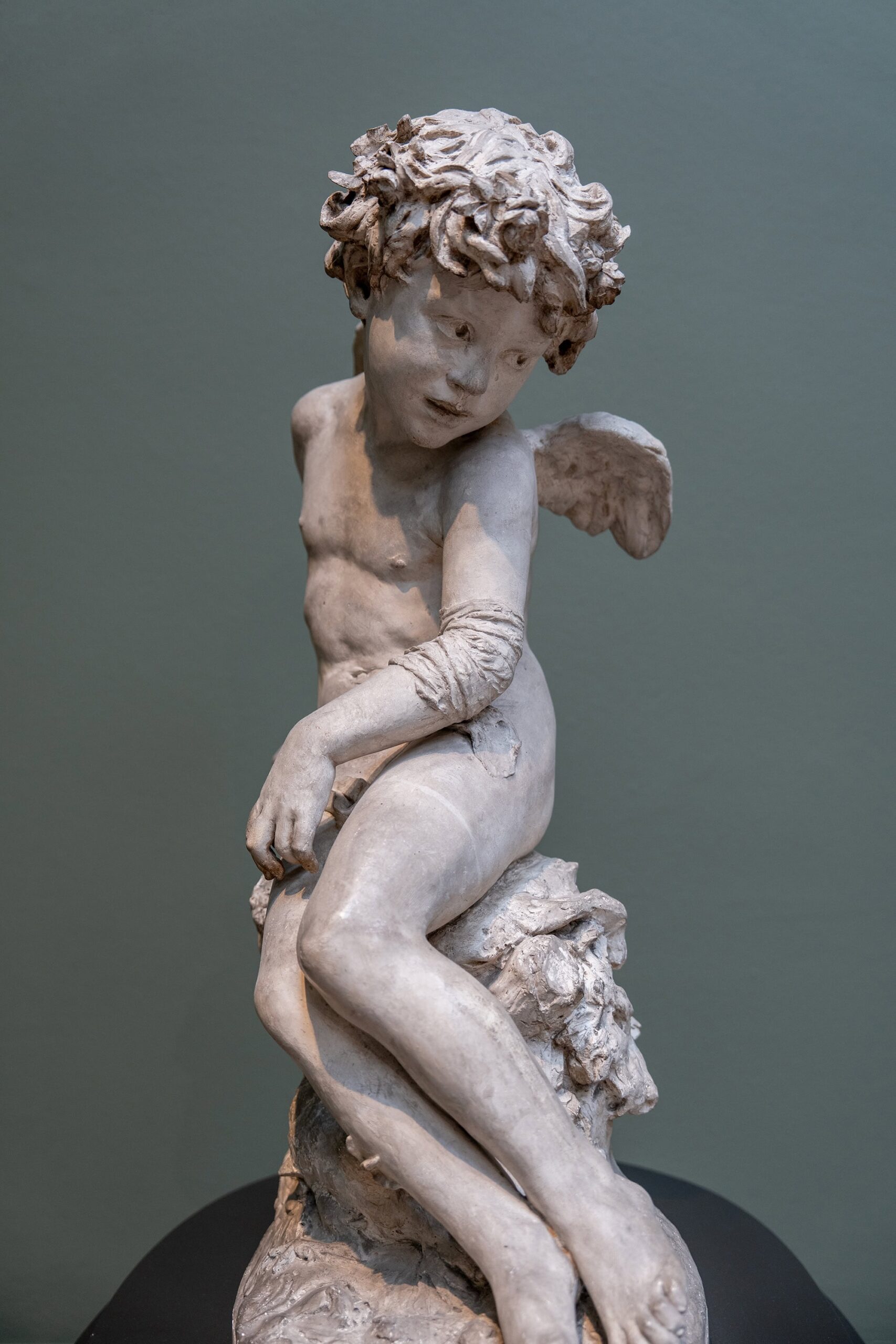
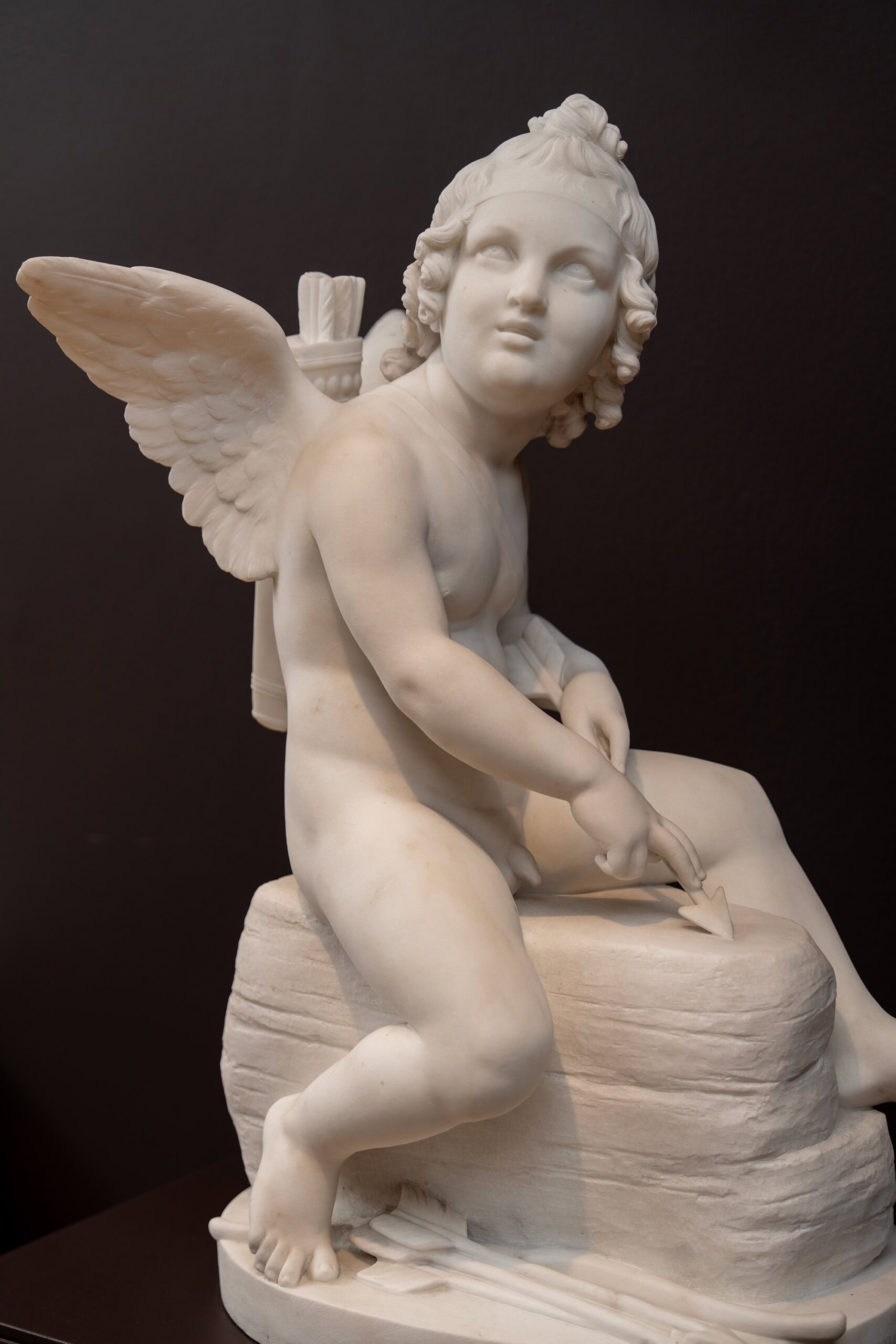
Jean‑Baptiste Carpeaux, one of nineteenth‑century France’s most influential Realist and Romantic sculptors, created the tender Wounded Cupid in 1873. The little winged figure is immediately recognizable to anyone familiar with classical mythology. The piece is an original plaster model treated with surface oxidation to imitate the look of bronze. Nearby stands another Cupid – Amor sliber sin pil (Cupid Sharpening His Arrow), by Danish sculptor H.W. Bissen, lighthearted yet finely detailed.
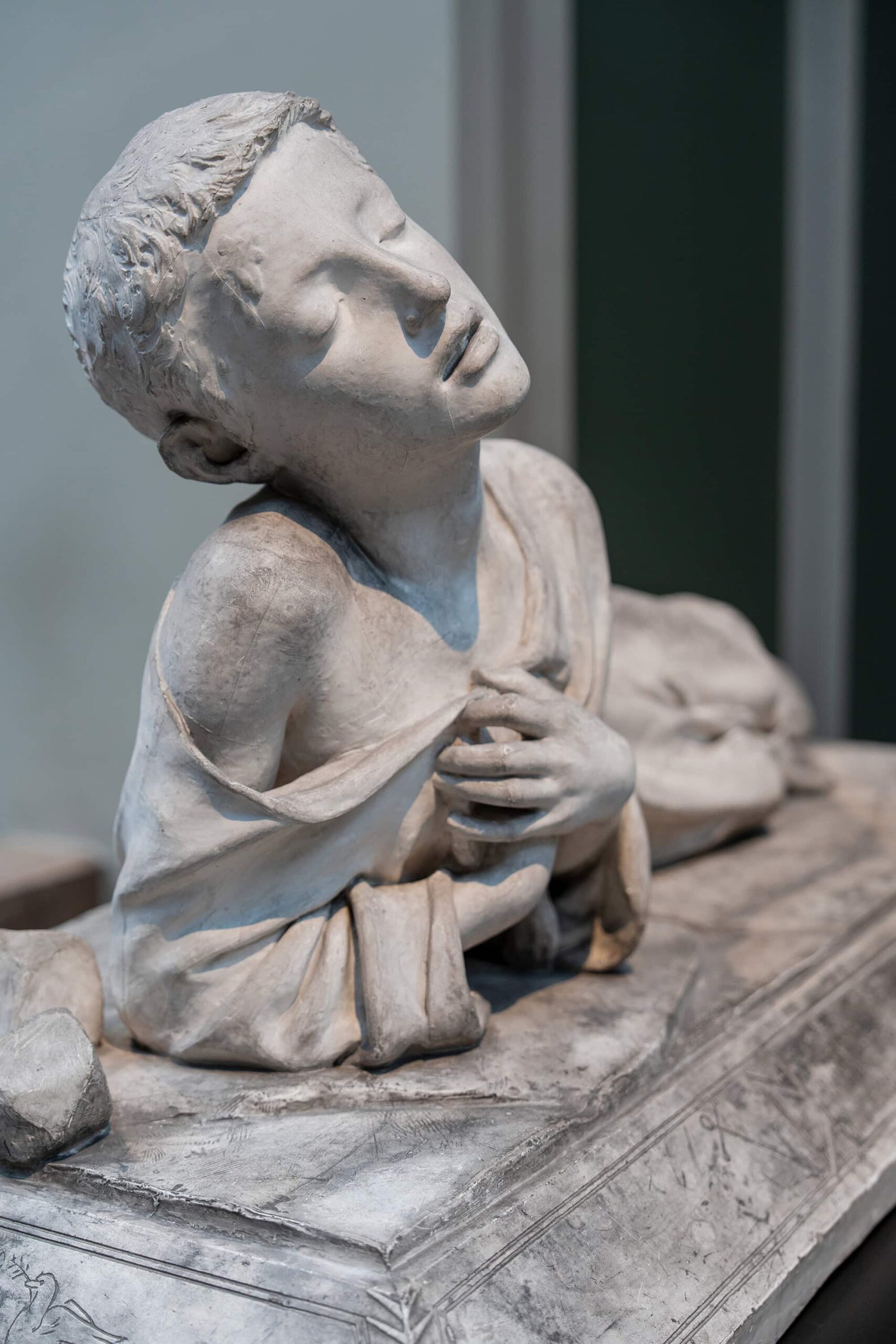
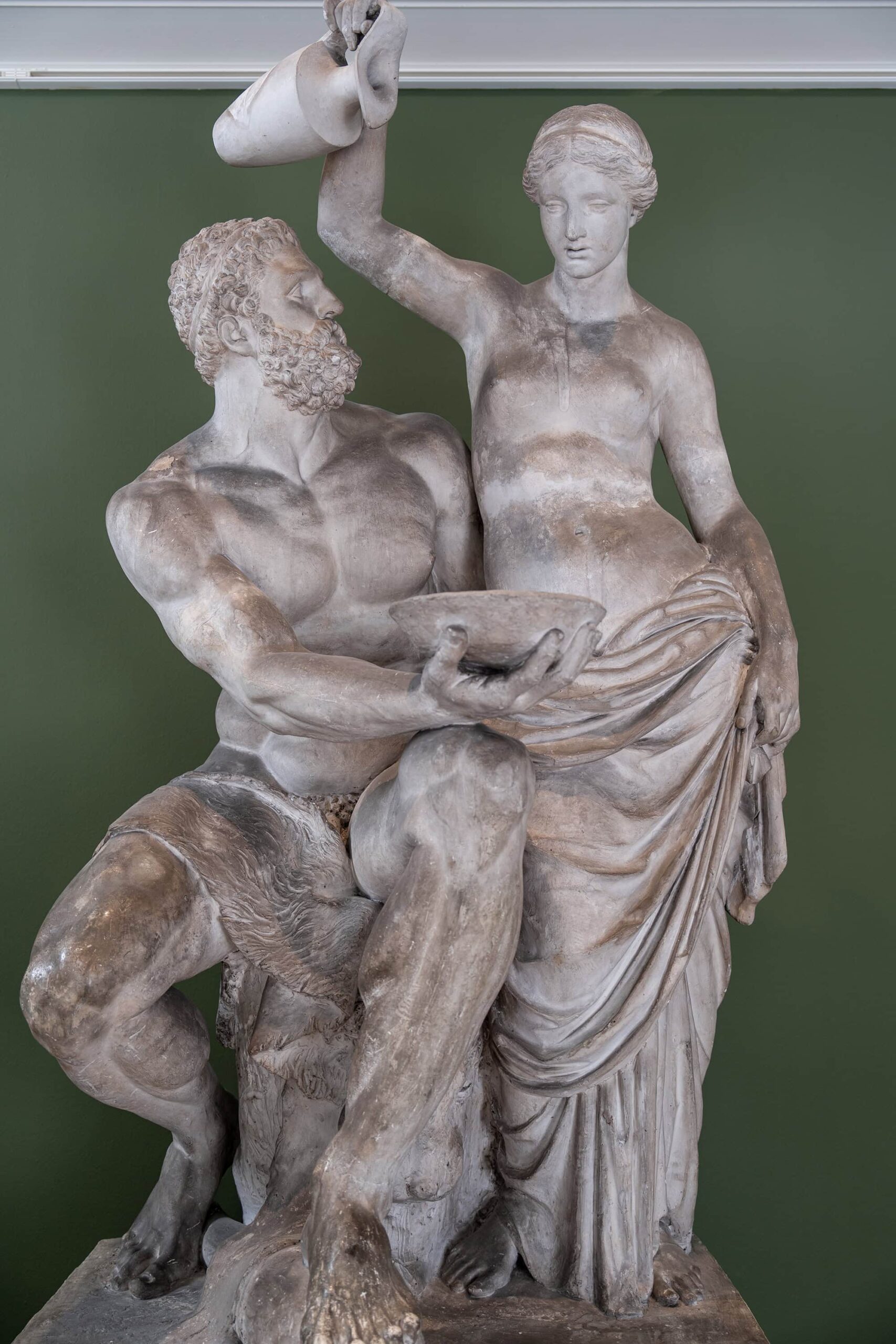
Not far from them is Saint Tarcisius, a work by the sculptor Alexandre Falguière of Toulouse. The figure’s body sinks in a dramatic swoon, draped in a softly falling cloth that Falguière, in the final marble version, stretched and smoothed to accentuate the mortal grace of youth. The subject comes from the story of Tarcisius, a Roman acolyte of the early Christian church who was attacked by pagans while carrying the Eucharist from the catacombs to imprisoned believers. According to the inscription on the base, the boy chose death over surrendering the Eucharist. The scattered stones by his side and the wound upon his brow mark his martyrdom; with hands crossed protectively over the host and eyes closed in devotion, he embodies quiet faith. Nearby stands a pair of intertwined figures – Herkules og Hebe, by Danish sculptor Jens Adolf Jerichau. Hercules, the half‑human hero of Greek mythology, is here served wine by Hebe, the goddess of youth, daughter of Zeus and Hera. Once the cup‑bearer of the Olympian gods, she would later become Hercules’s wife. The sculpture captures a moment of tenderness between strength and grace.
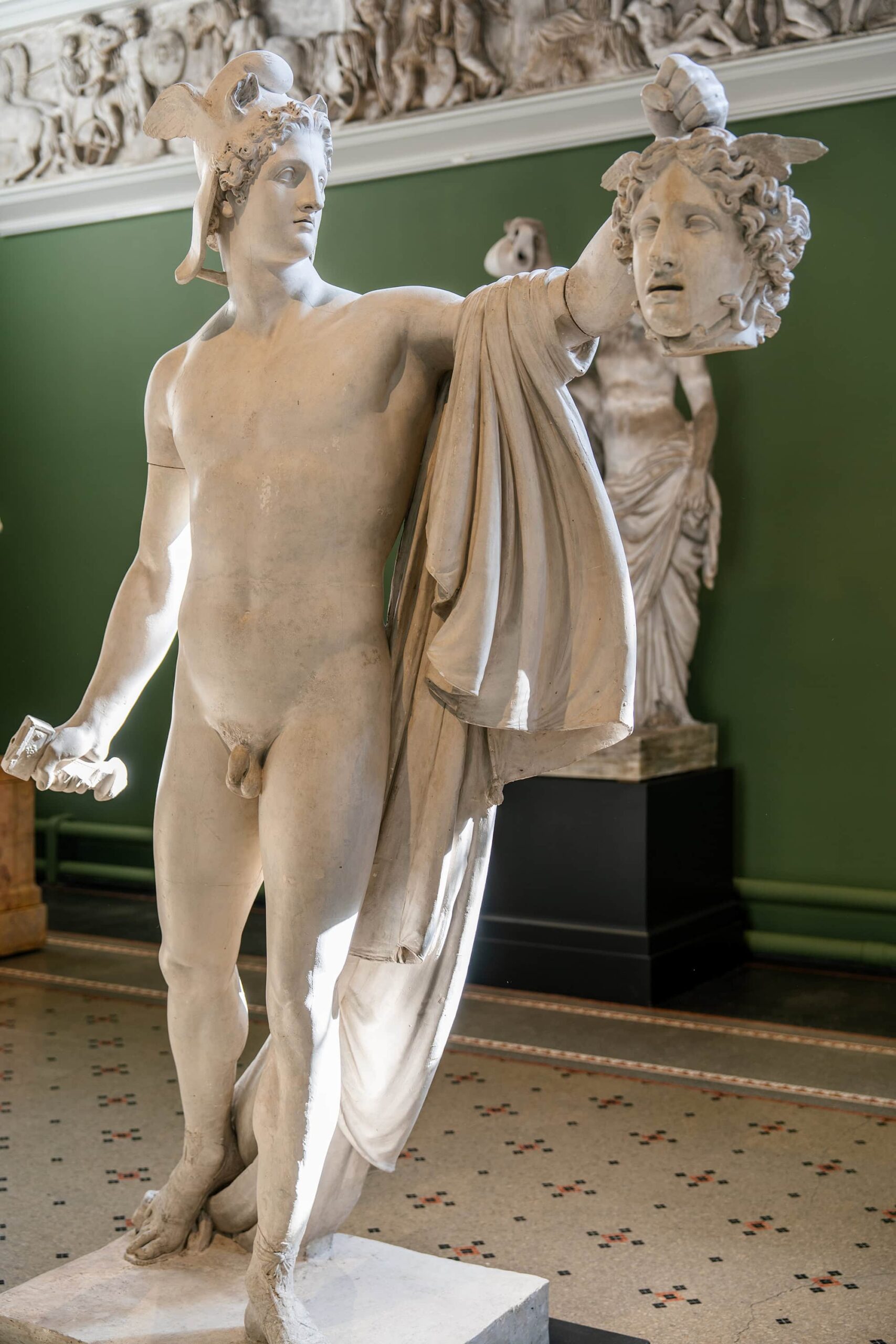
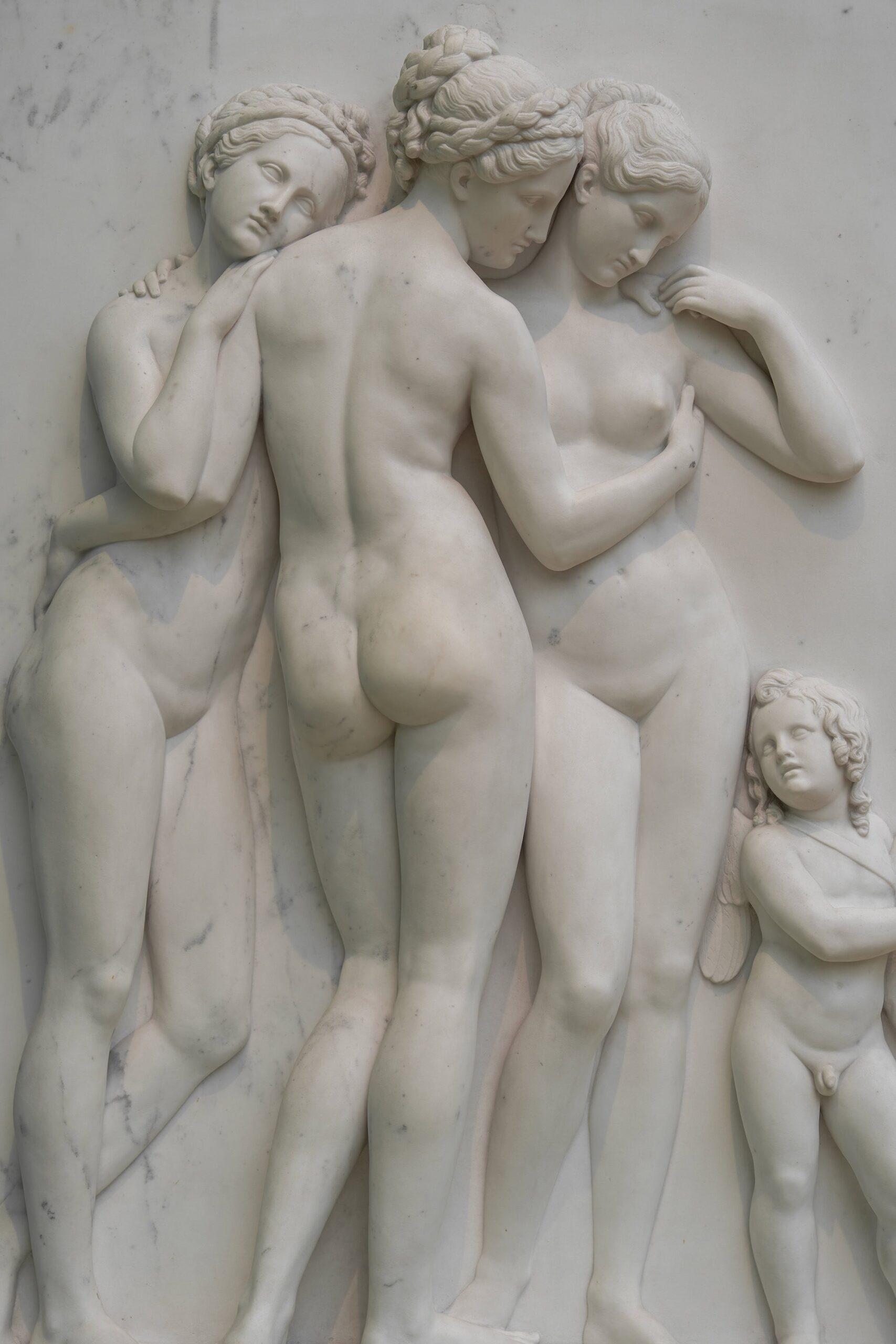
That figure triumphantly holding the severed head is unmistakably Perseus with the Head of Medusa, a neoclassical marble by Antonio Canova. And finally, three young women stand hand in hand – The Three Graces, by Bertel Thorvaldsen. These daughters of Zeus – Aglaea (Radiance), Euphrosyne (Joy), and Thalia (Charm) – represent the three perfections of human pleasure: beauty, delight, and elegance. The three goddesses lean gently into one another, their soft bodies forming a harmonious triangle of poise and intimacy.
There are many more works worth seeing, but I’ll leave those for you to discover.
We use cookies to optimize your experience, analyze usage, and personalize content. Your continued browsing indicates consent to our cookie usage and the sharing of site interaction data with our marketing and analytics partners.