Travel & Planning for New Destination Released. Free Shipping to Most Countries Around the World.
Free Shipping to Most Countries Around the World.
Are you an angel with a hidden devilish side, or simply someone looking for adventure? If so, let me warn you: You really shouldn’t come to Devil City Xinjiang. Once you get caught in the mystery of this land, you may find it hard to escape—just like being trapped in someone’s tears.
In fact, the entire area around Karamay Devil City is surrounded by oil fields belonging to a host of leading Xinjiang petroleum companies. What was once a desolate Gobi plain has become a vibrant new city built on oil: exploration, drilling, pumping, refining, construction, transportation, machinery—every facet of modern industry is thriving here. Education, science, commerce, culture, and healthcare support the booming community, making it a unique blend of industrial progress and desert mystique.
If you hop on the sightseeing train winding its way through the Ghost City Xinjiang, you’ll get a front-row seat to long rows of oil rigs and drilling machines, stretching off into the horizon—a stark reminder of mankind’s touch upon this extraordinary place.
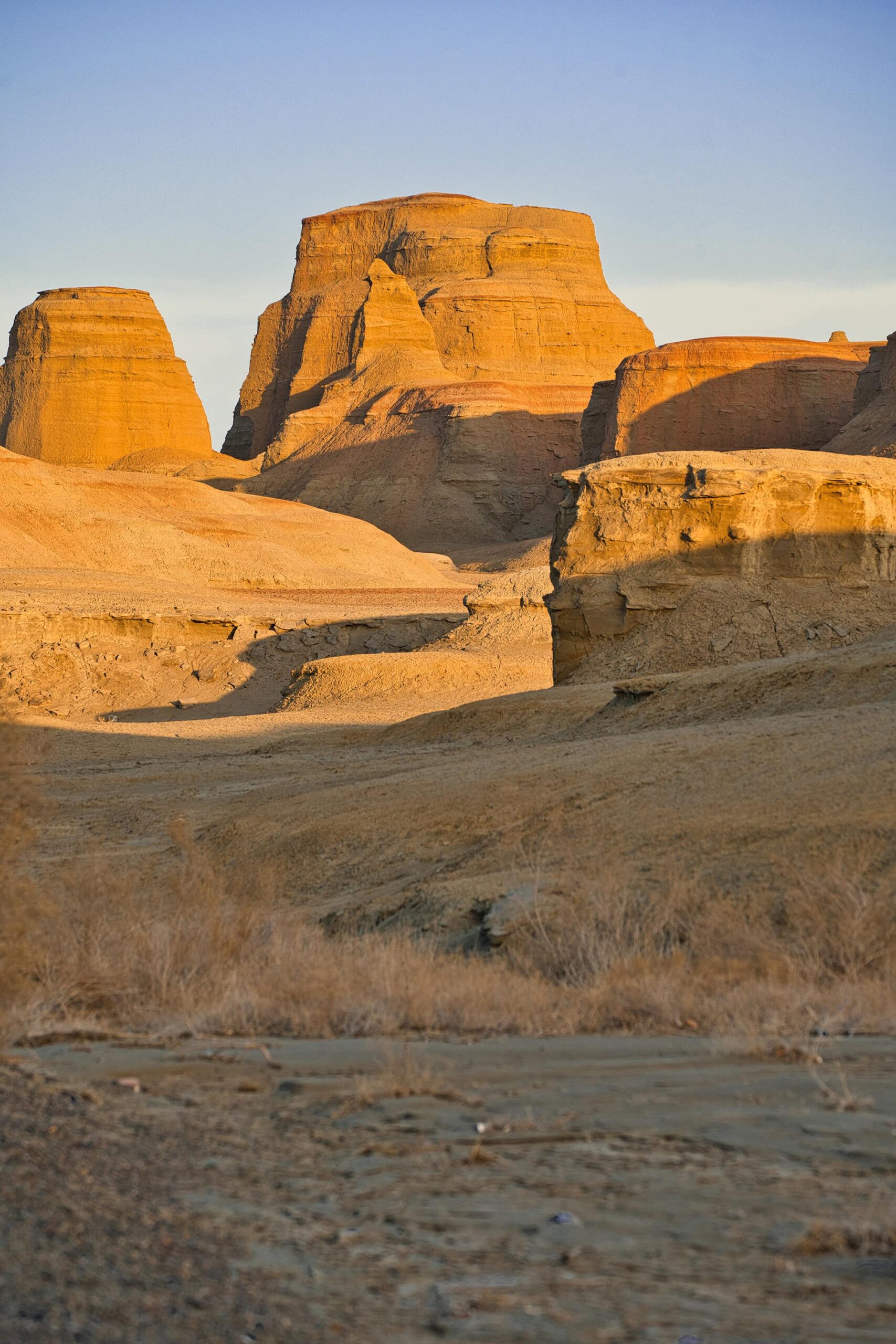
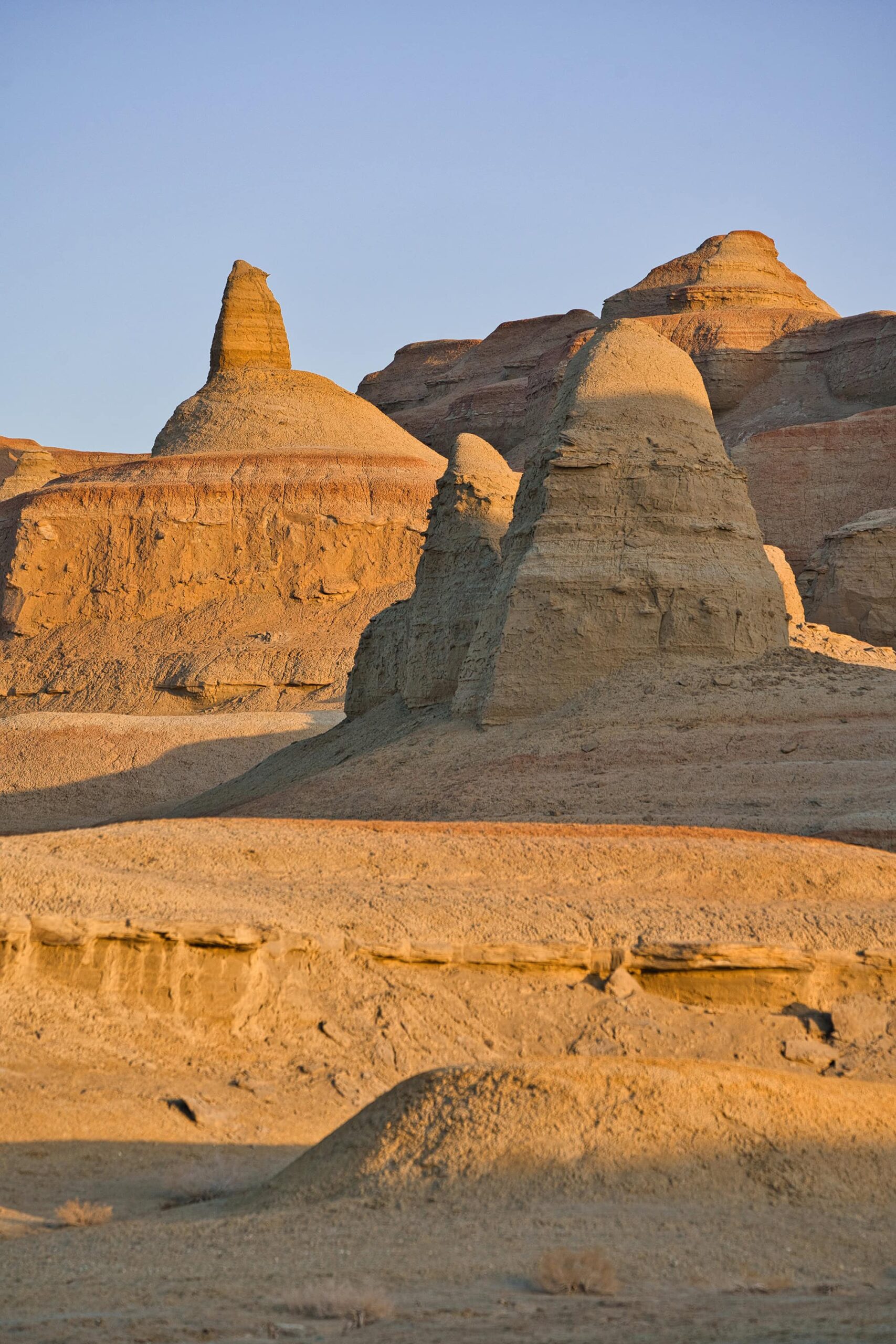
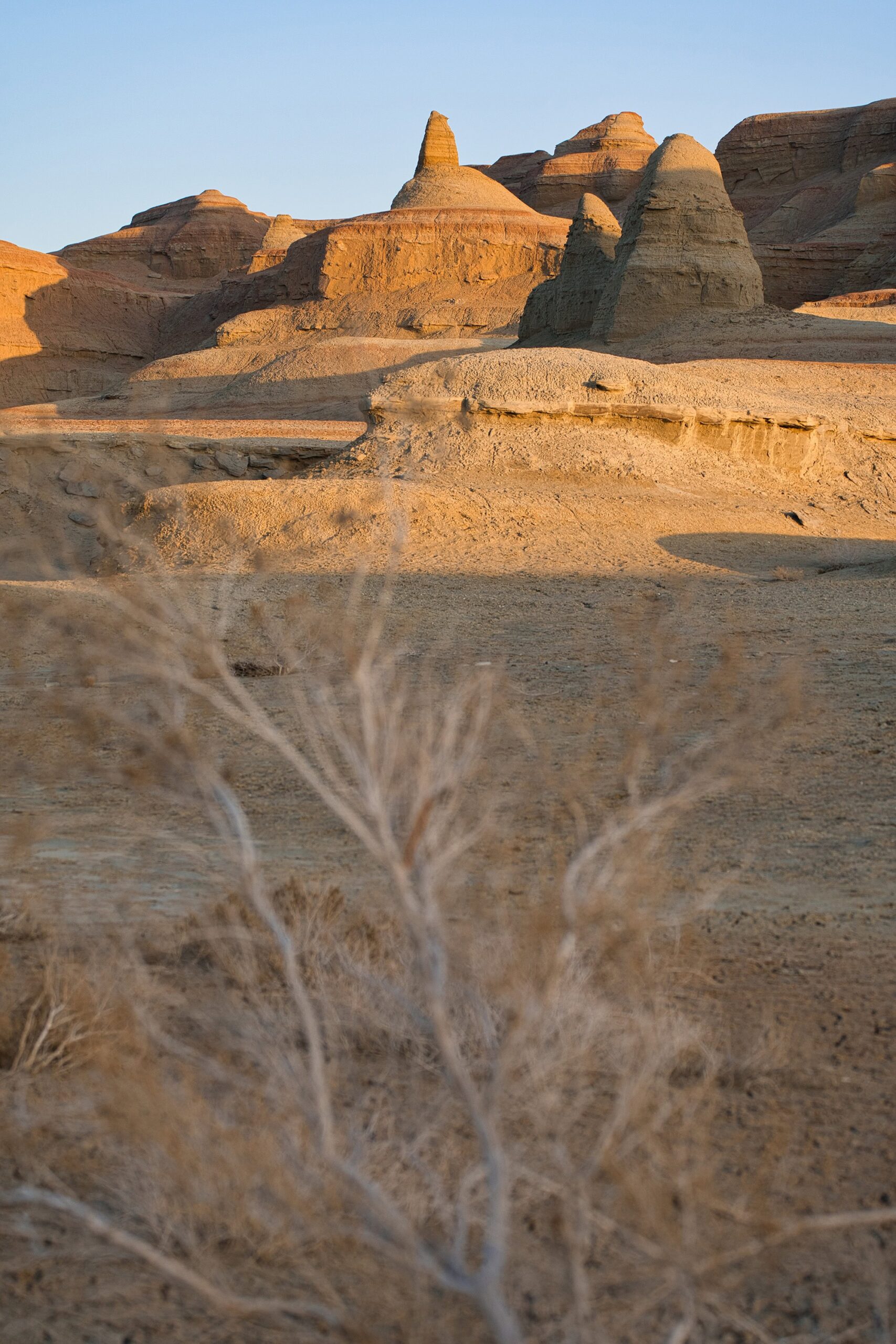
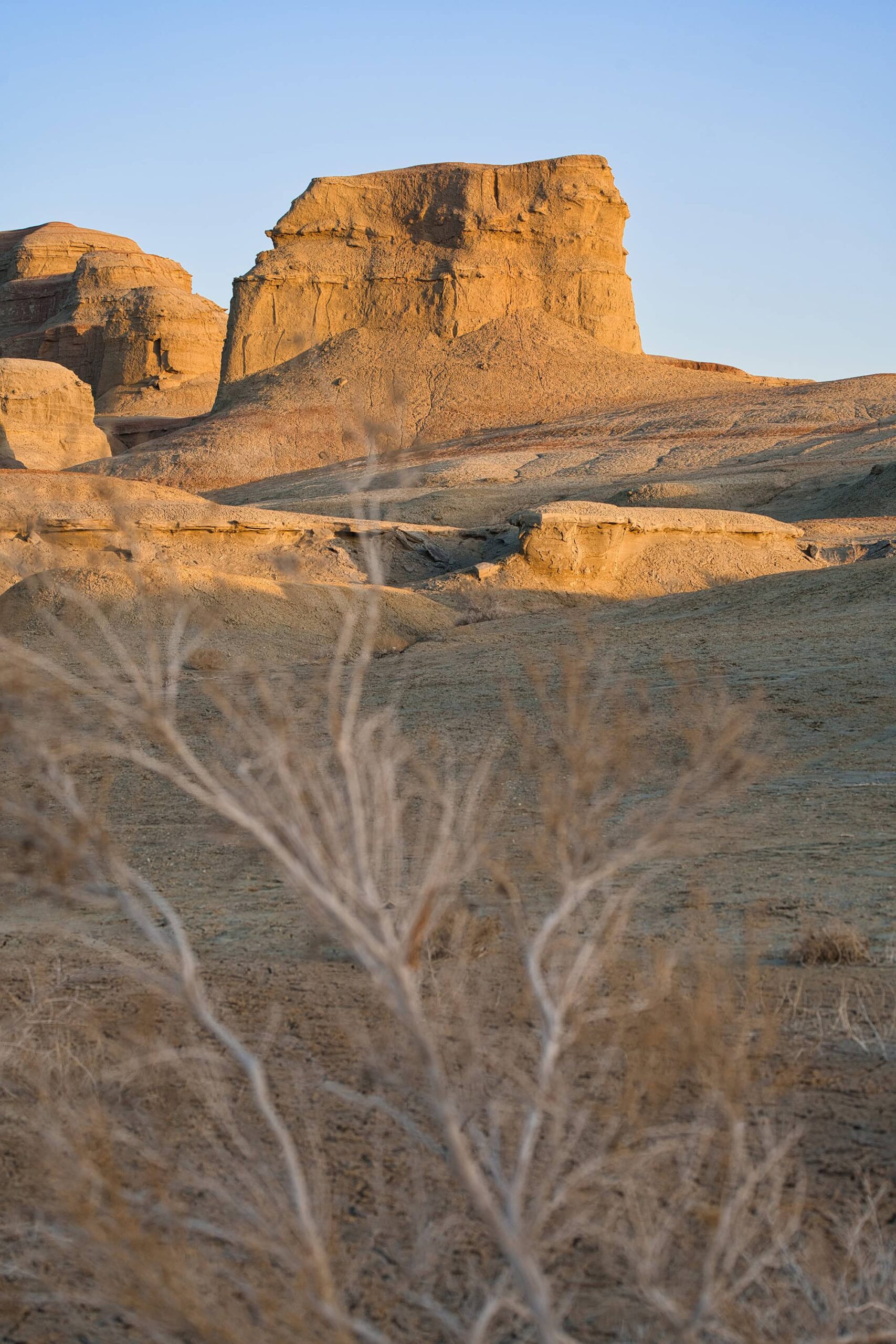
Now, let’s talk about what makes the Ghost City Xinjiang truly special—the Yardang formations. At first glance, you might think Yardang landforms resemble the famous Danxia landscapes. However, the two are quite different in their processes, geographical features, distribution, and rock composition. The Yardang landscapes in Karamay Ghost City owe their weird and wonderful shapes mainly to relentless winds carrying sand and gravel. Over centuries, those winds have sandblasted and sculpted the rocks, sometimes with help from occasional water flow, resulting in a surreal collection of shapes that could belong on another planet. In contrast, Danxia landforms are the product of tectonic movement and long-term weathering and erosion.
During the Cretaceous period, this region of Xinjiang ghost city was once the bottom of a giant freshwater lake. Along its shores grew lush vegetation, and within its waters lived ancient creatures: the Wuerho Stegosaurus, Plesiosaurus, dinosaurs, Dsungaripterus (a kind of pterosaur), and many more. Fittingly, the last stop of your visit includes a Dinosaur Valley, built to echo the many dinosaur fossils unearthed here.
Ticket Information:
Adult admission: 42 RMB per person; sightseeing train: 20 RMB per person.
We use cookies to optimize your experience, analyze usage, and personalize content. Your continued browsing indicates consent to our cookie usage and the sharing of site interaction data with our marketing and analytics partners.