Travel & Planning for New Destination Released. Free Shipping to Most Countries Around the World.
Free Shipping to Most Countries Around the World.
Stop 1: Xichan Temple, Fuzhou
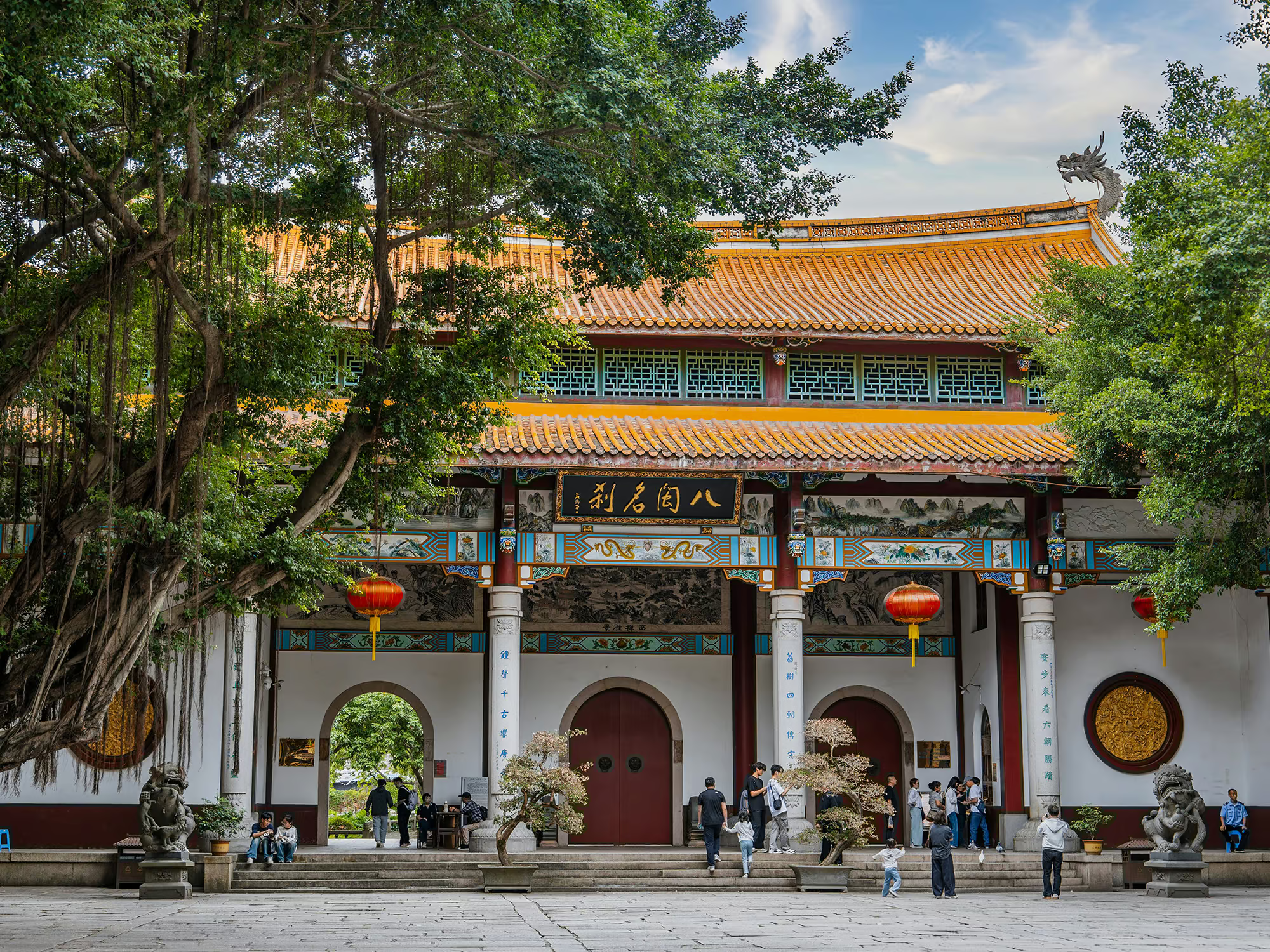
Xichan Temple, formally known as Yishan Changqing Temple, was first built in the Tang dynasty and has survived through six successive dynasties, making it a truly thousand‑year‑old monastery. The buildings are laid out with a quiet elegance. Inside the complex you will find the Bao’en Pagoda, a release pond, the Sutra Library, Mazu Hall, Arhat Hall, Guanyin Pavilion and the Jade Buddha Hall. Wherever you walk, there is a calm, solemn air that only time can create.
Locals often say that “Xichan Temple is not a place you just drop by on a whim.” It really does carry an almost weighty sense of history. In the temple grounds stands an ancient lychee tree planted in the Song Dynasty. Its trunk is hollow now, but the branches are still thick and full of leaves, and it bears fruit every year. People see it as a symbol of the temple’s auspicious feng shui. More than half of the lychee trees in the temple today were grafted from this old mother tree. There is even a saying: “Lychees of Central Fujian are the finest under heaven, and Xichan lychees are the finest in Central Fujian.” That should tell you how beloved it is.
The first time you see the enormous Guanyin statue outside the temple, it really does stop you in your tracks. The white figure towers over a lotus pond, where fountains keep striking the surface of the water and sending spray into the air. The scene feels both grand and a little theatrical. Near the main gate there is also a huge banyan tree that has grown into “one tree that became a forest.” Many of its hanging aerial roots have turned into separate trunks. On sunny days, along the branches that stretch out over the water, you can often spot a row of red‑eared sliders sunbathing, completely at ease.
The Bao’en Pagoda is not open every day. A small Buddha niche sits on each floor. If you happen to visit on a day when the doors are open and you can climb to the top for a view of the whole temple, that stroke of luck feels almost as special as tasting one of the temple’s Song-era lychees. Directly opposite stands the Arhat Pavilion, where you walk among rows of arhats in all kinds of poses and expressions. We went in the afternoon, when the light was dimmer. Combined with the solemn atmosphere, some corners were honestly a little eerie. On the third floor there is a “Child-giving Guanyin” that is said to be very responsive to prayers. The walls are covered with honorary silk banners from people returning to give thanks. In the Jade Buddha Hall you will find two massive jade statues of Shakyamuni Buddha, one seated in meditation and one lying in repose. Both were donated by overseas Chinese.
Wandering through Xichan Temple, with its ancient trees, pagodas, halls and curling incense smoke, you feel wrapped in a steady calm that sits somewhere between everyday life and deep history. People naturally lower their voices, slow their steps and let their thoughts quiet down.
Ticket: 20 RMB, 10 RMB for students.
Stop 2: Youth Square and the Min River
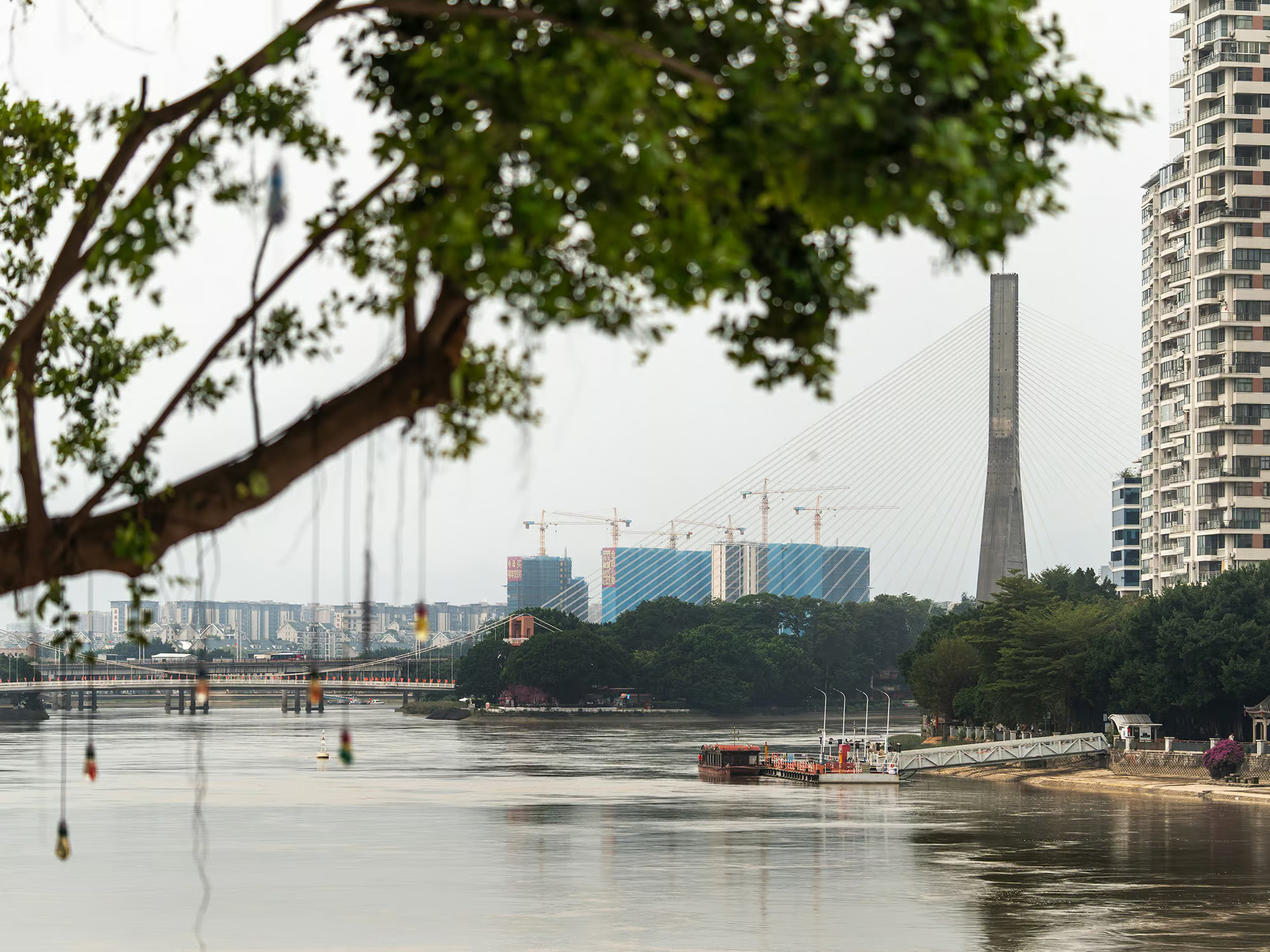
From Xichan Temple, a taxi ride of about 20 minutes brings you to Youth Square. It faces the Min River and looks across to the opposite bank. To the south is Yantai Hill with its historic buildings, and to the north are the old streets of Shangxiahang. This area is the heart of the “Min River in the City” project and is often called “Fuzhou’s Bund.”
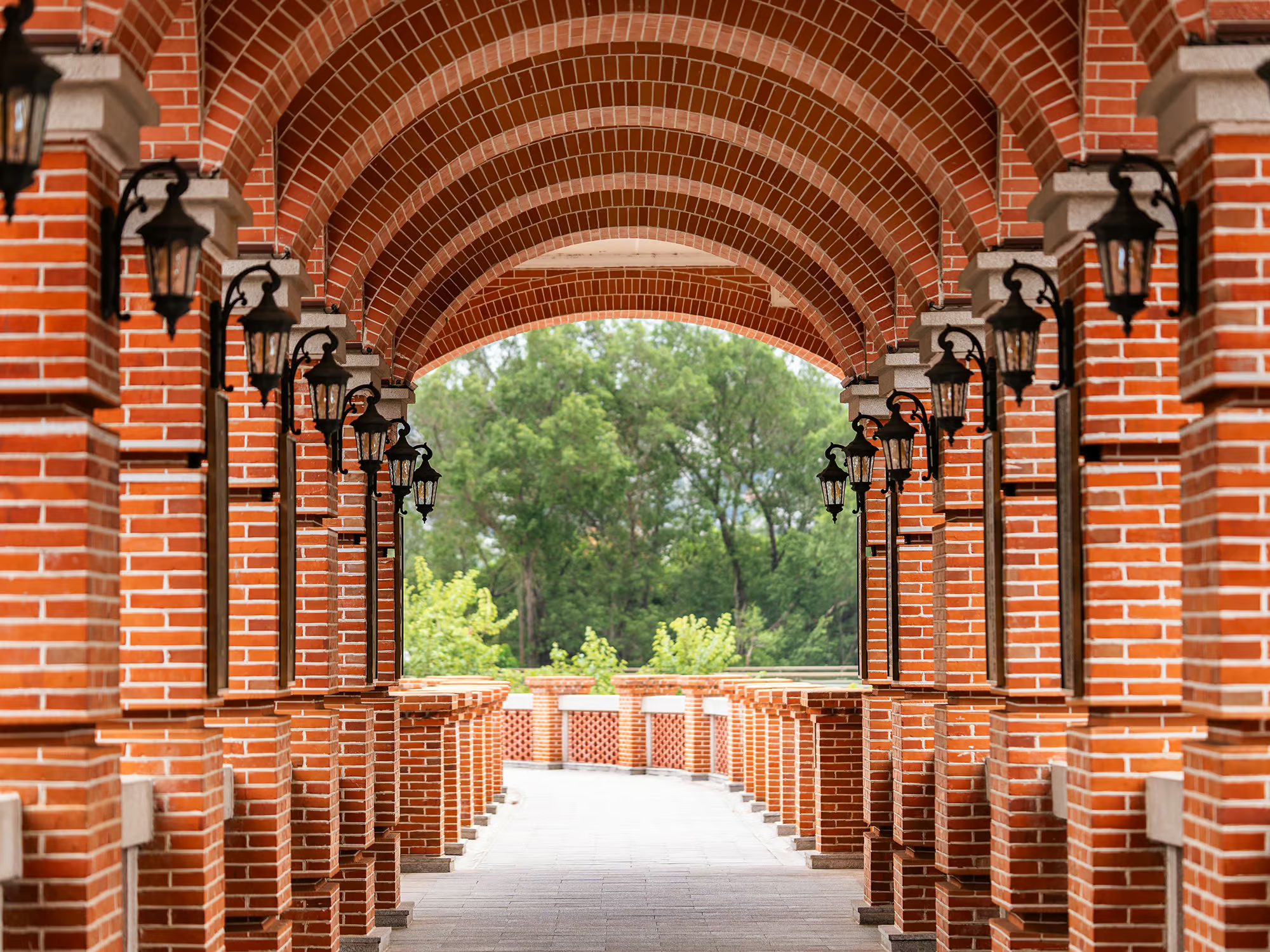
The name “Youth Square” comes from the red-brick Fuzhou YMCA building that stands nearby and anchors the skyline with its early 20th-century charm. From the viewing platform you can look out over Jiefang Bridge, Zhongzhou Islet and the lights along both riverbanks. The night view is especially beautiful when the bridges and buildings are all lit up and reflected in the water.
Linking Youth Square with Fuzhou’s historic street “Fujie” is Youth Bridge. This is where you find what many people call the most beautiful outdoor escalator in the city. Flanked by European-style facades with a slightly retro feel, the bridge makes you feel as if you have stepped into an old waterfront promenade.
Here you will also find creative fusion restaurants run by a younger “second-generation” of local restaurateurs. Many of them share access to a large open-air terrace of roughly 500 square meters. With the river breeze in your face and a wide, open view of the Min River, it is a great spot for all kinds of events and gatherings. You can book it for parties, small functions, or simply come for dinner and watch the river flow by as Fuzhou’s evening slowly lights up around you.
We use cookies to optimize your experience, analyze usage, and personalize content. Your continued browsing indicates consent to our cookie usage and the sharing of site interaction data with our marketing and analytics partners.