Travel & Planning for New Destination Released. Free Shipping to Most Countries Around the World.
Free Shipping to Most Countries Around the World.
The first thing to know about the Dongfengyun scenic area is that it’s not an “ancient town” in the traditional sense – it’s a fully curated, man-made destination transformed from Dongfeng Farm, founded in 1958. The name “Dongfeng” (“East Wind”) reflected the politics of the time – the idea that the East Wind would prevail over the West Wind.
For a generation, this land carried the weight of youth and destiny. People arrived here from major cities like Shanghai, Chengdu, and Chongqing-educated young people, cadres sent down from provincial institutions and colleges, along with demobilized soldiers and intellectuals. Together they opened up eastern Yunnan under harsh conditions, forging a state-farm spirit defined by endurance and bold pioneering. The farm itself later went through multiple eras-from an ordinary farm to a production-and-construction corps system, then enterprise reform and the separation of government and business.
Today, parts of that past are preserved in the town museum: the old Dongfeng Photo Studio, remnants of the Dongfeng Farm winery, and other everyday traces of a former life. The old winery exists for a reason: French settlers once brought quality grape varieties along the Kunming–Haiphong railway, and they turned out to thrive in Mile – eventually growing into the town’s own wine culture. Outside the museum you can even spot a vintage Dongfanghong tracked bulldozer, parked like a time capsule. Right by the exit is the sightseeing shuttle stop back to the entrance, where many visitors hop on to wrap up their visit.
The Heart of Dongfengyun: The “Kaleidoscope” Museum and a Thousand Terracotta Voices
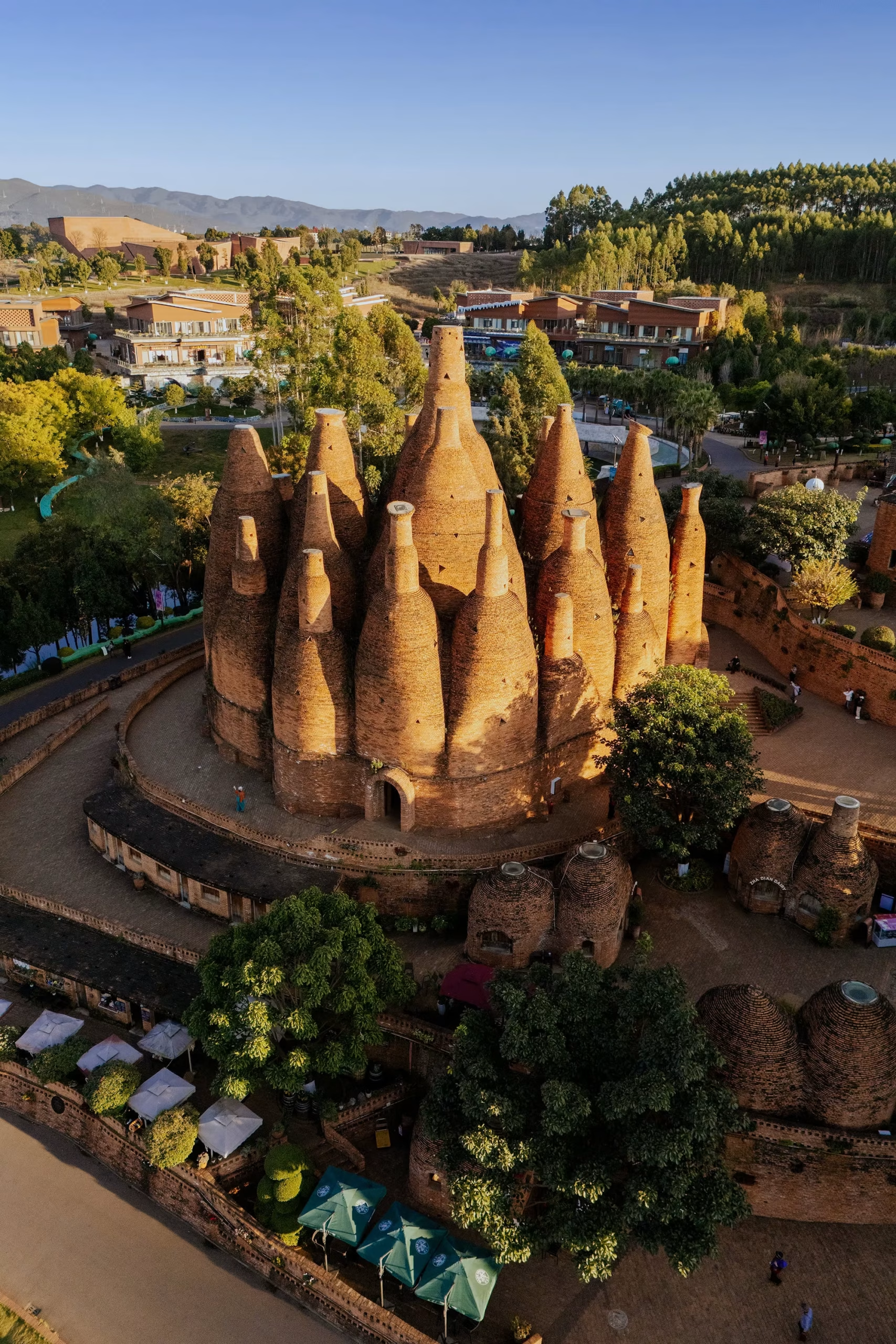
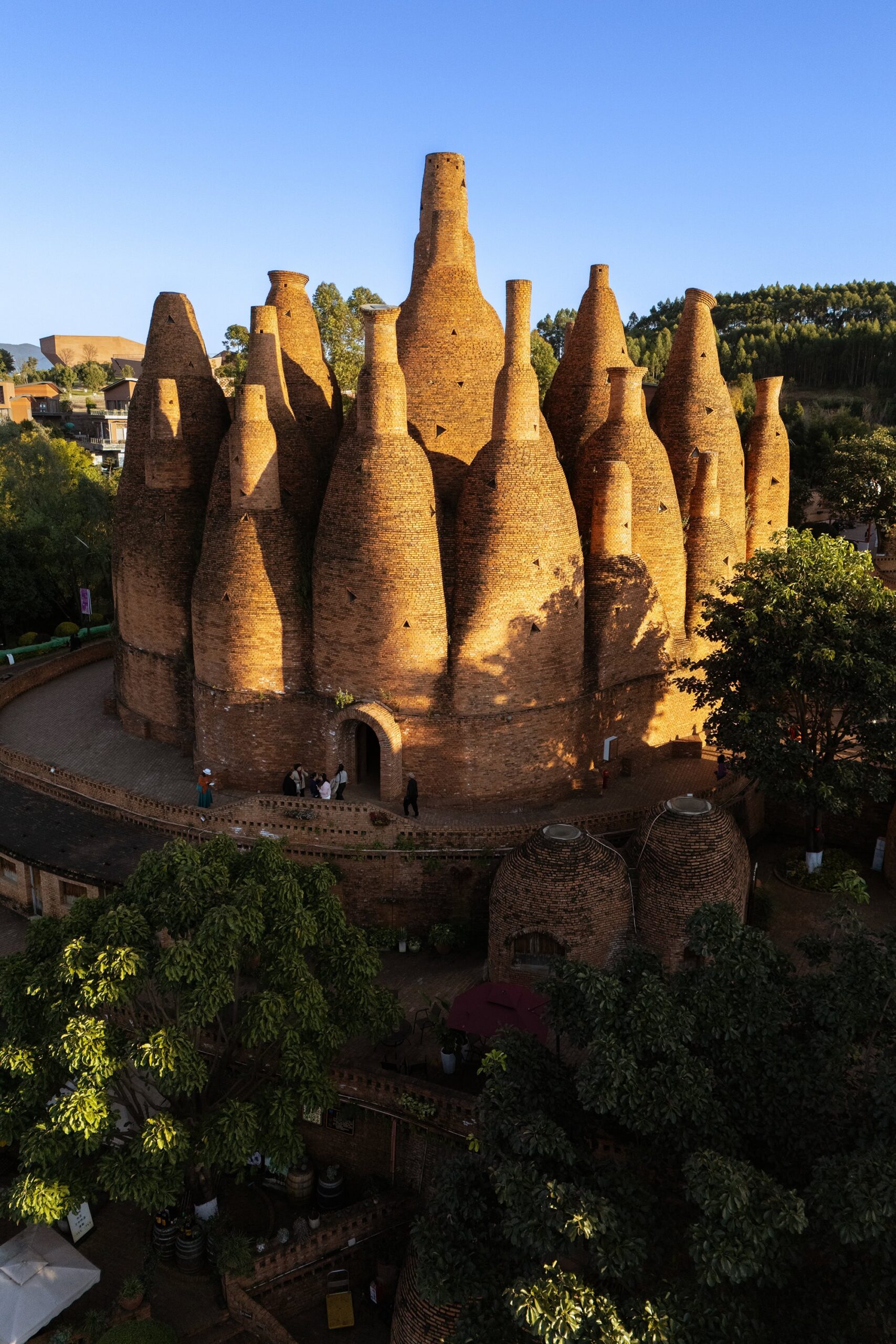
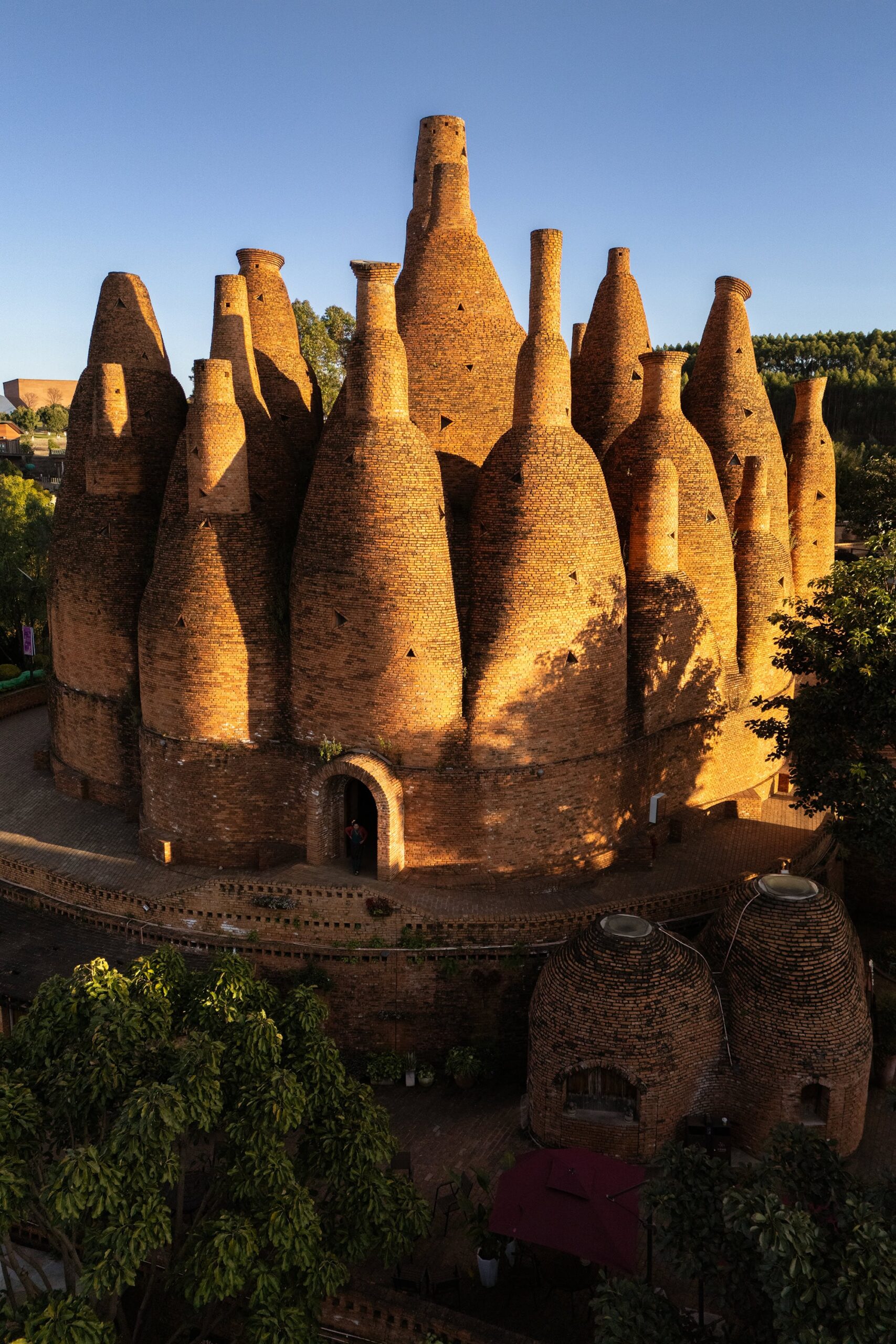
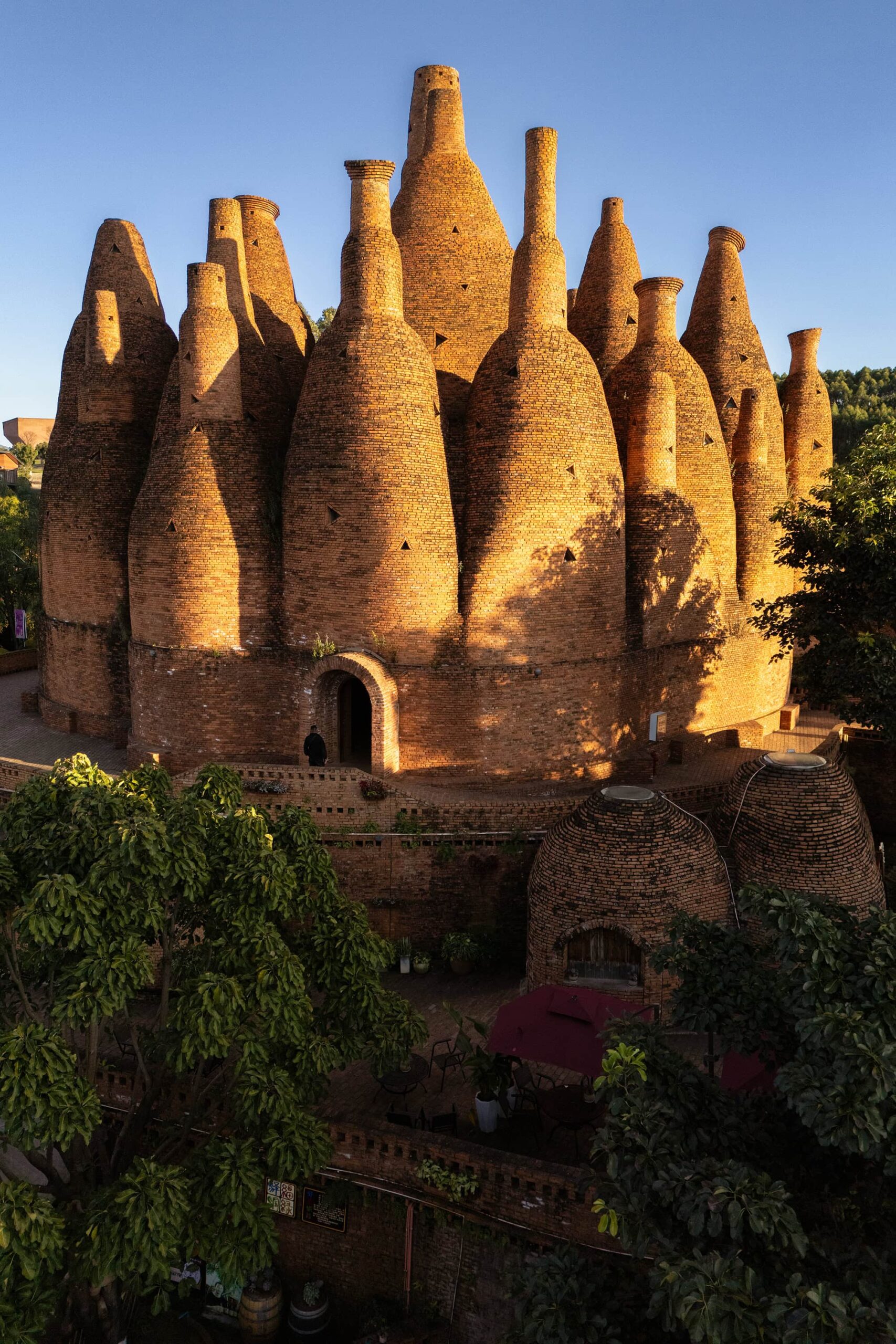
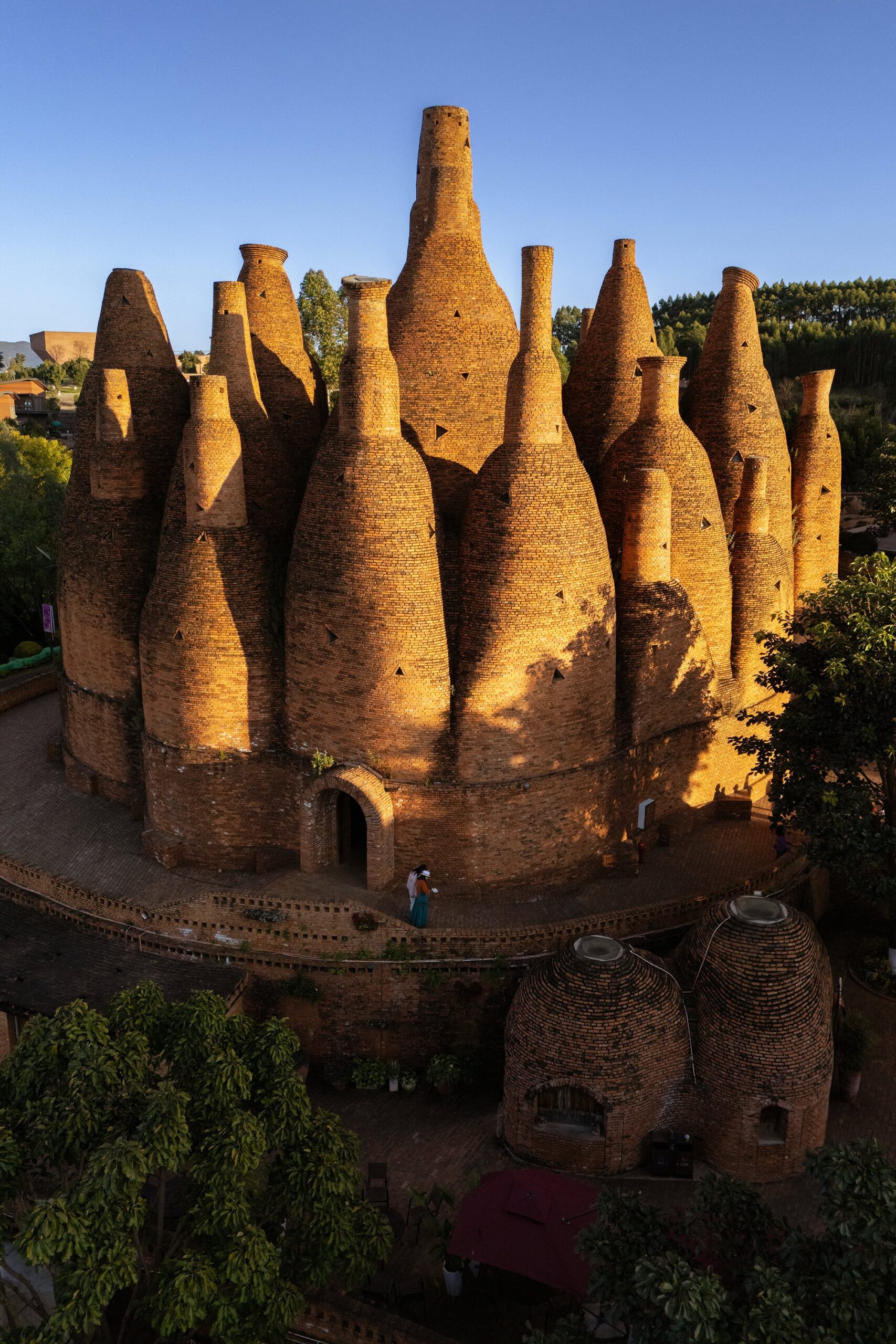
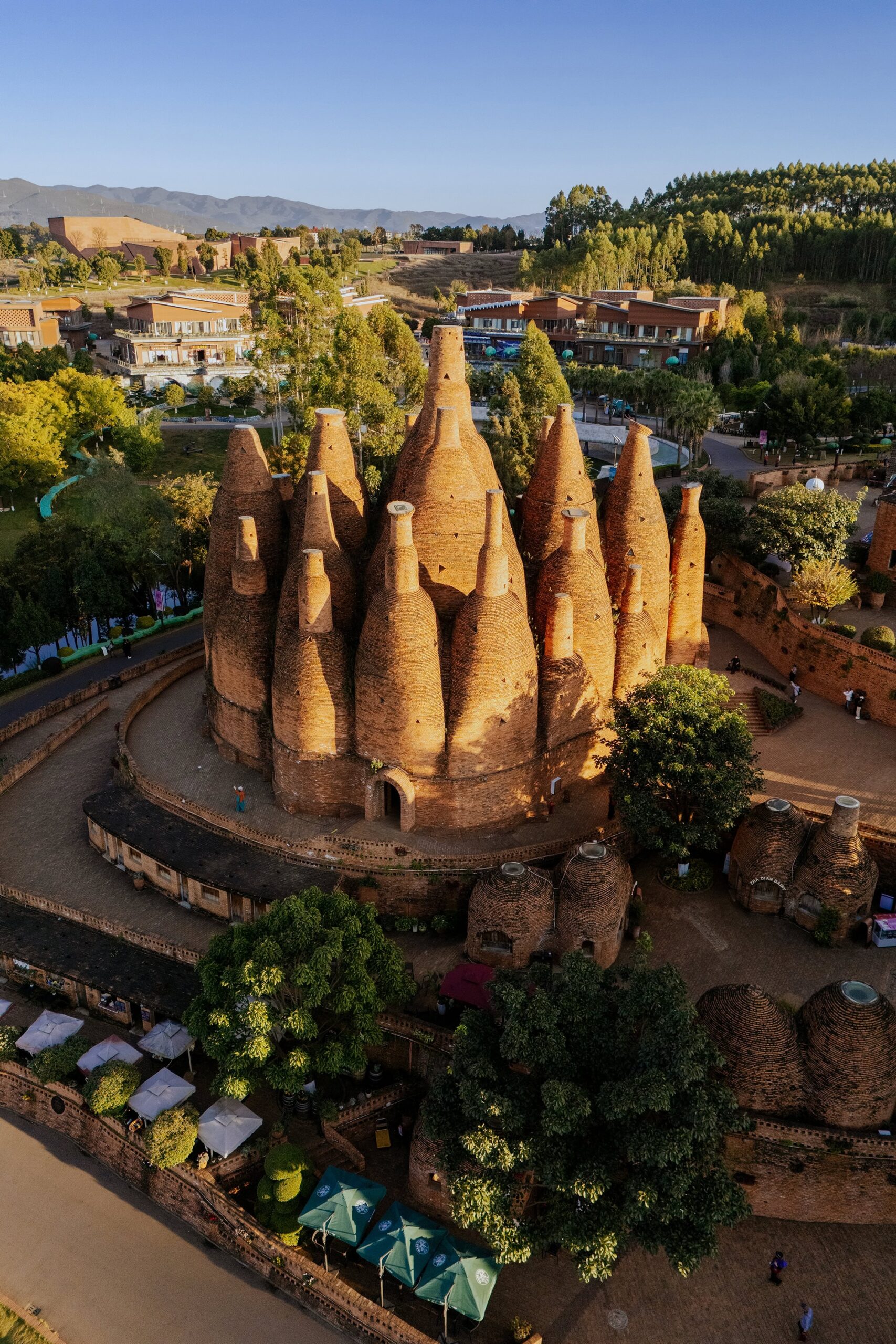
Across from the museum stands the visual centerpiece of Honghe Dongfengyun Town: the Kaleidoscope Art Museum, a building many people describe as resembling stacked beer bottles. Its roof is punctuated by triangular windows – an architectural nod to the kaleidoscope concept itself.
Inside (and conceptually at the core of Dongfengyun) is artist Luo Xu’s signature work: a terracotta “thousand-person choir.” Another set of this series is collected by the Singapore Art Museum, but seeing it here – where the project’s spirit is rooted – hits differently. The figurines are intentionally rough, handmade, and expressive; no two faces feel the same. When music plays, it’s easy to imagine their personalities: some singing with all they’ve got, others going through the motions. It’s part tribute to the past, part unspoken hesitation – both nostalgia and a faint sense of old wounds.
In front of the installation, the open plaza often hosts wandering singers performing live. Thanks to the unusual structure of the space, the sound carries in a way that feels especially airy and lingering.
Half Cloud Artist Salon: A Building That Looks Like Sky Made Solid
Another highlight, similar in silhouette to the kaleidoscope building but very much its own, is the Half Cloud Artist Salon. Its roofline stretches in layered curves that seem to connect with the distant sky. It continues Dongfengyun’s red-brick, dome-heavy style while also showing something more playful and imaginative: rounded, stacked forms that look like half a cloud suspended in motion.
Its inspiration comes from the bodhi tree: roots as the foundation, branches as columns, lifting the “half-cloud” dome. Step inside and the atmosphere shifts – quiet, tall, and contemplative. Natural light pours down from the top, blending beautifully with the interior lighting design, as if the building is inviting you to “walk alongside light.”
There’s also an on-site light-luxury Western restaurant. In reality, the food is often closer to pre-prepared dishes and the prices can be steep. But it does add a touch of everyday liveliness to a space that otherwise feels like an art set.
The Smaller Stops: Snacks, Flowers, Windmills, and (Sometimes) Empty Galleries
Beyond the main icons, the Dongfengyun scenic area includes:
Stamp Workshop (印章坊): lined with snack stalls – easy to browse, easy to nibble.
Lavender & Rainbow Flower Fields: planted with different flowers through the seasons; the nearby windmills make it a particularly popular photo spot – especially for visitors coming specifically to “check in” for pictures.
International Art Center: exhibitions appear from time to time, but on many days it can feel surprisingly empty.
Where to Stay (or Just Eat Pretty): MGallery in Mi’le
Just outside the park is DongFengYun Hotel Mi’Le – MGallery – a high-end hotel that fits the destination’s aesthetic perfectly. Even if you’re not staying overnight, it’s a good place to end the visit with a polished, photogenic meal.
We use cookies to optimize your experience, analyze usage, and personalize content. Your continued browsing indicates consent to our cookie usage and the sharing of site interaction data with our marketing and analytics partners.