Travel & Planning for New Destination Released. Free Shipping to Most Countries Around the World.
Free Shipping to Most Countries Around the World.
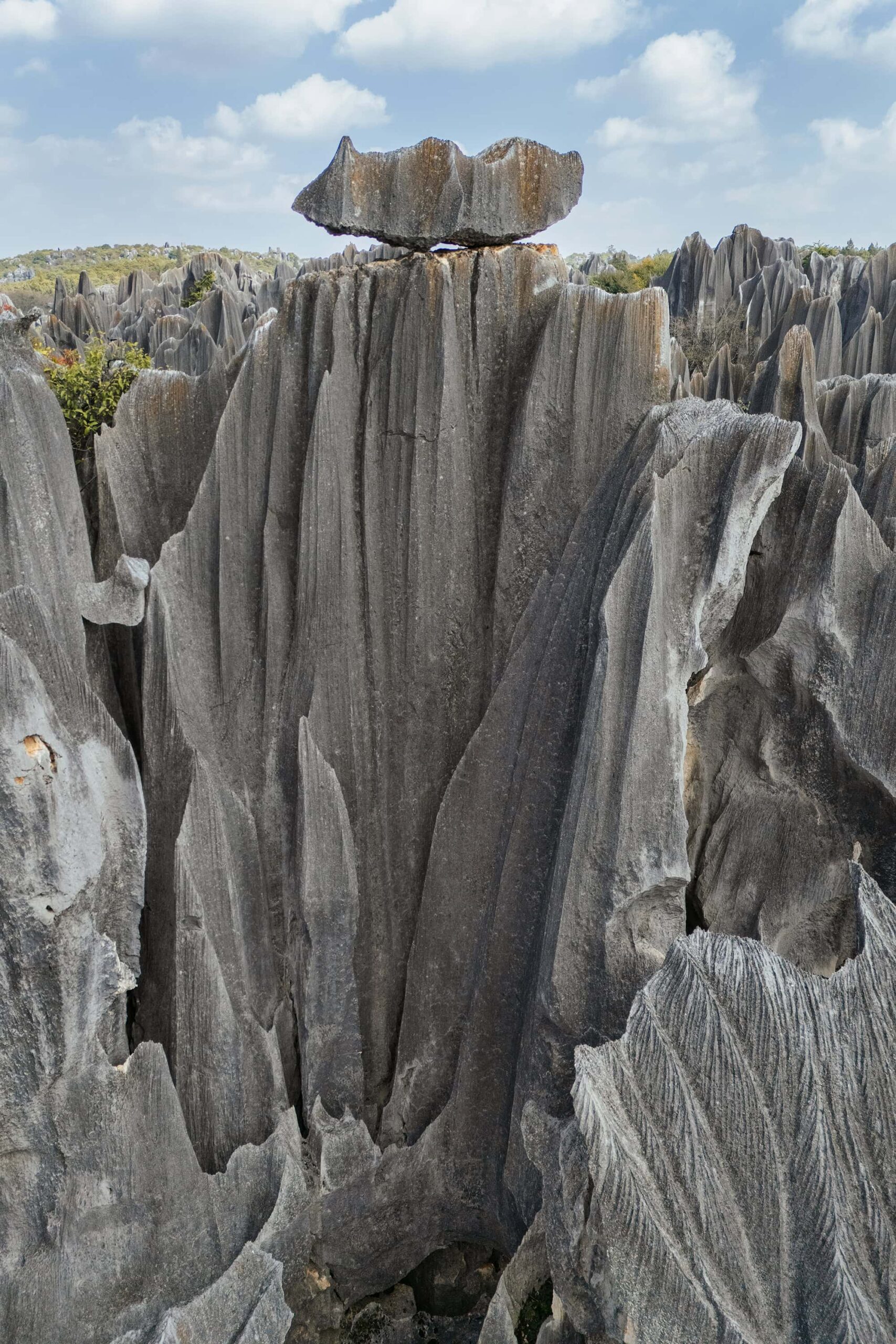
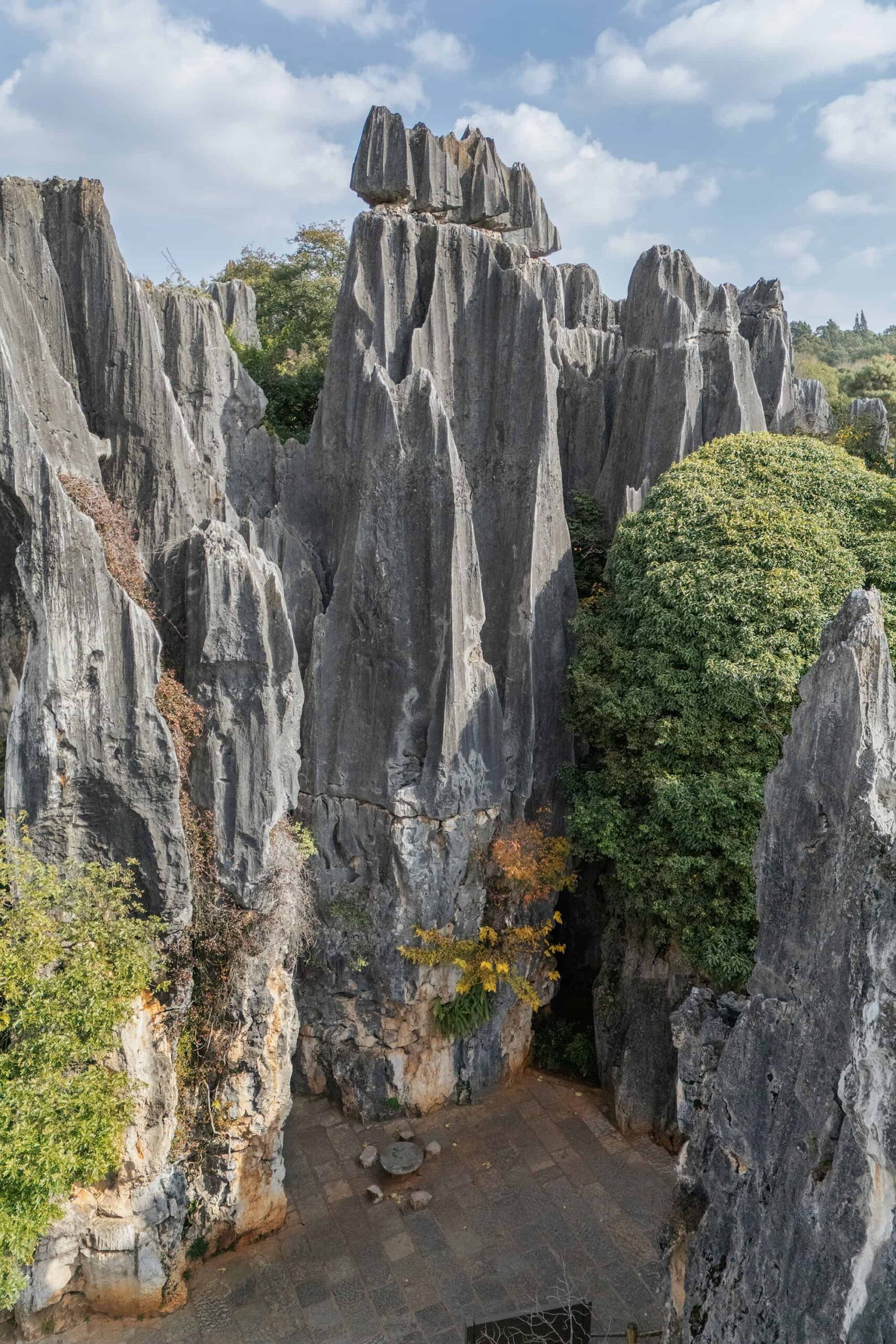
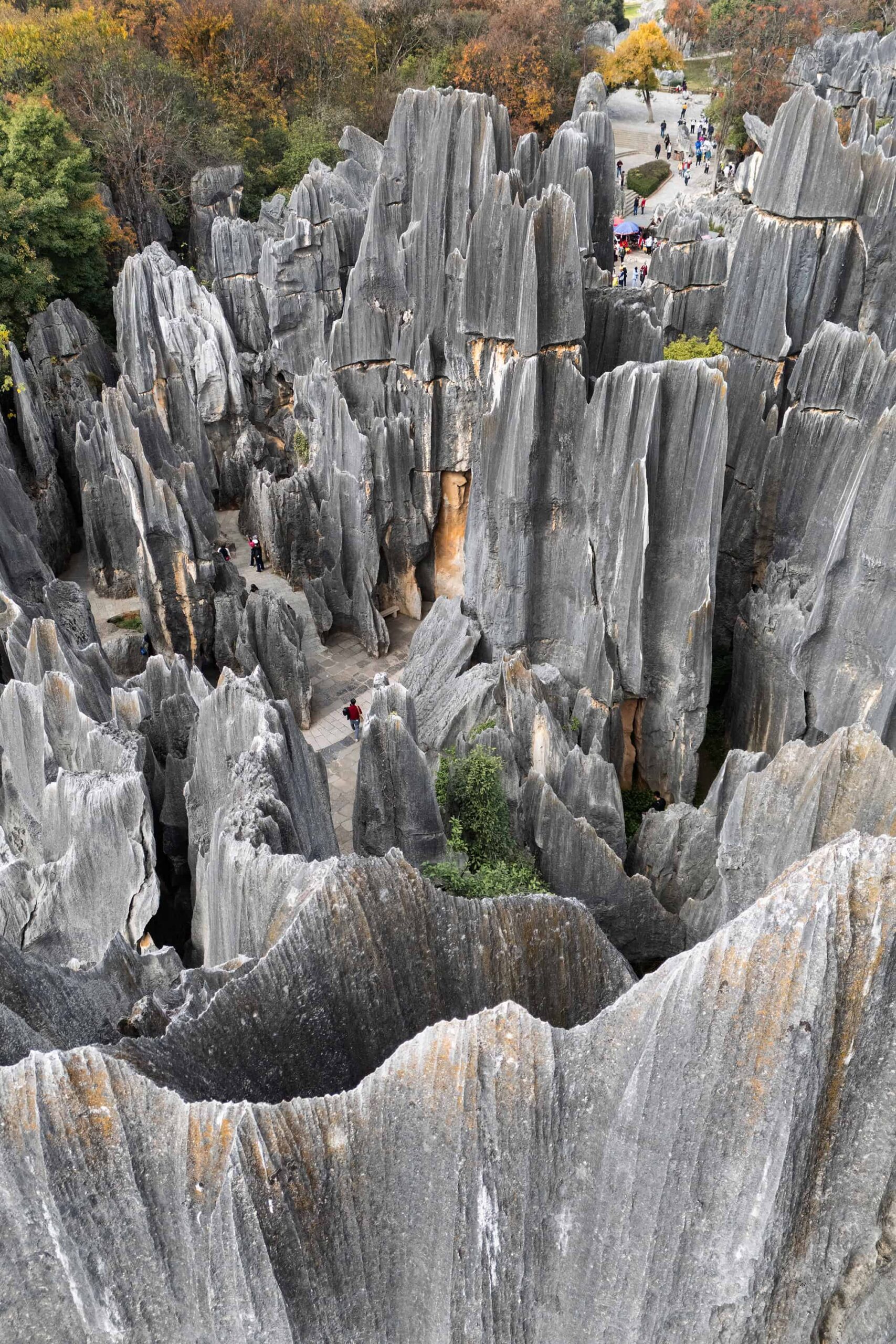
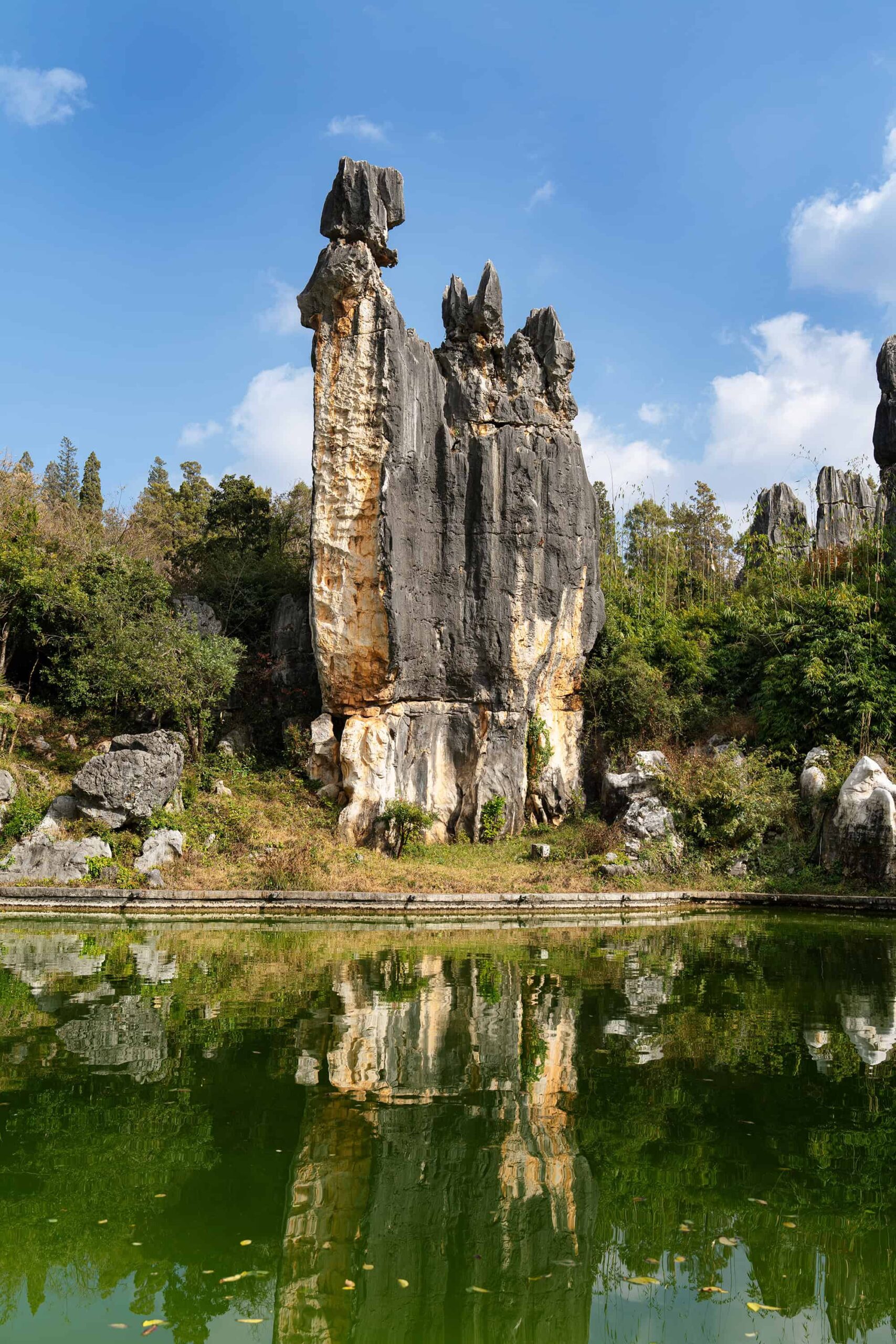
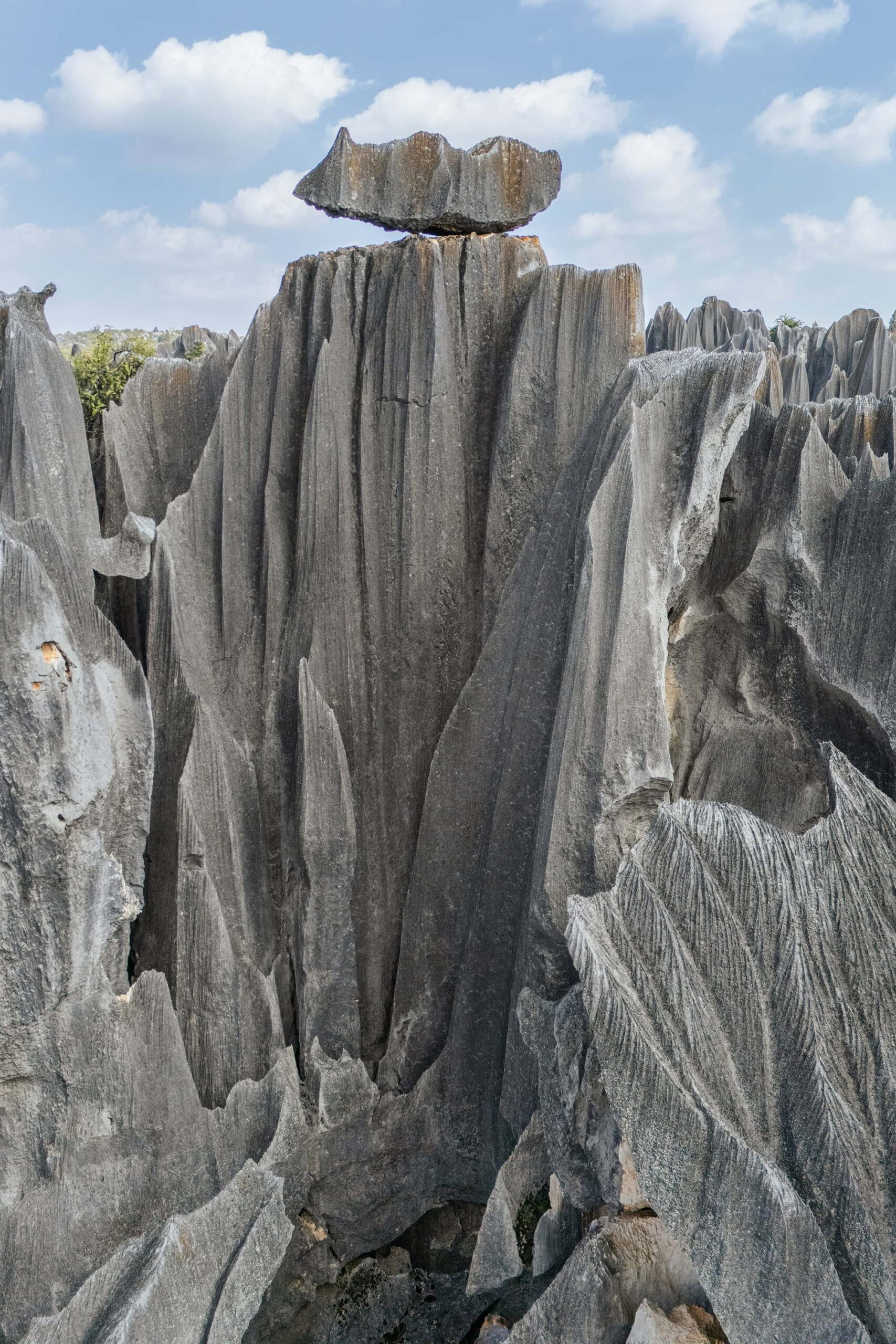
The story of Shilin begins in the Early Permian, 270 million years ago. Back then, this place was not a forest of towering stone peaks, but a vast ocean. Limestone on the seabed accumulated layer by layer over immense stretches of time, as if time itself were being pressed, page by page, into the deep. Later, the compression and uplift brought by tectonic movements pushed those long-sleeping strata up to the surface. Then, through tens of millions of years of repeated weathering and dissolution, nature carved and recarved the rock until it became the karst wonder we see today. The winding caves, twisting stone walls, depressions, and fissures you encounter in the Shilin Stone Forest may well be the routes where underground rivers once rushed through countless ages ago. Because of this rare and magnificent natural beauty, Shilin has gained many titles: a National 5A Tourist Attraction, a UNESCO Global Geopark, a China National Geopark, and it has also been inscribed on the World Heritage List, among others.
The core scenic area of the Stone Forest is made up of five sections: Major Stone Forest, Minor Stone Forest, Wan Nian Ling Zhi, Lizi Yuanqing, and Bushao Mountain. Visitors usually take a sightseeing shuttle to the entrance and enter with their ticket. After entering, the first place you’ll most likely come across is Lizi Yuanqing. There, you often see some local people – originally living around the Stone Forest, but having lost their livelihoods after relocation – holding cameras and taking “candid” shots of tourists. More often than not, the photo is taken before you even notice. Near the exit, they’ll come up with the printed pictures and ask if you want to buy them, usually 10 CNY per photo. It’s best not to get into conflict just because you were photographed. In a tourist area, trouble is often more expensive than a picture.
Continue on and you’ll reach the Major Stone Forest. The most striking sight is the pair of inscriptions carved with the bright-red characters “石林” (Stone Forest) – the wording was provided by Long Yun, and the calligraphy was written by Zhou Zhongyue – and they feel unmistakably like the park’s signature landmark. Inside the scenic area, you’ll also find several other inscriptions by well-known figures, such as “天下第一奇观” (“A Wonder Second to None”), inscribed by Zhang Weihan, then head of the Yunnan Department of Civil Affairs, and “群峰壁立,千嶂叠翠” (“Peaks rise like walls; layers of green ridges pile up”), handwritten by Zhu De (former Vice President of the People’s Republic of China) during his visit.
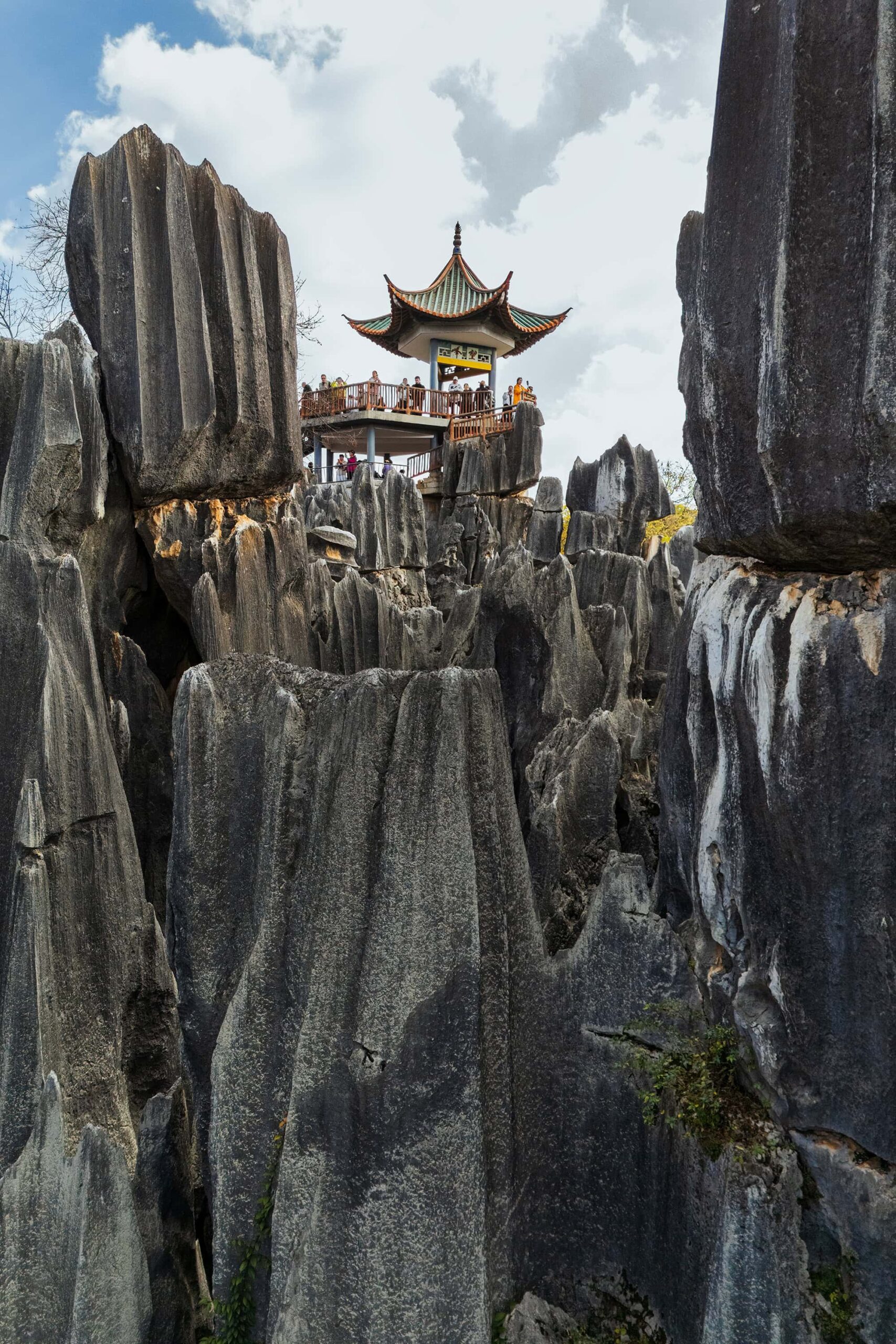
The Major Stone Forest’s classic sights are equally worth lingering over – “Lotus Peak,” “Sword Peak Pond,” “A Hair’s Breadth from Disaster,” and “So Narrow You Can Just Squeeze Through,” among others – some grand and imposing, some sheer and precipitous, and some so tight they almost make you hold your breath. If you want a fuller view of the peaks, walk deeper to Wangfeng Pavilion. There, stone spires stand like a forest, rising at uneven heights near and far, like a stampede of beasts caught mid-charge and suddenly frozen in place. Just keep in mind that many of the stone paths are narrow – watch your footing, and please don’t push or crowd.
For generations, this land has been home to the Yi people. Over time, different branches gradually formed – Sani, Black Yi, White Yi, Yiqin, Axi, Ayizi, and others. In the Shilin area, the main group is the Sani; in places like Keyi Town in Mile, you’ll find Axi communities. In Shilin, they call women “Ashima.” The name comes from a narrative epic passed down by word of mouth. It tells of a beautiful and lovable girl, Ashima, who falls in love with Ahei – only for a rich and powerful man, Azhi, to forcefully take her away. Ahei comes to rescue her but arrives a step too late; Ashima is swept away by floodwaters and turns into a stone peak, left behind in the Stone Forest. Ashima was also the first color widescreen stereophonic song-and-dance film in Chinese history. It was translated into multiple languages and became widely known both in China and abroad.
We use cookies to optimize your experience, analyze usage, and personalize content. Your continued browsing indicates consent to our cookie usage and the sharing of site interaction data with our marketing and analytics partners.