Travel & Planning for New Destination Released. Free Shipping to Most Countries Around the World.
Free Shipping to Most Countries Around the World.
REFER TO THE FULL REPORT BELOW
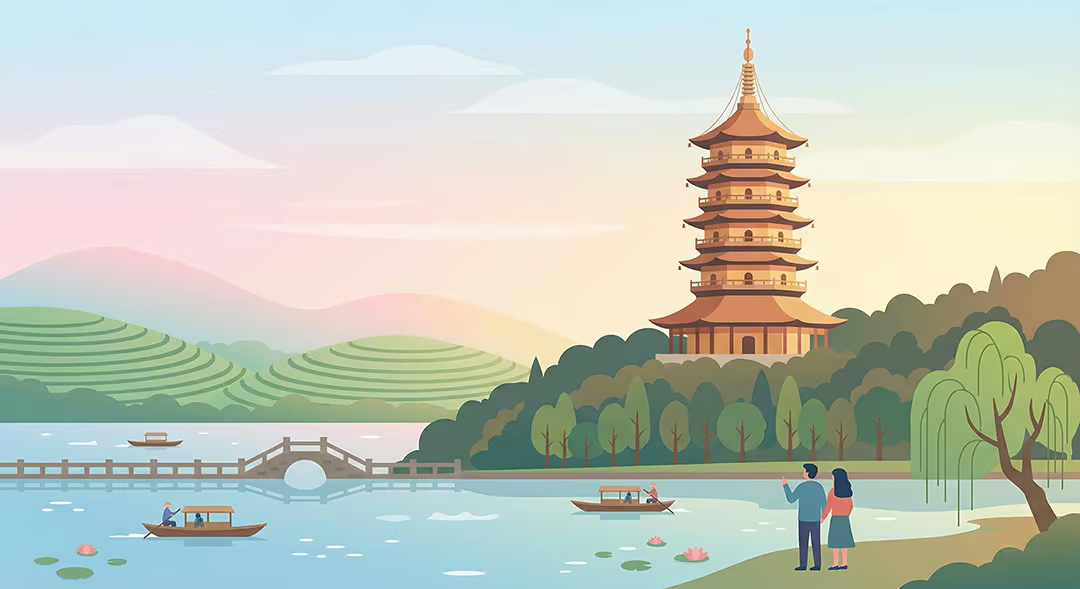
Any city exists not so much in space as in time, and time itself holds no inherent meaning; it is merely the varied narratives presented by each fleeting, extinguished individual. Cities emerge from history, adorned with stars and moon, and find rebirth through destruction. Each generation, along with countless souls, leaves marks on its skin, altering it beyond recognition, before silently retreating into history and impassively recording it all.
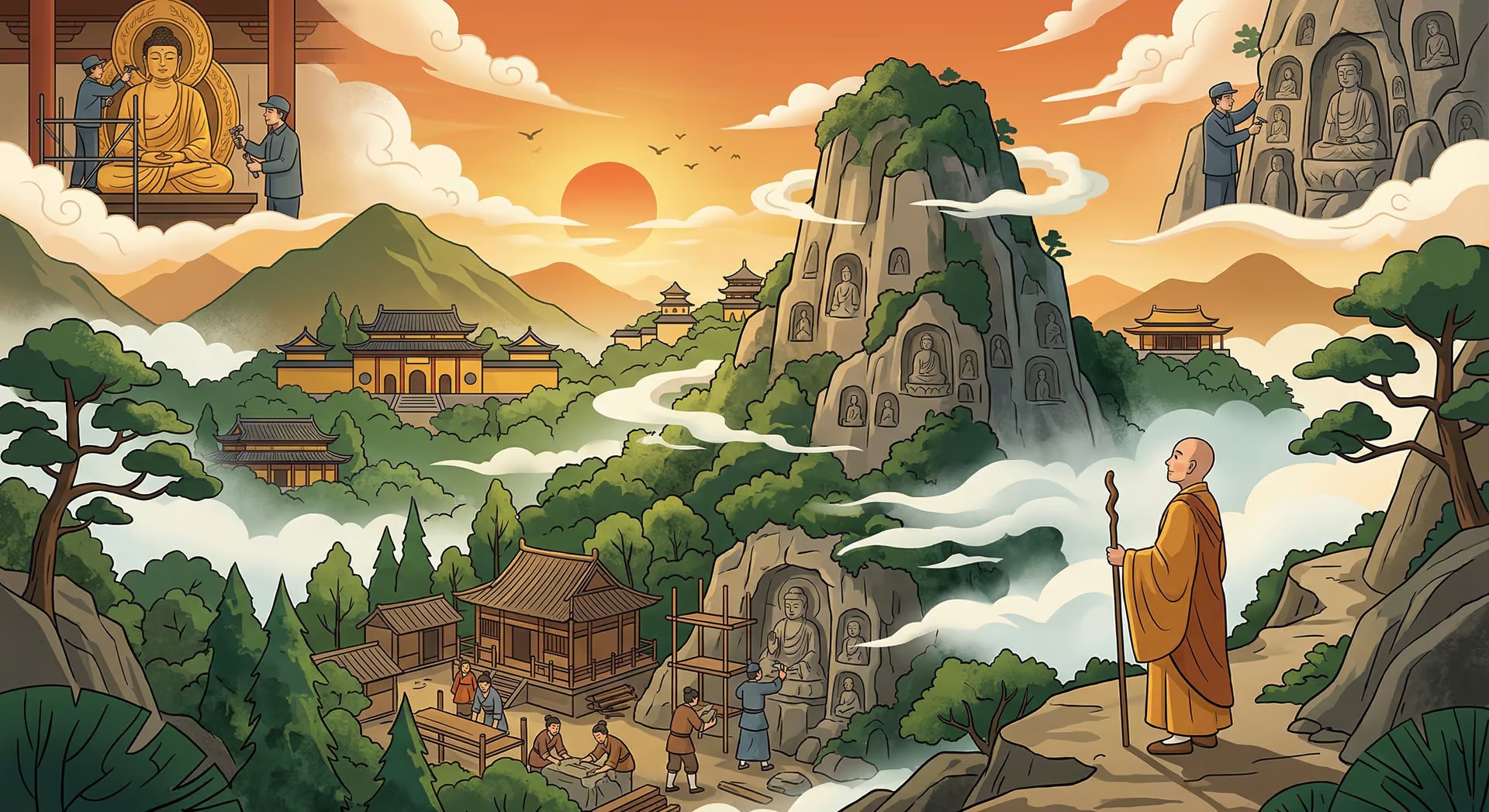
In the first year of the Xianhe era (326 AD), the monk Huili traveled from the Central Plains to Wulin Mountain in Hangzhou (now the Lingyin and Tianzhu Mountains). Upon seeing Feilai Peak, he believed it to be a small ridge that had flown over from Vulture Peak in India, so he established Lingjiu Temple (later known as Ligong Rock) in front of the peak. In the third year of the Xianhe era (328 AD), he founded Lingyin Temple, followed by the successive construction of the Lower Tianzhu Translation Institute (Lingshan Temple), Lingfeng Temple, Lingshun Temple, and others, an effort historically referred to as “building five temples in succession.” After liberation, termite infestation caused the central section of Lingyin Temple’s main hall to collapse, crushing the Buddha statues beneath it. In the summer of 1952, the Civil Affairs Department formed the “Hangzhou Lingyin Temple Daxiong Treasure Hall Restoration Committee” to oversee the repair work, funded by the government. After more than two years, the hall was completed. In 1975, with approval from the State Council, comprehensive renovations began that November at a cost of over 1.3 million yuan. All Buddha statues in the temple were gilded, stone pagodas and sutra pillars received protective repairs, and the carvings on Feilai Peak were restored. This restoration project concluded in 1980.
This city has never produced profound philosophers, suffering poets, or tragic novelists. A thousand years ago, someone described it as “frivolous.” A preference for safety is its destiny, which dramatically shapes the city’s personality. It yields loyal ministers but not fierce generals, literati but not philosophers, merchants but not gamblers, Zen discussants but not ascetic monks. Even on the rare occasion it produces a king, he lacks the ambition to vie for the Central Plains of China. This is a city without a rejecting disposition; it is enveloped by beautiful landscapes and has always remained captive to them. The people here approach everything with insufficient intensity, preferring to leave themselves an escape route. If Hangzhou possesses a so-called “city character,” it arises from four elements: “worldly Buddhist style,” “humanistic West Lake,” “years of preference for safety,” and “canal commerce.” Buddhism forms the soul, West Lake the sinew, preference for safety the personality, and commerce the flesh. These elements emerge in dramatic ways across different eras, thereby molding every individual who lives in this secular realm. Hangzhou residents excel at turning all matters into business, living business as everyday routine, and immersing their days in one elaborate pretext after another.
Hangzhou and West Lake were shaped through a long process of evolution. Hui Li infused them with the spiritual essence of Buddhist Zen. Bai Juyi rediscovered West Lake. Qian Liu fixed the spatial form of the city of Hangzhou. In the hands of Su Dongpo, this development reached a kind of cultural and symbolic elevation. He defined the personality of West Lake. “Preference for safety” serves as the designation of the Southern Song regime in Chinese historical records, seemingly a term unique to it. Clearly, “preference for safety” is a concept more derogatory than complimentary. During the over one hundred years when the capital was set in Lin’an, those emperors residing in the cramped palaces at the foot of Phoenix Mountain resembled a joke. They were surrounded daily by calls of “Northern Expedition, Northern Expedition,” yet had to feign indifference. Some aspects of the urban character of people in Hangzhou today, such as a preference for comfort, an avoidance of political discussion, enthusiasm for investment and business, and a fondness for everyday gossip, may well have their roots in those years of Lin’an. “Preference” is a choice, while “safety” is a posture; together, they create a cautious sense of security that gradually forms a collective unconscious and a way of life shared across eras. A city that embraces a preference for safety resembles an introverted yet self contented existence: it is unaggressive, reluctant to refuse, drawn to visible pleasures and immediate enjoyment, often blurring the boundary between simplicity and superficiality, and treating mere survival as the highest principle of life. The people of Hangzhou are not without courage; rather, their courage lies deeply concealed, expressed in a quiet and subtle form that dares only to contend with time itself.
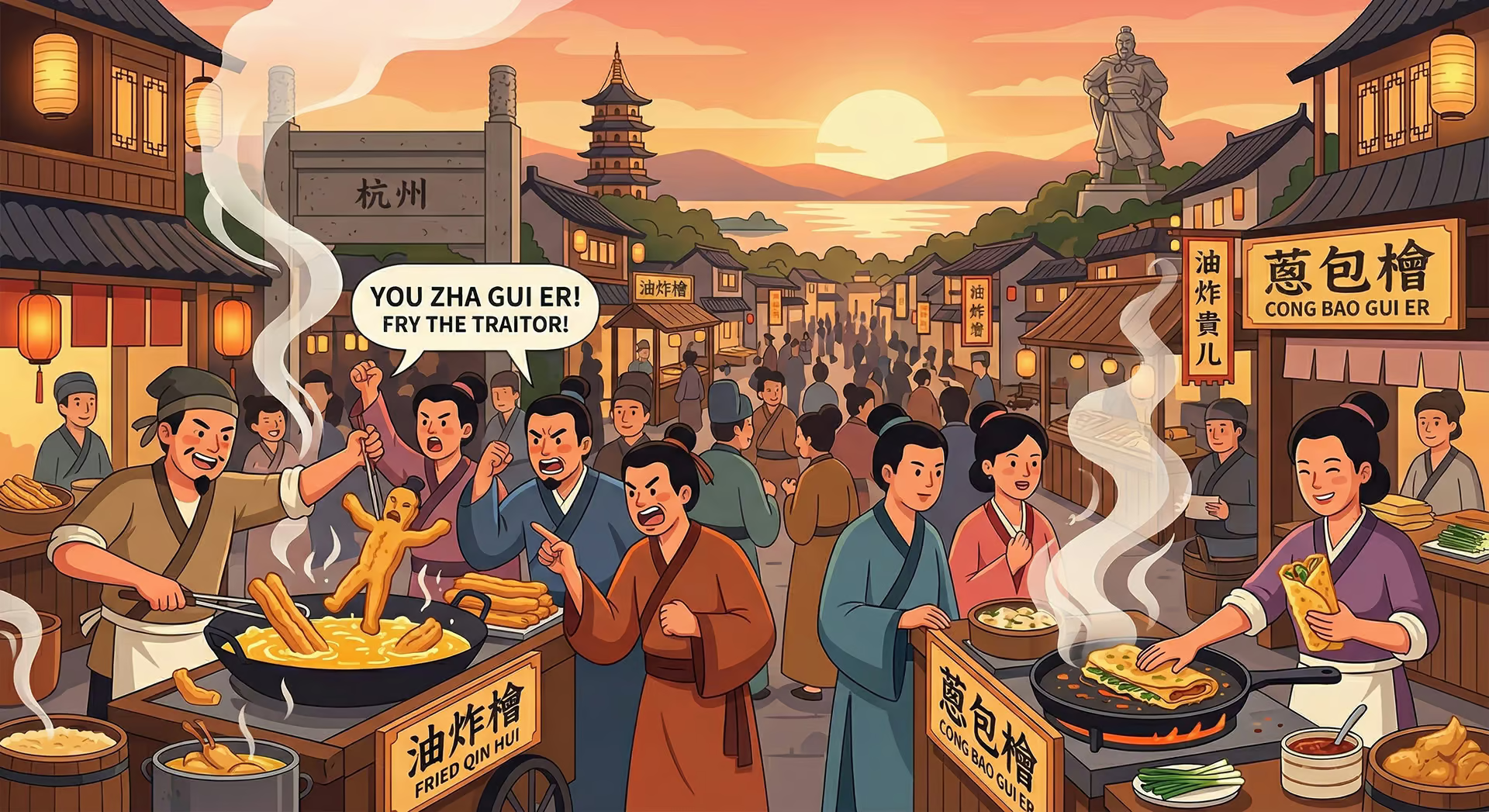
In Hangzhou, people call youtiao “you zha gui er,” a name that expresses their anger toward Qin Hui. Another local snack wraps fried dough sticks and scallions inside a flatbread, then presses and roasts or deep fries it in an iron pan until crisp and golden. This is called “cong bao gui er.” Because Qin Hui was responsible for the death of Yue Fei, he has been repeatedly “fried” in Hangzhou’s oil for hundreds of years.
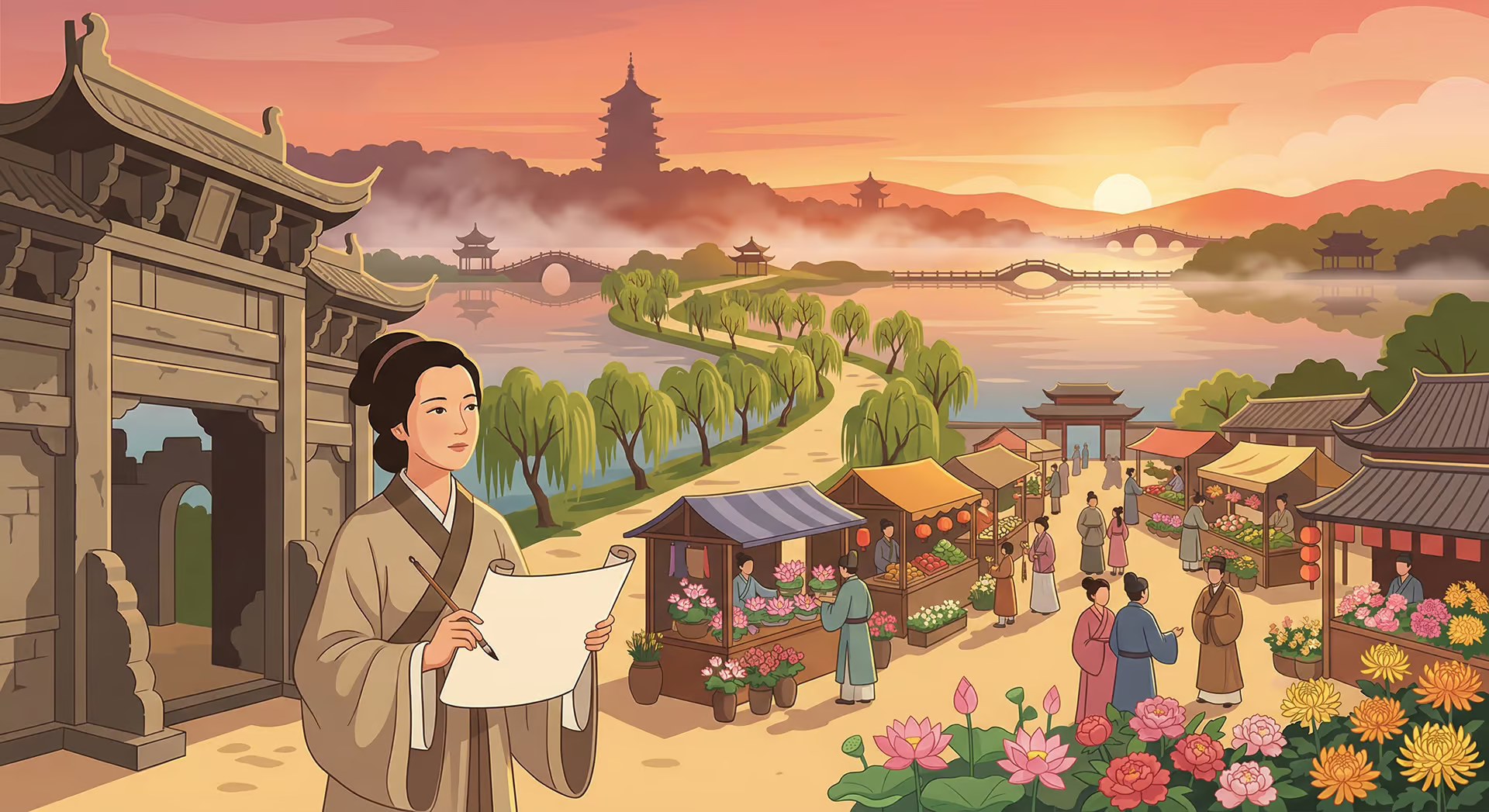
In Hangzhou, few people know that Li Qingzhao, the greatest female poet in Chinese literary history, once lived in this city for more than twenty years. Qingbo Gate lies only a short distance from West Lake. Macheng was originally a place where Qian Liu kept military horses, and during the Southern Song it became a flower market. From there to Quyuan Fenghe by West Lake is about ten li. Even at a slow pace, Li Qingzhao could have reached it within two hours. Yet throughout her life, she never wrote a single line of poetry about West Lake.
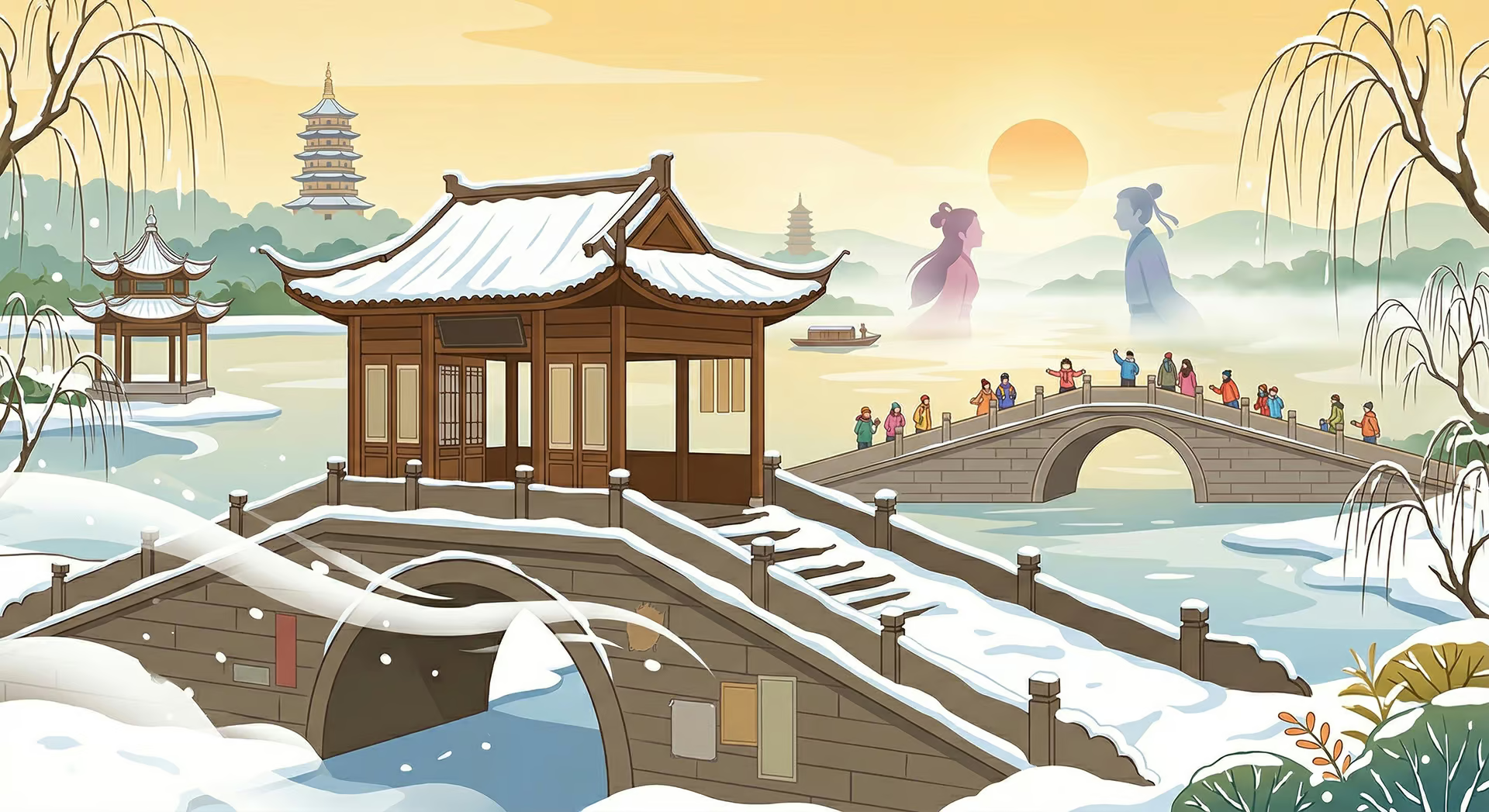
There is a saying about Broken Bridge. In earlier times, there was a pavilion on the bridge. During winter, when snow accumulated, the bridge appeared as if it were broken but not completely, and people began to call it Broken Bridge. The pavilion still stood in the early Republic of China period, and merchants often painted small advertisements on its walls. Today the pavilion is gone, and the bridge no longer truly matches its name. This explanation is factual, yet visitors rarely accept it, because in their imagination it is the bridge of lovers parted at the ends of the earth.
When Hangzhou is placed along the axis of time, one can sense a kind of illogical ignorance, stark reality, and coldness. In 1924, the Leifeng Pagoda collapsed due to excessive brick theft and vibrations caused by construction nearby. Hundreds of temples in the city were destroyed, with the exception of Lingyin Temple. Many were demolished, others were repurposed. The thousand year old Zhaoqing Temple by West Lake was turned into a children’s palace. On the site of Haichao Temple, the Hangzhou Rubber Factory was built, and the Double Reflection Well, once associated with the story of Liang Shanbo and Zhu Yingtai, became a source of drinking water for factory workers. During the Cultural Revolution, fervent youths wielded shovels day and night to smash all the cliffside Buddhist carvings in the city, and many famous tombs were also leveled. The collections in museums in Zhejiang or Hangzhou cannot compare with those of ancient cities such as Xi’an, Nanjing, Luoyang, or Taiyuan.
Truly strategic decisions take shape at the level of urban planning. In 2000, the municipal government proposed the strategies of expanding the city eastward, advancing tourism to the west, developing along the river, and extending growth across the river. These moves further opened up space for urban development and marked Hangzhou’s transition from the era of West Lake to that of the Qiantang River. The small company founded in Lakeside Garden holds particular significance for Hangzhou. From the perspective of urban economics, it created an effect comparable to Boeing in Seattle, Ford in Detroit, or Hewlett Packard and Stanford University in Silicon Valley. When a company with powerful influence such as Alibaba emerges in a city, it triggers and drives the participation and innovation of many others. Today, Hangzhou is also home to major enterprises such as NetEase, Hikvision, Geely, and Wanxiang. It has more than two hundred listed companies and nearly one hundred unicorns, and a new type of research university, Westlake University, has been established and opened. Over the past decade, the city has attracted an annual influx of four hundred thousand to five hundred thousand young people. From 2019 to 2021, it ranked first in China for net population growth among cities. Like a constant flow of fresh blood, they have reshaped the demographic structure, cultural temperament, and industrial landscape, turning Hangzhou into a city that never sleeps.
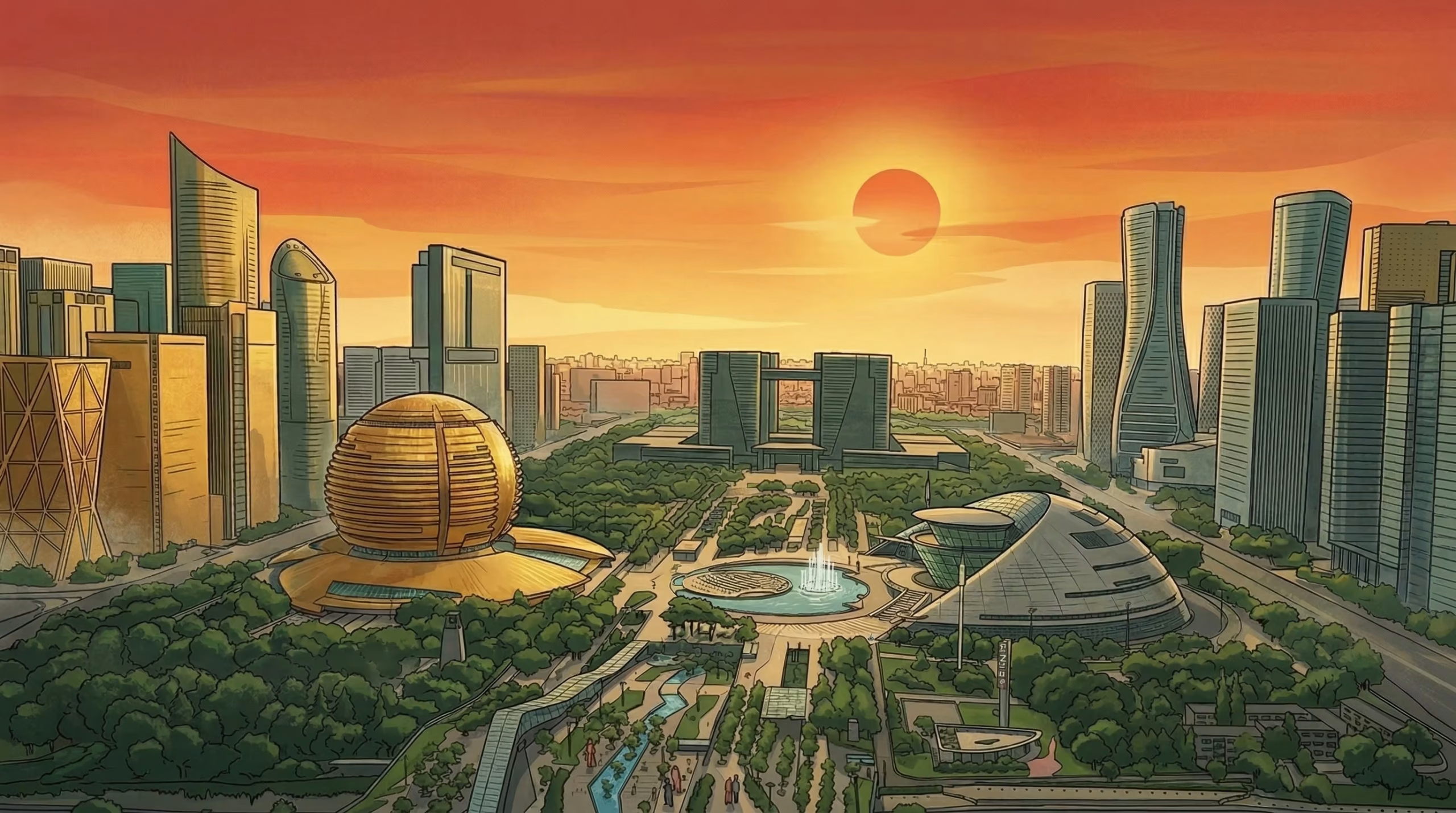
Hangzhou is also one of the earliest cities in the world to build what is known as a city brain. It was first applied to the traffic system, where tens of thousands of cameras were installed at major intersections. Data is fed back to the system, which dynamically controls traffic lights. This application has significantly reduced congestion, bringing Hangzhou’s ranking from second most congested city in the country in 2014 down to fifty seventh in 2021. At the beginning of 2020, when the COVID 19 pandemic broke out, this system enabled Hangzhou to pioneer the development of the health code, which quickly became a nationwide tool. China’s pandemic control surprised the world, and the health code played a crucial role.
The transformation of urban order through political and social systems, the reshaping of lifestyles and cultural patterns through technological tools, and the anxiety and unease hidden behind everyday smiles all coexist in this city. Like a river repeatedly redirected by the force of the times, we, like the city itself, strive to become better even when carried along by forces beyond our control.
We use cookies to optimize your experience, analyze usage, and personalize content. Your continued browsing indicates consent to our cookie usage and the sharing of site interaction data with our marketing and analytics partners.